
'Higher than expected' rework expenses for Royal Navy Type 31 Portsmouth frigates leads to £140m cost rise

Five Inspiration-class frigates are being built and will be based in Portsmouth once commissioned into the fleet
The estimated costs to build essential new Royal Navy frigates have increased by tens of millions of pounds.
Babcock International has reported an extra £140m charge on the Type 31 programme in Scotland. This was due to higher than expected rework levels during the outfitting and commissioning phase, and design changes.
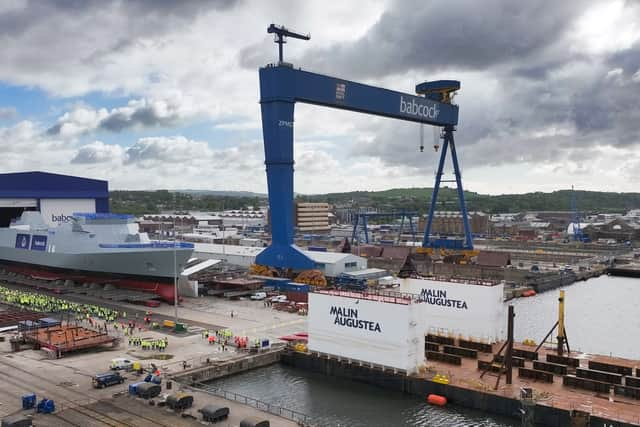

Work is progressing on the first four ships, with the entire compliment of five General Purpose Frigates due to be based in Portsmouth once they’re commissioned into the Royal Navy fleet. A Babcock International statement said: “As we finish structural completion of ship one (HMS Venturer), the bulk of the remaining work now relates to outfitting and commissioning.
“During the outfitting stage we have experienced higher than expected levels of rework as a result of changes to the design and the long-term impacts of out-of-sequence build activity earlier in the programme. Whilst the number of such rework events is not entirely unexpected, the work is being performed in the later stages of completion and therefore is more complex and more costly. The ability to enable the work to be performed to support increasing levels of programme productivity has also been impacted.
“As the build of ship two is close behind ship one, there is also some cross over in the design-related rework necessary to this ship. With ships three and four still in the early construction stages, the extent of impact on these and future vessels is comparatively reduced. As a consequence, we have performed an engineering maturity review, and we have updated our financial estimates to complete the programme, given the elevated levels of work due to engineering change and productivity. These re-estimates not only cover the production costs of material and personnel, but also an increased programme risk contingency.”
The Inspiration-class frigates are due to partly replace their aging Type 23 counterparts. Due to be equipped with 57mm main gun, 40mm secondary guns, Sea Ceptor air-defence missiles, and planned 32-cell Mk41 vertical launch systems, the warships are expected to be adaptable and carry out a range of tasks for the Royal Navy. This includes maritime security patrols, intelligence gathering exercises, anti-piracy and drug smuggling operations, disaster relief efforts, and other tasks.
Fears of delays and cost overruns were mooted in the National Infrastructure & Service Transformation Authority Annual Report 2024-2025. The programme was graded red on a traffic light system, which meant there are issues over schedule, budgets, and quality - re-scoping of the project being necessary to meet targets.
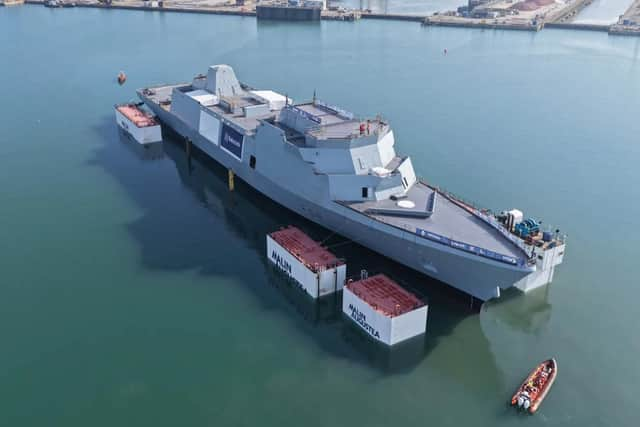
The first two ships, HMS Venturer and Active, took to the water for the first time during the past year after four years of construction. HMS Formidable and Bulldog are in the early stages of construction. Minister for defence readiness and industry, Luke Pollard, previously said all five ships will enter service in the early 2030s.
Meanwhile, the Royal Navy’s frigate force is shrinking as older Type 23 frigates are being retired. HMS Iron Duke was “quietly withdrawn” from the force, leaving the Royal Navy with five active frigates.
Babcock said its revenues increased in the year to the end of March particularly following a stronger performance for its nuclear and aviation divisions. However, its underlying operating profit fell to £293m from £363m the prior year, including the impact of the Type 31 charge. The company announced plans to return a further £200m to shareholders through buybacks after completing its previous programme.