
Royal Navy: Delays hit Type 26 shipbuilding programme costing millions - when Type 23 replacements expected

Delays are impacting a major Royal Navy shipbuilding programme costing millions of pounds.
Maria Eagle, minister for defence procurement, confirmed the project to construct the Type 26 frigates will take longer than expected. Eight City-class frigates are being constructed by BAE Systems, with the modern warships due to replace their Type 23 counterparts.
Mark Francois, Conservative MP for Rayleigh and Wickford, asked Ms Eagle what the cost overrun is on the scheme, what steps the government are taking to mitigate further delays and cost rises, and reduce the impact of delays on the Royal Navy’s operational capability.
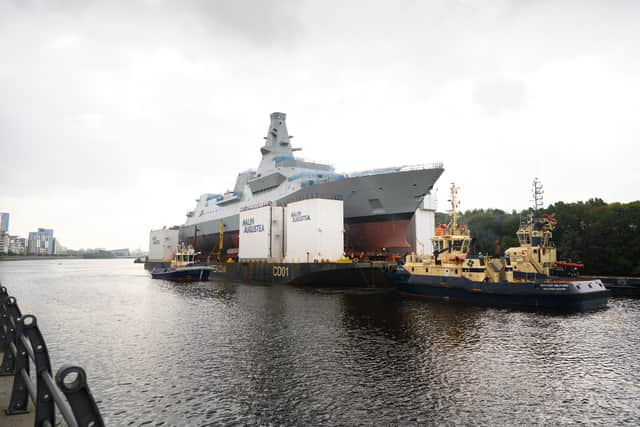

Ms Eagle said the project is forecasted to be delayed by 12 months - from October 2027 to October 2028 - as initially confirmed in a Written Ministerial Statement released on November 2, 2022. Costs are expected to rise by £233m (4.2 per cent).
“Investment in new facilities at Govan to increase productivity include a new Shipbuilding Outfit Hall, Shipbuilding Academy and steelwork panel lines,” the Labour minister added. “The new Shipbuilding Hall will enable the construction of two ships undercover simultaneously.
“This will improve schedule performance and the pace of delivery, allowing the time between ship deliveries to be reduced. This will not result in a capability gap; Type 26 will be a world beating frigate and the class will be delivered in time to take on the anti-submarine warfare duties of the retiring Type 23 ships.”
What are the Type 26 ships and where is the project now?
The eight City-class frigates will primarily focus on anti-submarine warfare missions, while also being involved in air defence and general purpose operations for the Royal Navy. Each ship is expected to have a service life of 25 years.
Construction of HMS Sheffield, the fifth of the right ships ordered, began in November last year. A Mk45 Mod 4A Medium Calibre Gun was fitted to HMS Glasgow, the first of the eight vessels, in September. The fully automated modern weapon will be used to eliminate threats such as drones and fast-moving inshore craft. HMS Cardiff sailed on the water in the same month.
All of the Type 26 ships are expected to enter the fleet by the mid-2030s. The shipbuilding programme, alongside the construction of Type 31 ships, were rated Amber in the MoD major projects data - meaning delays and cost rises are possible but can be mitigated with quick action.
Lord Vernon Coaker, Labour, insists that the scheme “remains on track” despite the delay. Responding to a written question by Admiral Lord West of Spithead, he said: “The T26 programme remains on track to meet all user requirements and deliver eight world-class anti-submarine warfare frigates in time to replace the anti-submarine warfare T23s.
“Type 26 will allow the Royal Navy to continue to play a leading role in the anti-submarine theatre in the North Atlantic and beyond.”