
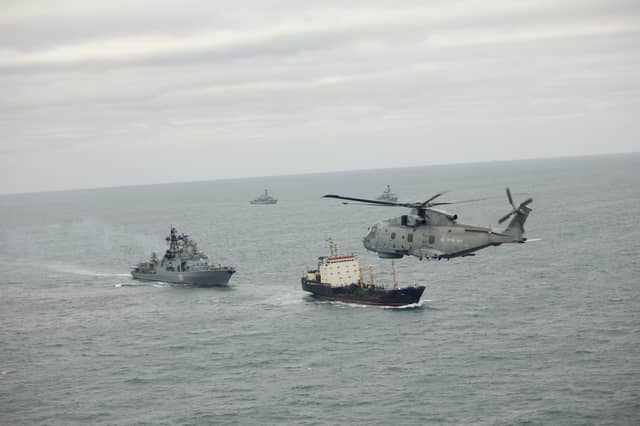


Naval assets from Portsmouth and elsewhere were scrambled as part of a ten day operation alongside Nato allies. Naval helicopters and ships HMS Somerset, HMS St Albans, HMS Mersey and RFA Tideforce were dispatched to shadow four Russian Navy vessels, including a surfaced submarine, in the English Channel and North Sea.
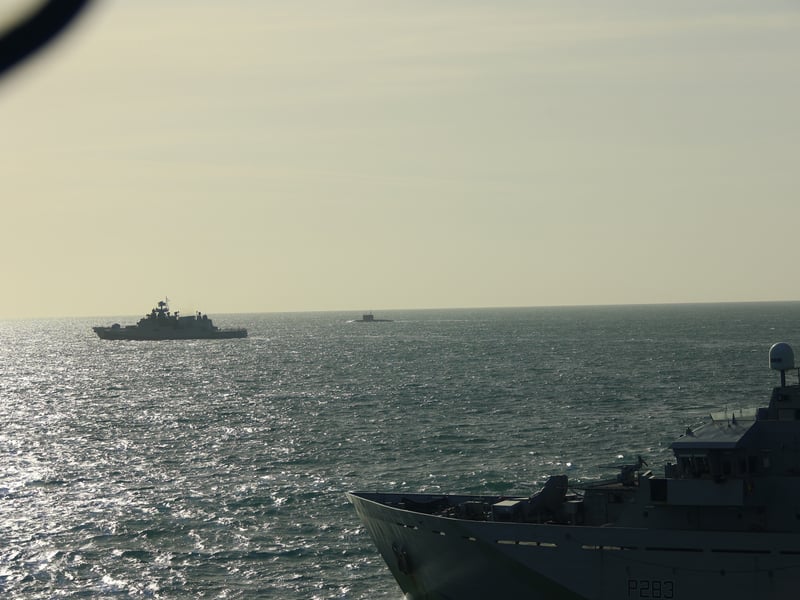
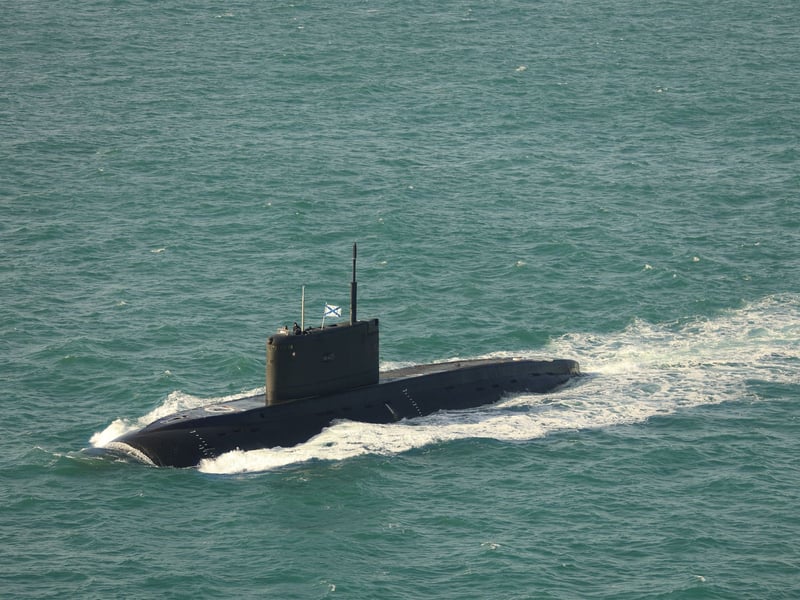
Portsmouth-based patrol vessel HMS Mersey was activated three times between March 29 and April 7, alongside a Wildcat helicopter from 815 Naval Air Squadron and tanker RFA Tideforce. They reported on the movements of the Russian frigate Admiral Grigorovich, Ropucha-class landing ship Aleksandr Shabalin and Kilo-class submarine Krasnodar.
Lieutenant George Hage, Executive Officer of HMS Mersey, said: “Mersey routinely acts as one of the high readiness units to protect UK waters, alongside her sister ships HMS Tyne and Severn. Our ability to provide a presence to monitor the Russian activity in UK water is no small feat especially with such an increase in activity over the last few months.
“I am extremely proud of Mersey’s ship’s company for their continued dedication and hard work in delivering Mersey to the frontline for these operations. We are very proud to be part of the Royal Navy’s commitment to the maritime security of the United Kingdom. Working with our NATO allies continues to highlight the teamwork and strength behind the NATO alliance.”
The River-class offshore patrol vessel was first activated to track the Aleksandr Shabalin on the morning of March 29, near the island of Ushant off the northwest coast of France. She continued to stalks the Russians as they sailed east through the Channel and into the North Sea until March 31.
HMS Mersey was then ready to intercept Admiral Grigorovich as the warship sailed towards the Strait of Dover. Battling high winds and rough conditions from Storm Dave, she monitored the frigate from April 2 as she sailed west to meet the Kilo-class submarine Krasnodar, and accompanying tug Altay near Ushant.
HMS Mersey and RFA Tideforce then worked together with Belgian, French and Dutch aircraft and ships, to monitor the Russian trio as they together made their eastbound voyage through the Channel.
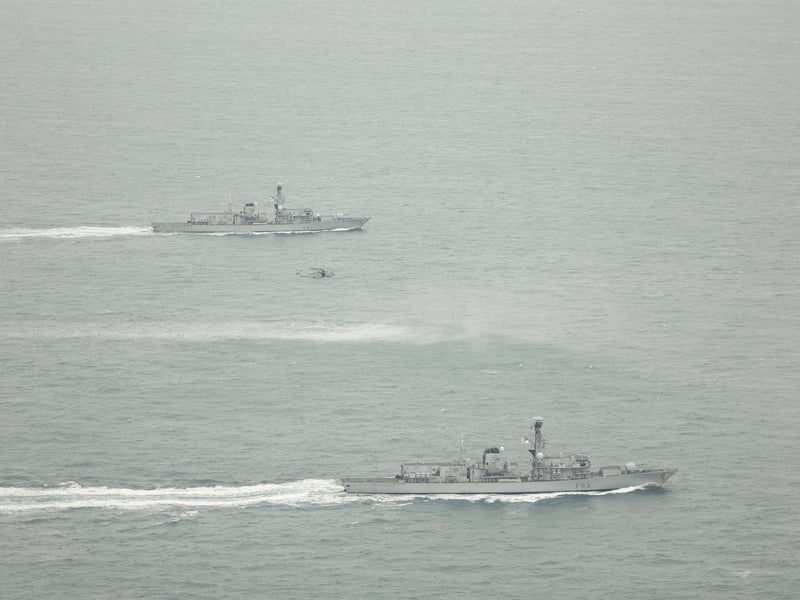
Separately, Type 23 frigate HMS Somerset intercepted Russian Udaloy-class destroyer Severomorsk and accompanying oiler Kama, near the coast of Brittany, France. The Type 23 frigate kept a watchful eye using her powerful array of radars and sensors through the Channel and into the North Sea. Sister ship HMS St Albans briefly joined Somerset as part of a formal handover, with the latter beginning four months of operations in the North Atlantic to monitor submarine movements and protect critical undersea infrastructure.
RFN Severomorsk was monitored over two days from March 31. HMS Somerset’s Commanding Officer, Commander Matt Millyard, said: “Since returning from operations in December 2025, an incredible amount of work has gone into preparing HMS Somerset to reassume the Op Ceto duty again and I am very proud of the crew for achieving so much in such little time. The months ahead promise to be a complex mix of tasking for the ship but we are ready and look forward to the challenge.”
Several Russian shadow fleet vessels have been spotted in the English Channel in recent days. This follows prime minister Sir Keir Starmer announcing that the armed forces could seize illicit ships that were funding Vladimir Putin’s war economy.
As reported by the Daily Telegraph, RFN Admiral Grigorovich - armed with anti-ship cruise missiles and surface-to-air ballistics - sailed between two 600ft tankers Universal and Enigma shortly after 9am on April 8, as they headed west toward Plymouth. Universal reportedly departed from the Russian port of Vysotsk on Jan 18.
The national publication said the tanker is believed to be on a mission to deliver crude oil to bolster Moscow’s war economy. It added that In September, she was outlawed in British waters for attempting to “destabilise Ukraine or undermine or threaten” Kyiv by exporting oil from Russia to fund its invasion.
The Cameroon-flagged Enigma was bound for Turkey, having left port at Primorsk, north of St Petersburg, on March 29. She was sanctioned by the UK in May last year for being part of the shadow fleet. Two other sanctioned Russian tankers – the Gambia-flagged Desert Kite and the Kousai from Sierra Leone – sailing through the Channel in the opposite direction, having entered on the evening of April 7.
Ships in Putin’s shadow fleet often travel under the guise of another country to avoid sanctions. The Royal Navy and the National Crime Agency could be deployed to capture the tankers, using a legal justification from sanctions legislation passed in 2018.
Special forces personnel from the Special Boat Service and SAS could potentially seize them should armed guards be seen, and Royal Marines could board them if they are not posed to be a threat. The Daily Telegraph reported that more than 300 ships from Putin’s shadow fleet have sailed through UK waters since January.
5. Putin ships and submarine stalked by Royal Navy
HMS Mersey tracks RFN Admiral Grigorovich and Kilo class Krasnodar1 | Royal Navy
6. Putin ships and submarine stalked by Royal Navy
HMS St Albans nearest and HMS Somerset in the background with 814NAS Merlin helicopter in between | Royal Navy
7. Putin ships and submarine stalked by Royal Navy
Kilo class Russian submarine Krasnodar | Royal Navy
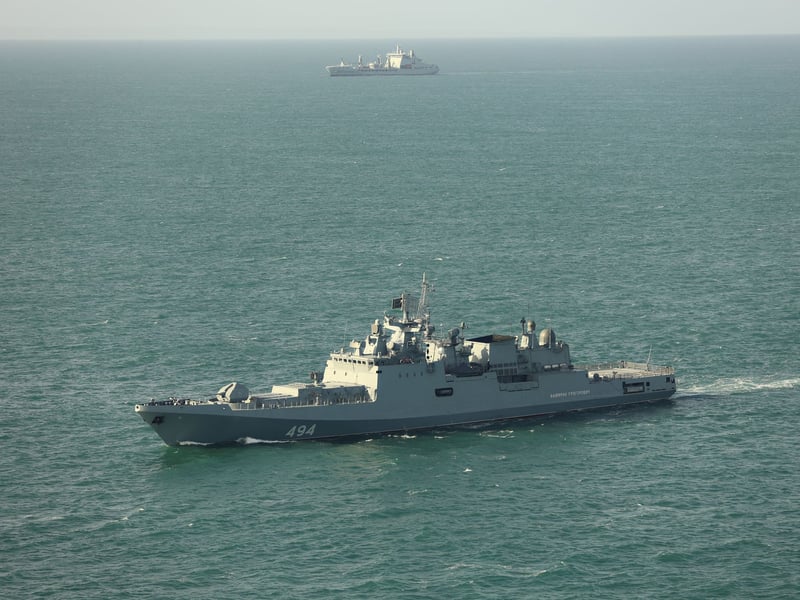
8. Putin ships and submarine stalked by Royal Navy
RFA Tideforce monitors RFN Admiral Grigorovich | Royal Navy