
'You need balance': Ex-Royal Navy sailors question Reform blockade policy after Portsmouth migrants incident

Questions were raised about the Royal Navy could practically deal with small boat crossings without the dereliction of other duties
Former Royal Navy personnel have questioned the viability of Reform UK’s suggestion that sailors could stop migrant boat crossings.
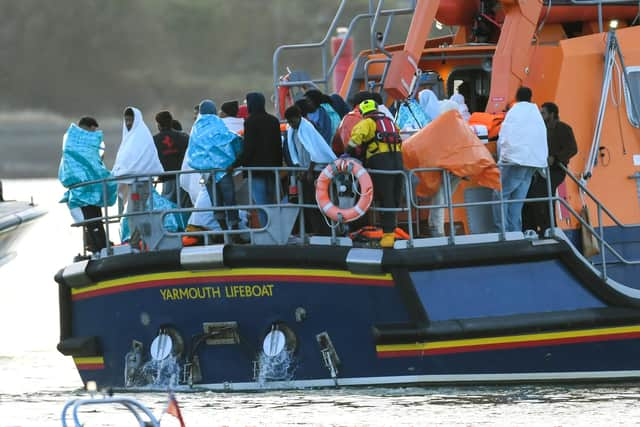
Calls for the military to stop asylum seekers being ferried to the UK have grown louder after a vessel carrying 120 migrants arrived at Eastney on Sunday evening (September 6).
But experts have said that more resources would be needed for this to be an option and that it would not be able to carry out this task at the same time as carrying out crucial military operations around the globe.
The arrival of migrants at the weekend sparked protests, with masked men wearing black shirts joining local residents in attempting to block coaches transporting migrants to a processing centre in Kent, obstructing the route leading away from the RNLI Portsmouth Lifeboat Station.

Photos showed police carrying riot shields forming a line and protecting a number of coaches that were parked up. Hampshire and Isle of Wight Constabulary said seven officers were injured during clashes with demonstrators, a number of who we wearing balaclavas and face coverings, adding that stones and bricks were thrown at them.
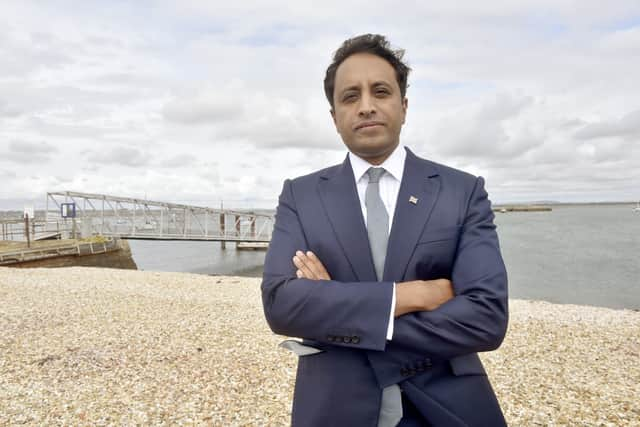
The incident prompted a media frenzy in Portsmouth the following day. Reform UK’s spokesperson for home affairs, Zia Yusuf, said the party would set up a Royal Navy blockade and not let “one unauthorised vessel” reach Britain. He added that it was the “first time I’ve seen the state offer a police escort to men who are invading Britain, and I use my words advisedly there.”
The government’s position has been the navy should only be involved in defence-related tasks, and shouldn’t deal with migrant crossings. Mr Yusuf said former some Royal Navy personnel have backed Operation Fortress, but questions have remained about how this can actually be implemented.
“We ought to protect ourselves”
Former Petty Officer Mike Tuttiett, who served between 1974 and 1991, told The News: “We have a Royal Navy to protect our shores and we ought to protect ourselves in the first instance, but we must consider the world picture. You’ve got to balance it.
“A lot of people in this country would say we should protect our shores first before others. Have we got the fleet to do it? I doubt it. Have we got the small boats needed to do it? I doubt it. We have small patrol aircraft but they’re dotted around in the Falklands, Caribbean, and Far East. It’s a hard thing to decide whether we should or shouldn’t.”
PO (RET) Tuttiett, who served in the Falklands War on HMS Bristol, also worked for the border force at Portsmouth International Port. He said the border force isn’t fully equipped to deal with the extensive patrols necessary, which could stretch from Holland down to the Channel Islands.
He added that a lot of grey areas need to be ironed out for the policy to work. “The question is, what do they do? Do they pick them up and bring them here, or just take them back to France? Would France accept them? Through diplomatic channels, it would take years to sort out.
“Knowing the government and how they work, it would be very slow. Nigel Farage said he would stop the boats in 100 days, but whether he can is very hard to say. What boats will be used? Who is going to man them? Where are they going to come from?”
The Royal Navy is under increasing pressure to meet various tasks globally. One closer to home includes monitoring Russian activity in the English Channel, which has increased by 30 per cent in the previous two years.
Warships spent 21 days in July tracking Kremlin vessels. The Ministry of Defence (MoD) said in its annual report that Royal Navy vessels had been “activated” 116 times in the year to March 2026, shadowing 61 Russian warships and 28 merchant vessels around the UK’s waters.
Then there is the size of the fleet to consider. Three of the current crop of River-class offshore patrol vessels - HMS Tyne, Severn, and Mersey - are due to be retired in 2028 and little has been said of replacements. Other River-class ships are deployed in the Indo-Pacific, Falkland Islands, and elsewhere.
Rules of engagement
Commander Mark Dickens, great-great-grandson of Charles Dickens, served as a submariner between 1974 and 2001. He said: “It’s a political problem, so in order for the Royal Navy to handle that, personnel would need to be given the tools and the rules of engagement. What can they actually do at the moment?
“I’m a great believer in small craft, and you’ll need many more of them. You can only do so much with the fleet you have. If you need to give the Royal Navy political tasks, you need to equip them properly as there will be no force involved. We’re finding it difficult to meet all our requirements at the moment.
“We need to increase defence spending and return the fleet to where it should be. It’s easy for someone in an armchair to say we need to do these things, but we need to look at the resources and how we’re going to do it.”
When asked if he believes Reform or Labour will increase defence spending, he added: “I’d like to think politicians keep to the statements they make, but whether they do is a different matter.”
Deterrent
Marine Engineer Mechanic 1 AMC Steve Audley, who served on HMS Glamorgan during the Falklands War, said the Navy has the capacity to deal with it but wouldn’t achieve much more than border force due to the limits of the law.
“The only possible thing is there might be a deterrent. What capacity do the River-class ships have to influence whether the migrants turn up? It remains to be seen. If the prime minister or the King turned round to The First Sea Lord and said ‘I want the navy to conduct xyz under jurisdiction to turn them back to France’, the Royal Navy can do it.

“I personally as a captain of a ship would have no problems following orders from government or king, but it’s about what do I do with these migrants? Where would I take them and put them? There’s only so many places you can take them.”
Former Royal Navy Lieutenant Commander and Conservative district councillor, Mike Critchley, believes Royal Marines can be deployed to deflate migrant dinghies. The Gosport native added: “There can’t be loss of life, but the marines can use a knife to sink the boats.
“If we can sink a few, then word would filter out and there would be a stop to this long-running saga. I have no problem with legal immigration, but this illegal nonsense is the problem. If they can get brought off the deflated dinghy, and on a lifeboat, that would send a message.
“The Royal Marines can do it, it just needs the political will to do it. These people are human beings, but you don’t know who these men are.”