
Royal Navy ramps up tests of its fleet or drone lifesavers in Portsmouth
ROBO-rescuers have flown into action to help save Royal Navy sailors from drowning.
Remotely-piloted drones have been put through their paces during a series of hi-tech man overboard drills.
The state-of-the-art pieces of kit – currently being tested by navy tech in Portsmouth – can be used to locate sailors who fall into the water.
But vitally, the heavy-lift Minerva drones can hover above the sailor and drop life-saving equipment until rescuers arrive.
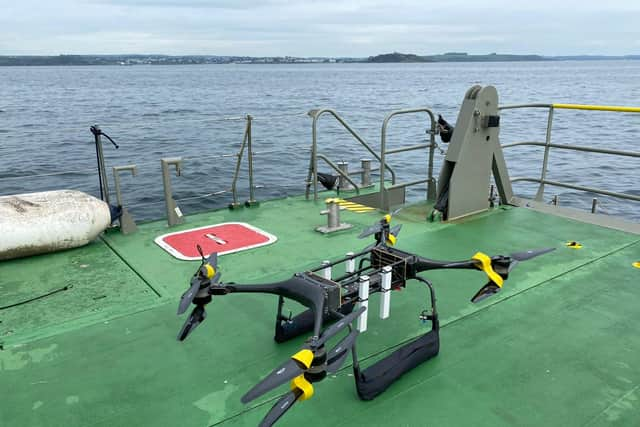

Over the past few months members of NavyX – the Senior Service’s special tech team – have been carrying out tests at both the Royal Navy’s Diving School at Horsea Island, Portsmouth, and at sea on a civilian boat.
First a Minerva T-150 drone was successful in locating a dummy in the water at Horsea Island, deploying a test package which could one day contain a life raft and hovering above the dummy to signpost their location.
Royal Navy crews perform extensive ‘man overboard’ drills, ensuring they can quickly and effectively rescue anyone at sea.
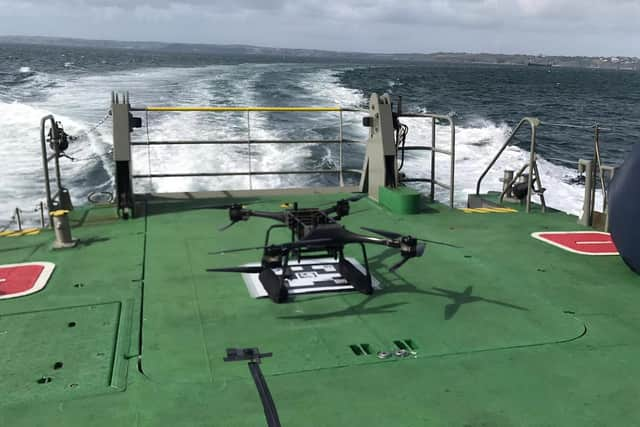
But it’s hoped the introduction of drone rescue bots will mean help in increasing the chance of quickly finding and saving sailors when they fall.
The drones could be armed with thermal imaging cameras making it easier to pick out stranded sailors at sea and would hover above its target until rescue boats arrive.
For the past 18 months, the Senior Service has been ramping up it’s testing of drone kit.
Recently, a drone spy boat has been carrying out tests in the Solent.
Other drones have taken to the skies, too, with the Royal Marines during training operations in Norway and Cyprus, where they were used to deliver ammunition and other supplies to Commandos on exercise.
Aircraft carrier HMS Prince of Wales has previously been earmarked as a testing ground for future naval drone tech.