
"A bold strategy": Call to secure stealth combat drones for HMS Prince of Wales and HMS Queen Elizabeth

High-tech drones will soon become a regular feature on the Royal Navy aircraft carriers.
The Ministry of Defence (MoD) has taken the next step to secure more autonomous systems for HMS Prince of Wales and HMS Queen Elizabeth. A Prior Information Notice (PIN) has been published by Defence Equipment and Support (DE&S), setting out a two-year-deal worth up to £20m.
The contract is linked to the Autonomous Collaborative Platform (ACP) programme, which aims to bring in drones and other un-crewed systems for the RAF. A statement on the MoD website said: “This bold strategy recognises a new way of doing things: our partnerships and the innovation we are seeking to harness will provide us with a force multiplier. The approach will augment and enhance our existing capability and provide us with the opportunity and means to learn, develop and fight faster than our adversaries.”
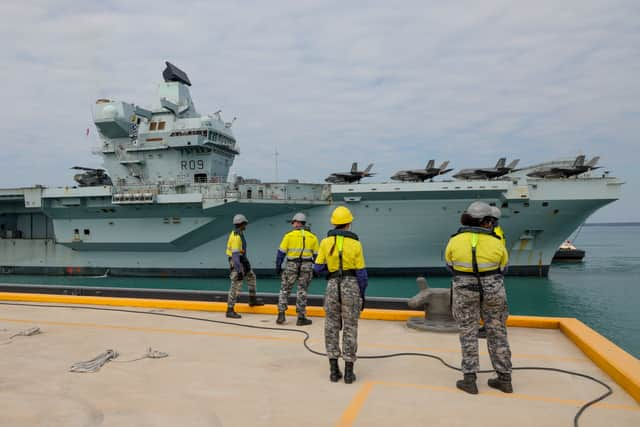

Businesses are asked to sign up for the second tranche of the programme. A tranche is a portion of something, with this second batch of drones contributing to the whole amount being procured by the government.
The notice for the second tranche said the systems must be “designed to operate in collaboration with the fourth-, fifth- and future generations of combat aircraft and to operate from the UK aircraft carriers”. Coverage in the UK Defence Journal described this as marking “a significant ambition to extend un-crewed combat capabilities into the maritime domain”, particularly from the Queen Elizabeth-class carriers.
The Strategic Defence Review set out plans to implement various drones and autonomous systems on HMS Prince of Wales and HMS Queen Elizabeth. Malloy T-150s are currently being used for transporting goods between ships on the UK Carrier Strike Group (UKCSG) as it continues Operation Highmast.
As previously reported in The News, Labour defence peer Lord Vernon Coaker said: “For the Royal Air Force, Protector and Storm Shroud are entering operational service this year. For the Royal Navy, the Concept of Hybrid Carrier Air Wings continues to develop to greatly enhance the striking power of our carriers.
“Molloy T150 un-crewed rotary wing logistics support air systems have deployed as part of OP HIGHMAST. The Peregrine rotary wing system has also entered operational service in the Gulf. Development continues on un-crewed surface vessels and un-crewed underwater vehicles. Further systems are under development or undergoing trials in a range of roles across both services. This will continue to be accelerated, with further workstreams through the Defence Investment Plan.”