
Royal Navy: "Versatile" P2000 small patrol boats assigned to Nato Baltic mission facing swarm of drones

“Versatile” Royal Navy patrol boats from Portsmouth will be fending off swarms of drones during a Nato mission.
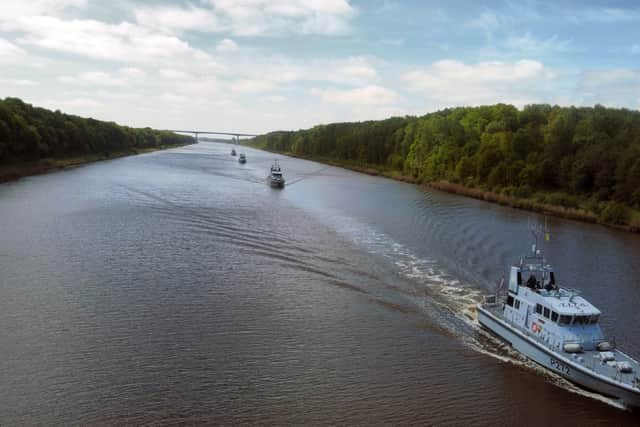
Six P2000 craft have sailed to the Baltic to play their part in one of the alliance’s principal exercises. Portsmouth-based Archer-class craft HMS Dasher, Pursuer, and Archer - as well as HMS Smiter, Example and Biter - will spend the next six weeks taking part in an array of trials.
Some of these will involve joint training with Nato allies who are trialling and operating autonomous underwater vessels and aerial drones. Lieutenant Sophie Tulloch, Commanding Officer of HMS Biter, said: “There’s also a huge range of experience among the ship’s companies with it being some personnel’s first days at sea and first operational deployment.

“Not only do they get hands-on exposure to a live multi-national exercise, but the P2000 are also small enough to explore and make the most of ports in countries all over the region.”
What will the ships be tasked with?
BALTOPS - Baltic Operations - is a security mission which has been running for more than half a century. The aim is to test the ability of Nato allies and partners to work together side-by-side in the region.
This 2025 iteration of the exercise is spread across an area from Jutland and the Great Belt in the West to the Bay of Gdańsk: covering an area of roughly 40,000 square miles. Two of the P2000 patrol vessels will work with the Royal Navy’s Mine Threat and Exploitation Group. They will be used as launchpads for the latest robot tech monitoring the underwater battlespace through unmanned underwater vehicles (UUVs).
The rest of the Coastal Forces Squadron personnel will work in trials of US Navy surface and aerial drones. Unmanned air vehicles (UAVs) will be “harassing other participants to test their abilities to fend off waves of swarm attacks,” the Royal Navy said.
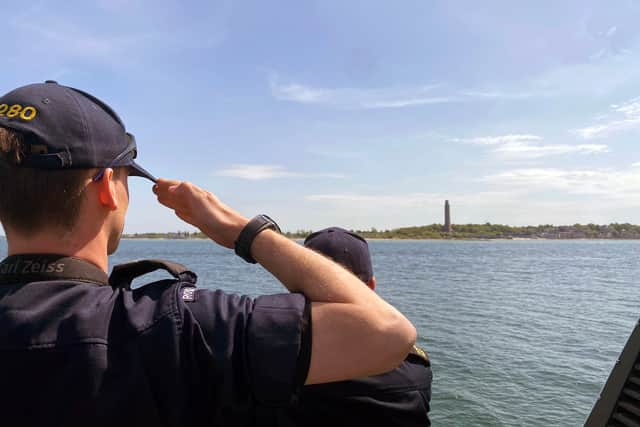
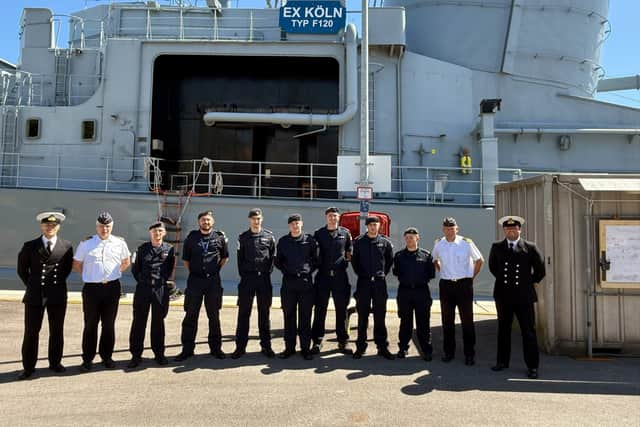
Even though the exercise takes place in the Baltic, it’s directed from Nato’s headquarters in Lisbon. Coastal Forces Squadron staff will aid in directing BALTOPS, while additional UK personnel will operate from Ustka on Poland’s Pomeranian coast where some of the most dynamic phases of the training will take place.
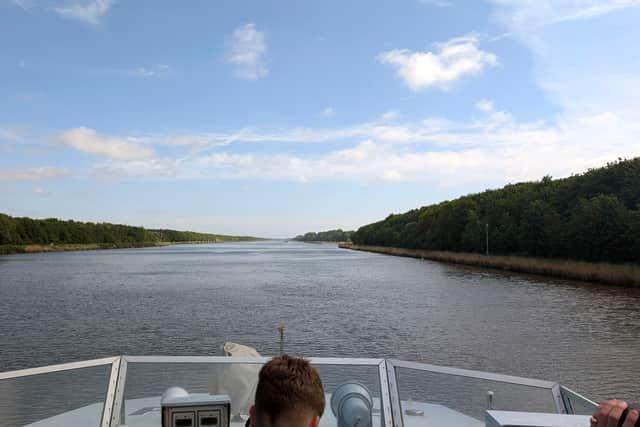
Training has begun for the personnel after the patrol boats after sailing through the Kiel Canal. The relatively limited range and facilities on board the patrol craft means they typically put into port every night – and their size allows them to visit smaller harbours unable to accommodate larger warships. It means the time in the Baltic for the 30 or so personnel deployed with the detachment can cram a wide variety of experiences, cultures and sights into a few weeks.
CO Tulloch added: “The vessels themselves are remarkably versatile – as well as our regular role playing opposing forces, there’s a huge focus on unmanned underwater and surface vehicle presence – for which P2000 are an ideal platform.”