
No current plans to fit laser weapons to HMS Prince of Wales and HMS Queen Elizabeth despite rollout on ships

Defensive laser weapons will not be fitted to the Royal Navy aircraft carriers despite the technology being rolled out to other ships in the fleet.
Lord Vernon Coaker revealed the move while responding to a parliamentary written question from former First Sea Lord Admiral Lord West. The government is currently investing in energy weapons to deal with emerging threats such as drones, prompted by the action that HMS Diamond faced in the Red Sea in 2023 and 2024.


When asked if HMS Prince of Wales and HMS Queen Elizabeth will be fitted with defensive lasers, Lord Coaker said: “The Queen Elizabeth Class (QEC) aircraft carriers were designed with adaptability in mind, enabling capability upgrades throughout their service life.
“This flexibility ensures the Royal Navy can integrate emerging technologies and maintain operational advantage. The Royal Navy remains committed to building combat mass while staying at the forefront of innovation.”
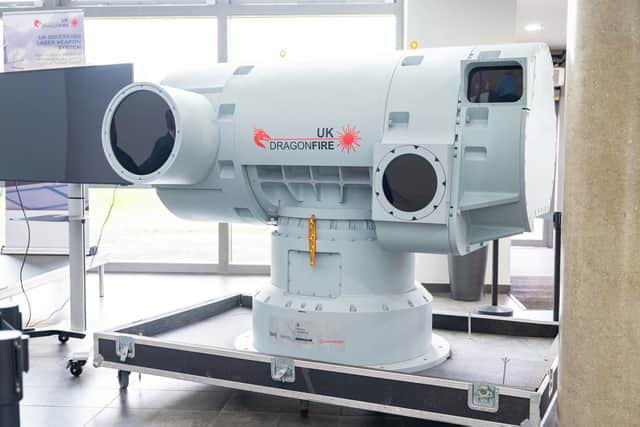
The laser directed energy weapon known as DragonFire is due to be fitted to Type 45 destroyers. Expected to be operational in 2027, these beams are capable of zapping a £1 coin from a mile away and can be fired at un-manned aerial vehicles (UAVs) at cost of just £10 per shot.
Lord Coaker said the “cutting-edge capability” will be used alongside the aircraft carriers as part of the Carrier Strike Group. He added that the armed forces will continue to enhance layered defence and future proof the fleet against evolving threats.
The government announced it was investing £140m into drones and counter drone technology earlier this year. Shadow defence secretary James Cartlidge asked the government if any contracts have been placed for additional laser weapons.
Parliamentary Under-Secretary for defence, Al Carns, said the funding is helping the Ministry of Defence (MoD) stay at the forefront of such technology by continually improving systems and sub-systems, with further research and development being undertaken.
“This will contribute to advanced future capabilities across laser and radio-frequency (RF) systems across all domains, that will come into service on a longer timescale, building on the learnings we take from accelerated capabilities like DragonFire,” Mr Carns added.
“The Defence Investment Plan will outline our future plans, and whilst we cannot comment on all contracts for security and commercial reasons, we are exploring DEW applications across many use cases, both within the MOD and with partners across Government.”