
Royal Navy minehunter from Portsmouth comes 'under attack' from US patrol boat during Gulf exercise
SAILORS from a Portsmouth-based minehunter were forced to defend themselves from ‘attack’ as they knuckled down to their first mission in the Gulf.
HMS Chiddingfold safely completed her 6,000-mile odyssey from Portsmouth Naval Base to Bahrain last week.
But the vessel was sent straight into action during an eight-day workout with American forces in the region.
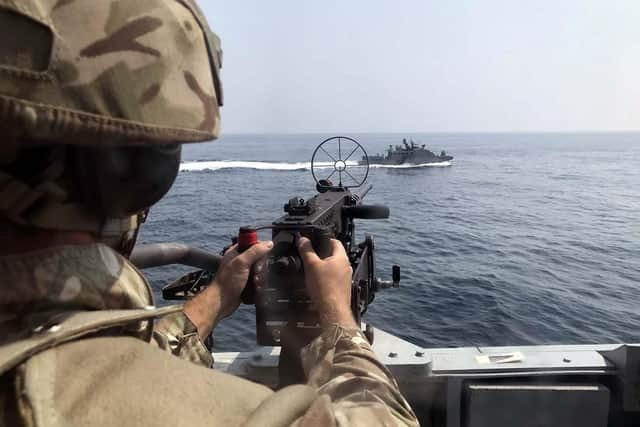
And the crew’s mettle under fire was tested by US Navy Mark VI patrol boats, who harassed them with mock attack runs while Chiddingfold attempted to clear dummy mines from the water.

Watching from Royal Fleet Auxiliary support ship RFA Cardigan Bay was Commander Richard Talbot, who is responsible for the navy’s mine warfare assets in the Gulf.
He said: ‘This exercise has been hugely important to choreograph and employ air, surface and underwater mine countermeasure capabilities required to defeat a potential threat.
‘It’s given our sailors and airmen and women a chance to work alongside one another, share knowledge and build on the already strong relationships we have.’
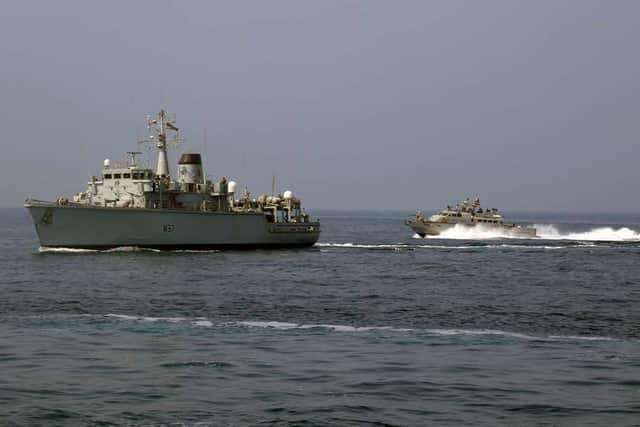
Minehunters are slow – 17kts top speed – and minehunting operations especially so as the ships crawl along at a couple of knots on safety grounds.
The patrol boats are nearly three times faster and armed with 25mm chain guns which can tear chunks out of the hunter’s glass-plastic hulls or crew, but the Brits successfully fought back with 30mm cannon, high-speed miniguns and SA80s rifles.
During the drills in the Gulf, the ‘Cheery chid’ worked alongside Faslane-based HMS Penzance – which travelled to the Gulf with them – to hunt out the dummy mines.
They were joined on the search by their American counterpart USS Dextrous, American explosive ordnance disposal technicians, similar to Royal Navy clearance divers, and huge HM-53E Sea Dragons helicopters which pull minesweeping sleds or sonar through the water.
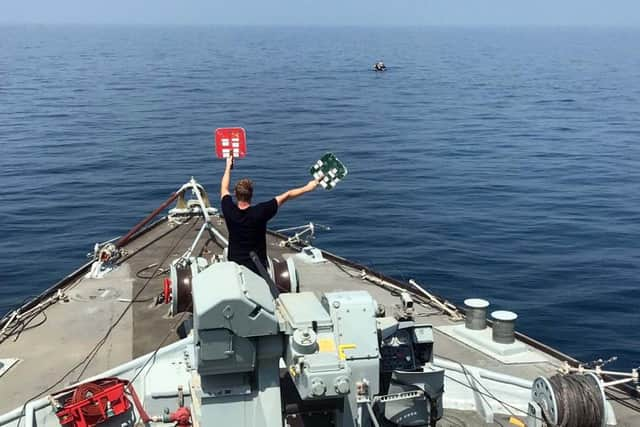
For the new arrivals it was a chance to acclimatise both to Gulf conditions and to working side-by-side with the US Navy.
HMS Chiddingfold left Portsmouth in June for the Gulf. She is due home in summer, 2023.