
Royal Navy is not banning the use of 'Seaman' amid sexism claims
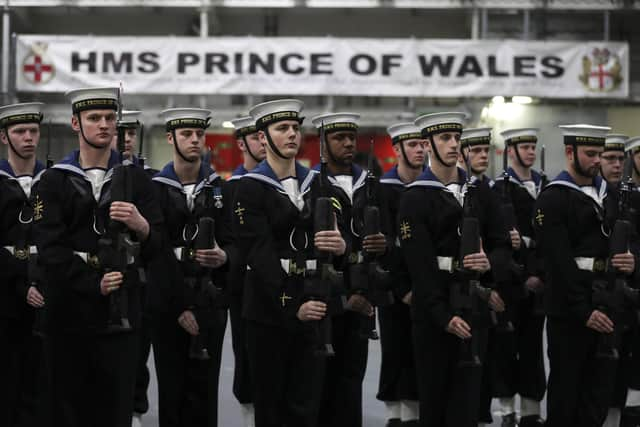
THE Royal Navy is not ditching the term ‘Seaman’ amid concerns about sexism, sources have insisted.
Military lingo like ‘manpower’ and ‘manning’ are being kicked into touch by the navy, sailors now being discouraged from using such phrases by naval top brass.
But contrary to national reports over the weekend, the term ‘Seaman’ is not being axed.
Sources within the navy have told The News such claims made by national newspapers are ‘largely inaccurate’ and that there were ‘no plans’ for the Senior Service to change the ‘Seaman’ rate.

Naval expert Mike Critchley, of Gosport – who was a former Lieutenant Commander in the navy, said: ‘The idea of Seaman being dropped would have been political correctness gone mad.
‘This is just so unnecessary. It just feels like people have nothing better to do with their lives.’
Admiral Lord Alan West, a former head of the Royal Navy, said the issue of sexism was something that needed to be addressed in all walks of life.
He added: ‘In a world where one has to be very careful with the use of words because in this very politically correct world it has a relevance.
‘What one mustn't do is use words that make anyone feel excluded.
‘But I hope that most of their attention is being paid at the moment to ensuring that we have sufficient ships, weapons and men to prevent war and if there is a war, to be able to fight and win.
‘Those things seem to me merit a huge amount of attention and it seems that quite often that we’re focusing more and more on things like the RAF changing its uniform and all those soft things, which are lovely, but they don’t actually help you when a war comes along.’‘
The navy has been using the term ‘Seaman’ for hundreds of years.
A system separating sailors into two rates, ‘ordinary’ and ‘able’, was introduced in 1652.
An able seaman was considered to be an experienced sailor familiar with their duties.
They would have to be at least 20 years old with five years of experience under their belt.
And they would be capable of taking on a greater range of tasks and responsibilities at sea.