
"Persistent damp, mould and rats": Lords demand civilian renters rights for Royal Navy, Army and RAF housing

Military families must have the same formal housing protections as civilian renters, peers have demanded.
The House of Lords backed a Liberal Democrat motion which would extend the decent homes standard to Ministry of Defence (MoD) accommodation. A vote took place in the chambers yesterday (July 15) and passed by 282 votes to 158, with the 124 majority defeating the government.

This setback for Labour comes as the Renters’ Rights Bill is being passed through the upper chamber. As part of the legislation, the government plans to bring the private rented sector within the minimum standard set for social housing - making sure properties are safe, warm, and have modern facilities.
Pressures have been mounting to advance this even further, extending it to Service Family Accommodation (SFA). Al Carns, Labour MP for veterans and people, recently visited Hilsea to analyse the state of armed forces housing and listen to personnel about their concerns.
The new Consumer Charter was issued to make sure problems can be fixed faster, and the upcoming Defence Housing Strategy seeks to issue reforms for military housing. Despite this, many problems still persist and accommodation is left in poor condition. Many of the houses acquired from Annington Property Limited in Portsmouth and Gosport were considered “unfit for human habitation”.
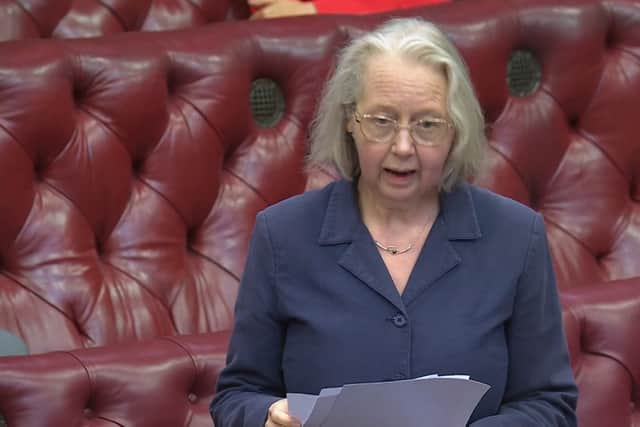
Speaking in the House of Lords on July 15, Liberal Democrat Baroness Grender said: “The current state of service accommodation is in many cases unacceptable. There have been persistent reports of damp, mould, rats, inadequate maintenance and poor communication. Satisfaction levels with service family accommodation fell to their lowest reported levels in 2023.”

She added: “This deplorable situation impacts recruitment and retention within our armed forces, undermining our national security in a time of global uncertainty. Applying the decent homes standard through the Renters’ Rights Bill would provide a clear, legally binding benchmark for acceptable housing quality for service family accommodation.
“It would ensure accountability and establish a right to a decent home for those who serve our nation. Pride in our armed forces must mean pride in how we house them. We owe it to them to guarantee in the strongest possible terms that their homes meet a basic, dignified standard. This change would be a powerful and lasting declaration of our commitment to our service personnel and their families, and they deserve nothing less.”
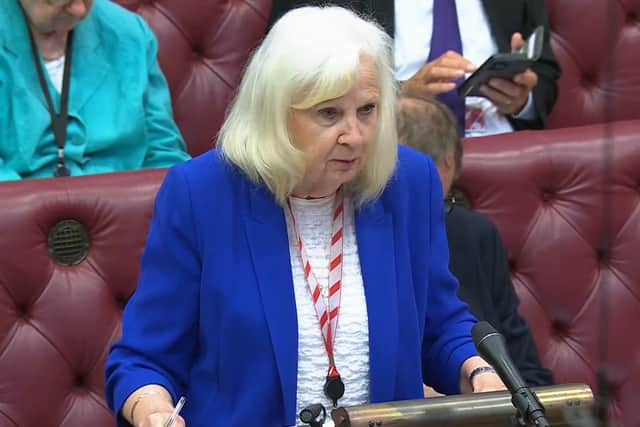
Crossbench peer Lord Stirrup, former senior RAF Commander and Chief of Defence Staff, said he has seen the deficiencies of military houses for years. “For years, I have listened to successive Governments undertake to get to grips with the issue,” he added. “For decades, I have seen them fail to do so, not because they do not care – of course they care – but because of budgetary constraints, institutional inefficiencies, bureaucracy and other organisational issues.
“I served in the military for 43 years and I have been out of it for nearly 15 and yet, the problems persist. So why should I, or anybody who comes after me, put any faith in any Government’s promises that are not backed up by enforceable measures? We have been told that we should not worry too much, because 90 per cent of service families’ accommodation meets or exceeds the decent homes standard already. Well, even if that is so, does the Minister think that one in 10 service families living in substandard accommodation is acceptable? I do not.”
Responding, housing minister Baroness Taylor of Stevenage said: “No one, especially me, is going to disagree that those who defend our country deserve to live in decent homes. The Government absolutely recognise that action is required to tackle the poor state of forces’ housing. That is why we are already taking decisive steps to remedy the situation that we have inherited.”