
"One step closer": HMS Trent tests crucial new systems on helicopter flights before Royal Navy drug-busting op

Brand-new systems have been tested on a Royal Navy warship ahead of a crucial drug-busting operation.
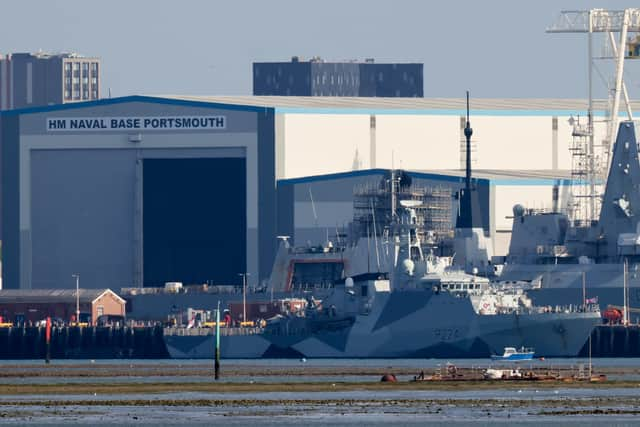
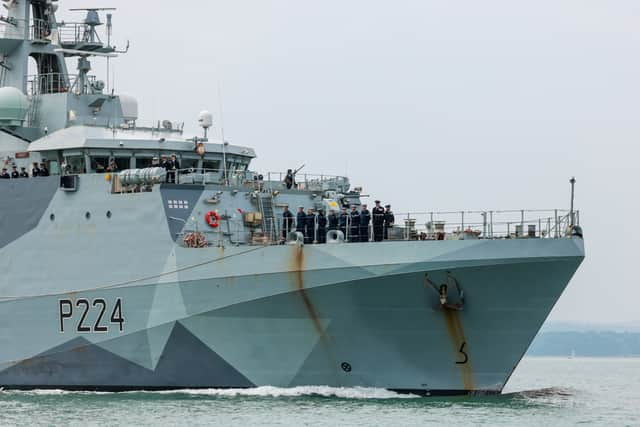
Sailors aboard HMS Trent tested its technology for guiding helicopter pilots in rough seas and night operations. The River-class offshore patrol vessel, which returned to Portsmouth on Monday after spending five years away, is due to once again be deployed to the Caribbean.
Lieutenant Harry Jukes, Weapon Engineer Officer, said: “This is a major milestone in Trent’s regeneration and brings us one step closer to returning to the Caribbean later this year. The last few days have seen a significant effort from the crew as we conducted flying trials – both by day and night – to validate our aviation systems and procedures, ensuring we’re ready to support missions including counter-narcotics and humanitarian aid.”

What is the new technology on HMS Trent?
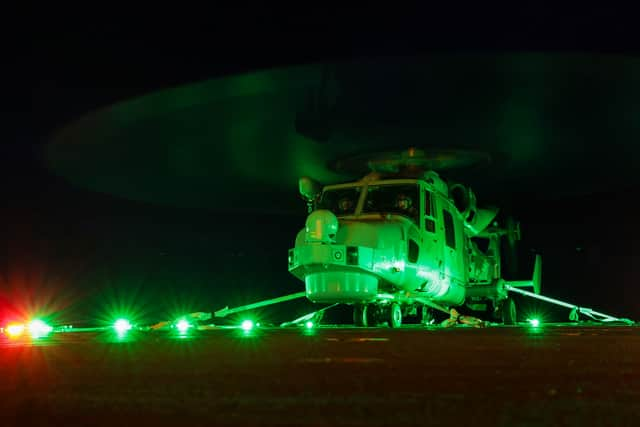
Pilots carried out three days of concentrated flying operations with a Wildcat attack helicopter to test a new lighting setup known as a Helicopter Visual Landing Aid System (HVLAS). This provides a guide for pilots to land onto the ship’s flight deck in adverse conditions or at night.
The HVLAS consists of a stabilised horizon light bar and glide path indicator, which feeds valuable information to pilots during approach and landing. Additional lights have also been installed on the flight deck, highlighting the edges so pilots know where to land. Laser eye-lines have been fitted so aircraft can end up in precisely the right spot.
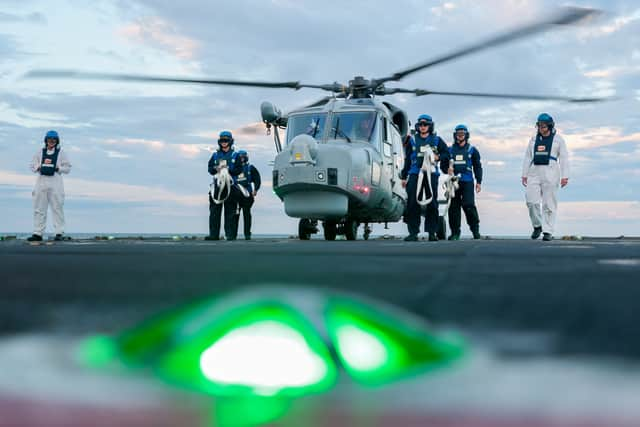
The system is fully compatible with night-vision devices. HMS Trent does not carry a helicopter, but she regularly works with US Coast Guard personnel on anti-smuggling patrols in the Caribbean Sea. Sailors also host regional military and emergency service personnel when carrying out disaster relief operations at British Overseas Territories, particularly during hurricane season.
Lt Jukes added: “The lighting system is a brand-new type to the Royal Navy and the offshore patrol vessels. For a start we have a new stabilised, horizon bar, which is showing the pilots where the horizon is regardless of how much the ship rolls or pitches.
“The brand-new stabilised glide path indicator provides information to the pilot on what angle to come into the ship at. The new flight deck lights are particularly good, as we are able to change their intensity such that when the pilot is coming in on approach, they are not hindered by the brightness, particularly when using night vision compatible devices.”
HMS Trent completed intensive Operational Training and Assessment drills, which determine if a ship is ready for frontline duties. Recent trials were the first time the ship worked with a Wildcat helicopter in three years. Fleet Operational Standards and Training (FOST) personnel put officers and sailors through their paces before the flights.
The new deck lighting and fuel delivery systems were tested under live conditions, replicating real-world scenarios and emergency procedures. Final preparations will be made at HMNB Portsmouth ahead of the deployment. HMS Trent spent the last decade patrolling the Mediterranean, West Africa and the Caribbean, but has been closer to home testing her upgrades which was fitted during a stay in Malta.