
'Freedoms' upheld by Royal Navy's HMS Spey as sailors defy Beijing warnings and patrol South China Sea

Xi Jinping’s regime has warned Britain on several occasions about such patrols
Determined Royal Navy sailors have conducted patrols in a vital shipping area despite warnings from China.
Portsmouth-assigned patrol ship HMS Spey was seen conducting operations in the South China Sea this week. A Ministry of Defence (MoD) statement said the River-class vessel “exercised navigation rights and freedoms around the Spratly Islands in the South China Sea” in accordance with the United Nations Convention on the Law of the Sea.
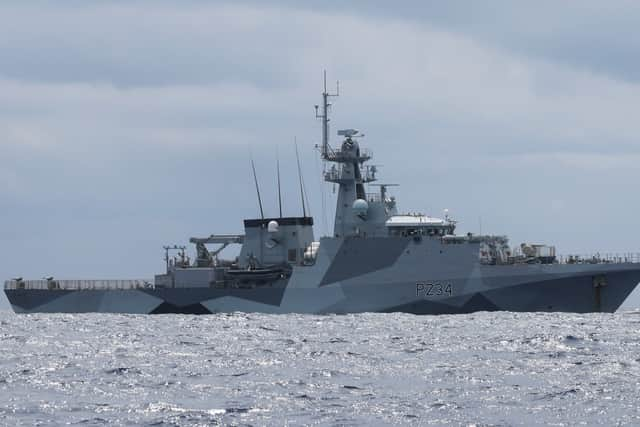

“The UK is committed to international law and to upholding a free, open and stable South China Sea,” the government body added.
This follows on from a series of sailings in 2025 where HMS Spey upheld freedom of navigation rights despite China’s protests. Last year saw her transit through the Taiwan Strait, the first time a Royal Navy vessel has done so since 2021. This was ahead of HMS Prince of Wales’ Indo-Pacific deployment, which saw the UK Carrier Strike Group (UKCSG) conducts similar manoeuvres in the South China Sea and Taiwan Strait.
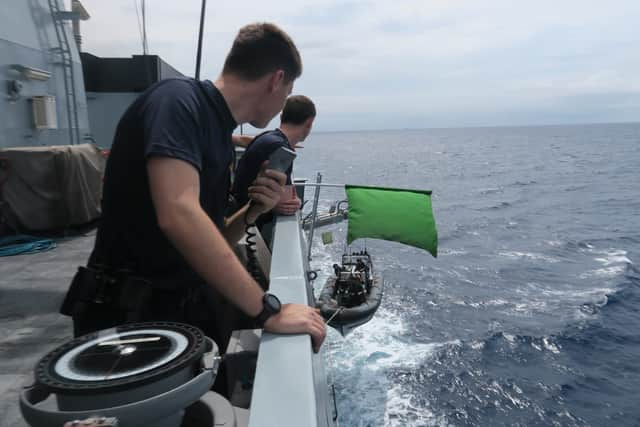
Sharp responses from Beijing followed. Senior Captain Liu Runnke, PLA Eastern Theatre Command Navy spokesperson, said the UK’s remarks about the freedom of navigation distorted legal principles and confused the public. He added that the Taiwan Strait transit was deliberately intended to disrupt the situation and undermine peace and stability in the region. Beijing’s military proceeded to carry out “constructive kill” drills - simulated missile attacks - on the UKCSG in the South China Sea.
The Spratly Islands, spread across 409,000 square kilometres, represents on of the most divisive territorial disputes on earth. China, Taiwan, Vietnam, Malaysia, the Philippines and Brunei all claim some of it, or all of it. This is due to historical occupation, proximity, and exclusive economic zone rights.
The Royal Navy conducts regular freedom of navigation patrols in the Indo-Pacific and elsewhere. A 2016 ruling from the Permanent Court of Arbitration in The Hague said the South China Sea is governed by international maritime law and is not under the complete control of Beijing.