

The crew aboard HMS Lancaster got their hands on Peregrine during missions in the Middle East. On its operational debut, it was used to monitor several board and search operations while Royal Marines boarded suspect dhows, seizing drugs and other contraband.
Commander Sam Stephens, Lancaster’s Commanding Officer, said the Peregrine operations with his ship marked “a key milestone in the evolution of the Royal Navy’s un-crewed capability”.
He added: “Integrating this force-multiplier into the longest-serving operational Type 23 frigate whilst deployed on operations is a significant achievement. This is just the start, as we continue to unlock the game changing capability with every flight, gaining the advantage over smugglers and adversaries alike”.
Peregrine is three metres (10ft) long and capable of conducting sorties lasting up to five hours. It recently conducted sweeps of the Indian Ocean and Gulf of Oman looking for drug runners in the colloquially named “Hash Highway”.
Peregrine has been launched on sorties by day and night, scouring hundreds of square miles of ocean on every flight. Data was then fed to HMS Lancaster’s crew, with live radar pictures and imagery directly beamed onto displays in the operations room.
AB(AWW) Bradley Morris said: “Being part of the team that used Peregrine in our counter-narcotics operations was a fascinating experience. The clarity of the images we obtained from miles away was impressive and highlighted the advanced capabilities we have at our disposal. It's exciting to see how technology is enhancing our operations at sea."
The drone is best used on long and demanding surveillance missions, freeing up the frigate’s crewed Wildcat helicopter to conduct interdiction or strike missions. It has also operated concurrently with the aircraft.
Lt Cdr Rob Guest, in overall charge of both the Wildcat and Peregrine embarked on the frigate, said: “Combining the maritime expertise of the Wildcat Flight with the development and integration of un-crewed air systems has been a crucial catalyst in providing the Command team with additional assets that complement the existing capabilities - a combination that is producing promising results for the future.”
Peregine requires a pilot to fly the drone on each mission. The mini helicopter is a Royal Navy-specific variant of the civilian Schiebel S-100, equipped with UK military tech: radar and an infra-red/electro-optical camera giving it the ability to ‘see’ at night and in poor visibility as it moves over the ocean at speeds up to 125mph.
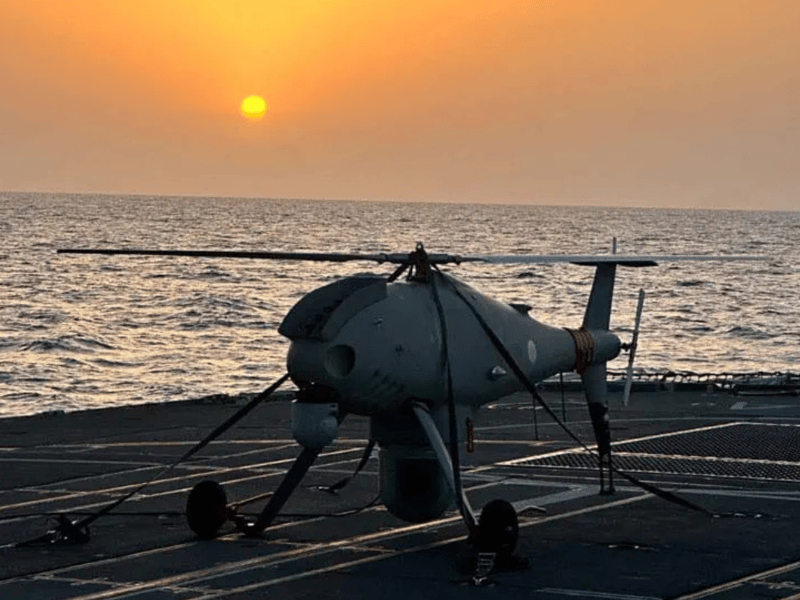
1. HMS Lancaster mini helicopter drone
"Game-changing" mini helicopter drone Peregrine has been tested for the first time during narcotics operations conducted by HMS Lancaster off the coast of Bahrain. | Royal Navy
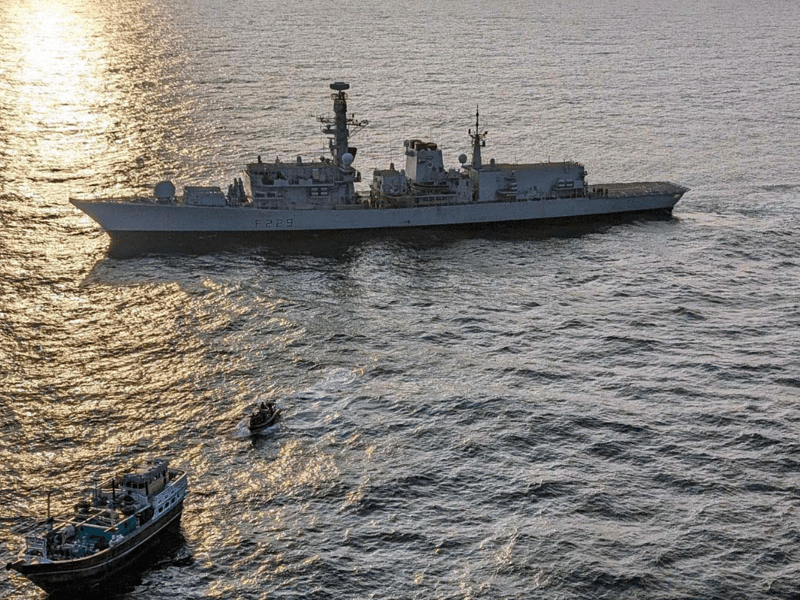
2. HMS Lancaster mini helicopter drone
"Game-changing" mini helicopter drone Peregrine has been tested for the first time during narcotics operations conducted by HMS Lancaster off the coast of Bahrain. | Royal Navy
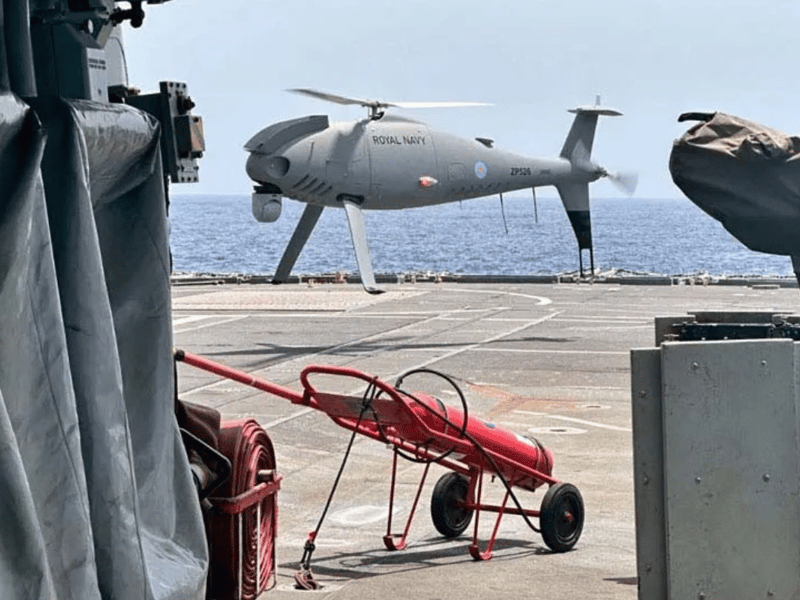
3. HMS Lancaster mini helicopter drone
"Game-changing" mini helicopter drone Peregrine has been tested for the first time during narcotics operations conducted by HMS Lancaster off the coast of Bahrain. | Royal Navy
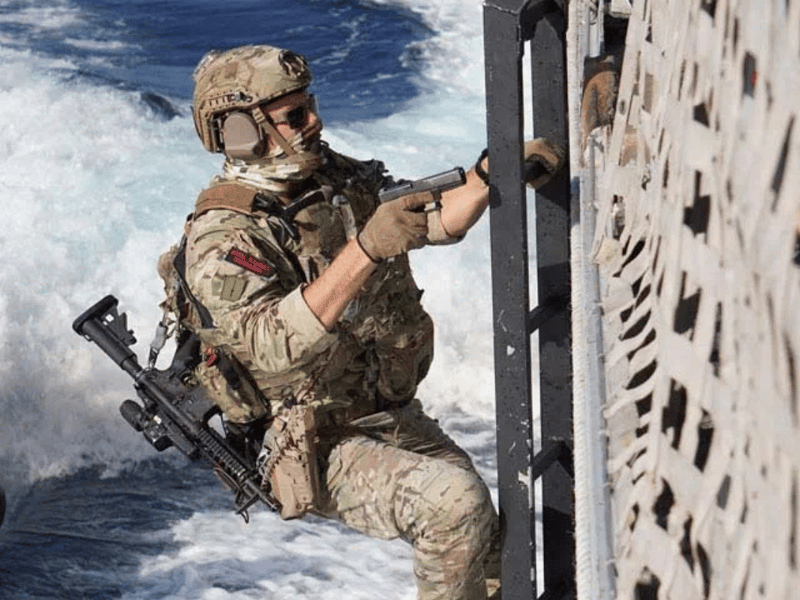
4. HMS Lancaster mini helicopter drone
"Game-changing" mini helicopter drone Peregrine has been tested for the first time during narcotics operations conducted by HMS Lancaster off the coast of Bahrain. | Royal Navy