
Uncertain 'hollow threat' looms over Royal Navy’s HMS Dragon as Middle East op aims to solve ‘catastrophe’

The Type 45 destroyer will be an integral part of a multinational force aimed at keeping the Strait of Hormuz open when the Iran war ends
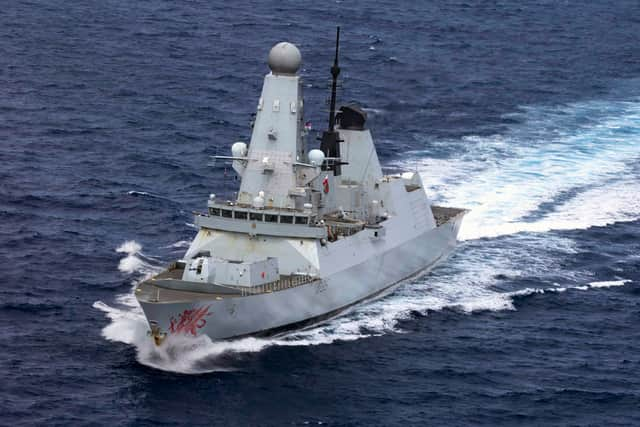
Menacing threats from Iran and an uncertain future faces a Royal Navy warship ahead of her Middle East operation.
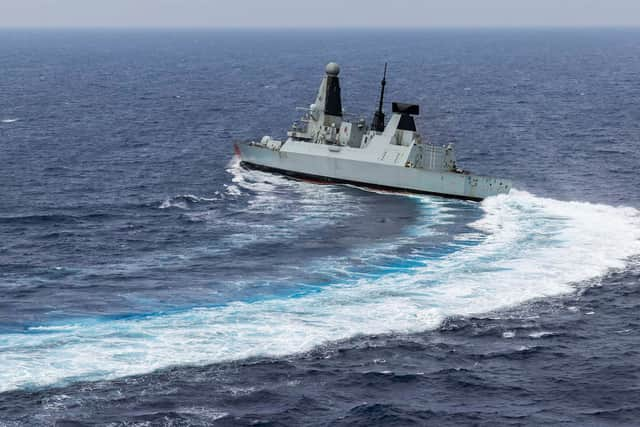
HMS Dragon is pre-positioning near the Strait of Hormuz, ready to act alongside a French multinational force to keep the strategic waterway open once the Iran war ends. A brittle ceasefire between US-Israeli forces and Iran is just about holding, but peace talks are failing to create any solutions.
The Type 45 destroyer and her French counterparts, headed up by the huge aircraft carrier FS Charles de Gaulle, is not expected to fully deploy until the conflict ends. Despite this, Iran’s deputy foreign minister Kazem Gharibabadi warned that Tehran will act in a “decisive” manner if the force intervenes in the region - with them being met with a decisive and immediate response.

Dr Dafyyd Townley, Senior Teaching Fellow at the University of Portsmouth and leading expert on US-UK politics, said Tehran wants to remain authoritative amid an unclear leadership structure. He told The News: “Iran doesn’t have to target the UK and France home territory to pose a security risk. Both nations have interests in the Gulf, militarily and commercially, and Iran can target those through missile launches or proxy groups.
“Iran is trying to ensure it has leverage in the negotiation process. It wants to make sure it’s not impacted severely in terms of its capabilities in the region. If there was a convoy group put together by France and Britain, that would challenge Iran. The Americans have diminished their attacks because they understand the impact Iran can have by closing the region.
“We’re looking at a potentially splintered leadership that may be saying one thing and capable of doing another. This might be a hollow threat from Iran. We won’t be sure until the dust settles and we get some sort of normality to Iranian governance.”
Economic pressure
Roughly 20 per cent of the world’s oil and liquified natural gas flows through the Strait of Hormuz. Soaring fuel prices and rising costs of raw materials is putting pressure on countries across the globe. Dr Townley said the multinational response, announced by prime minister Sir Keir Starmer as a peaceful defensive mission in April, will be prioritised to keep the area open to merchant shipping due to its impact on the cost of living crisis.
He added: “It wasn’t a concern prior to February 28, so there needs to be some discussions with the US to ensure it won’t resume any military operations in the region. Most nations in Europe will be eager, but also China. China gets a great deal of its oil from Iran so wants it open. If we’re to avoid a major financial catastrophe, which is what might happen, then that Strait needs to remain open for the foreseeable future.”
What Royal Navy assets are being deployed to a “dangerous environment”?
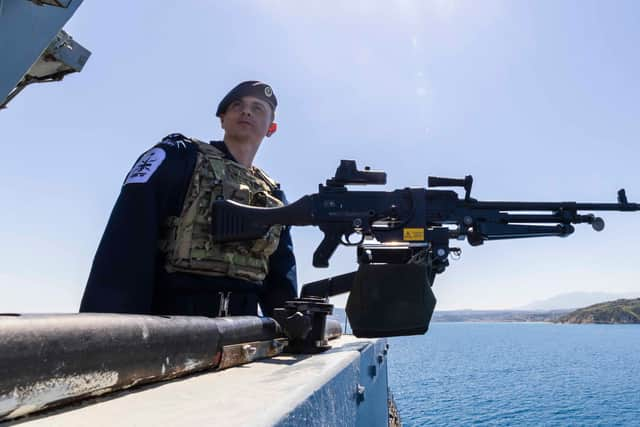
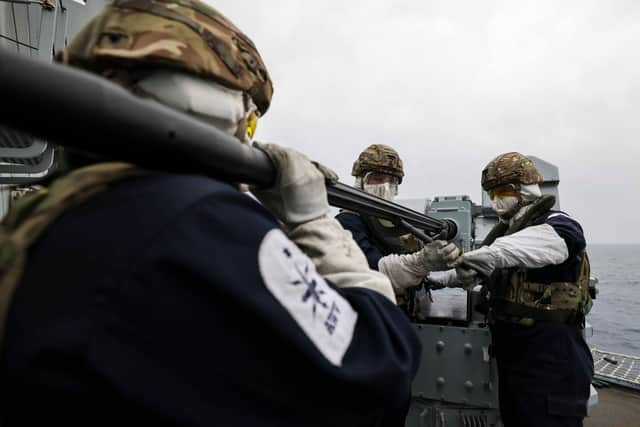
Defence secretary John Healey previously said “practical military plans” are being drawn up to calculate Britain’s response. Autonomous mine-hunting systems are already in the Middle East vicinity. RFA Lyme Bay, a Royal Fleet Auxiliary support vessel, remains in Gibraltar ahead of being transformed into a mother ship for drones and other capabilities.
US-Israeli forces conducted bombing raids on Iran, with Tehran effectively closing the shipping lane. This led the US to impose its own blockade of Iranian ports, leading to a stand-off. And there looks no sign of an end to the stalemate after US President Donald Trump said the Iran ceasefire was on “life support” and dismissed Tehran’s peace proposal as “garbage”, causing oil prices to again increase sharply.
Dr Matthew Heaslip, Senior Lecturer in Naval History at the University of Portsmouth, said personnel will be walking into a tense situation even if a ceasefire materialises. “Once there is a resolution between Iran and the US, it’s going to be a dangerous environment,” he added.
“There will be mines and munitions that need to be cleared. For a lot of shipping companies, they’ll have concerns about their crews transiting. It’s logical for this multinational force without the US to provide the reassurance that merchant crews are not going to be unprotected. A ceasefire doesn’t look any closer. It’s useful that HMS Dragon is looking that way, but she might be waiting a while before she gets to do anything before Trump can cut a deal.
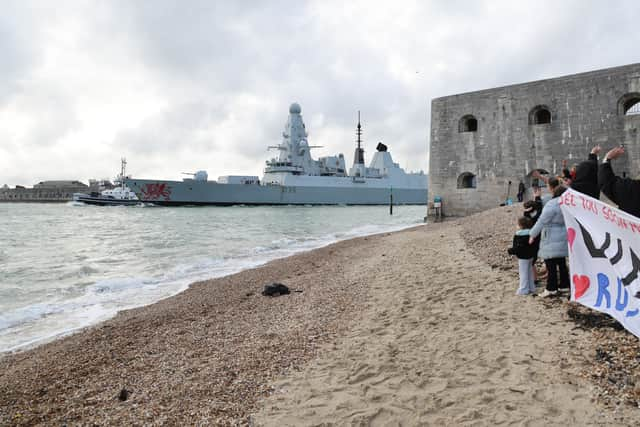
“In an ideal world, the UK would send its own strike force there, but even if resources were better, it’s stronger to have a multinational force rather than a purely British one. If we get hung up about the Battle of Trafalgar and 1805, the French having the bulk behind it is embarrassing, but if we’re thinking in the 21st century, it’s not a bad thing. It doesn’t hide that the Royal Navy doesn’t have enough resources, but that’s a wider issue.”
Dr Heaslip said the Iran threat isn’t hollow, but both them and the US tend to do less than they threaten. “It’s the uncertainty of what might happen,” he added. “It’s a warzone. If the UK, France, or any neutral-ish party were to enter the Strait now, it would be considered an act of war and they would act accordingly.
“The UK could avoid becoming drawn in if HMS Dragon doesn’t take any damage, but all it would take for one drone coming through to commit injuries or death, for the UK to be at war.
“It would be very sensible to wait until a diplomatic resolution to remain neutral, even if the Iranians are not friendly to us being neutral.”
“Purely looking at naval capabilities, Britain has a smaller role than France, but it’s not just about physical capabilities. It can be about expertise, satellite coverage, and intelligence. Just because a warship belongs to one country, it doesn’t mean it’s crewed entirely by one nation. It’s possible the UK will be taking a leading role, but it’ll be more difficult for the public to see that role.”