
"Essential" Royal Navy helicopter sonobuoys contract signed to track "submarine threats" from Russia

Vigilant Royal Navy aviators will be bolstered with “essential” technology to track submarines.
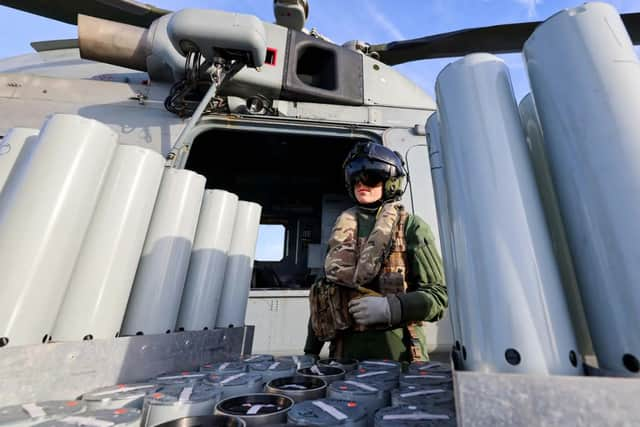
The Ministry of Defence has agreed a £40m with Ultra Maritime to provide sonobuoys. These air-dropped sonar systems are used to detect, track, and locate submersibles.
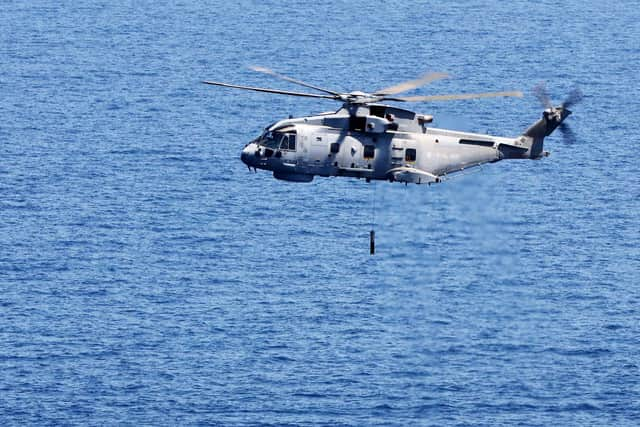
Given that Russian submarines and warships are becoming an increasingly common sight, a 30 per cent increase in the last two years, personnel need more tools than ever to monitor any potential adversaries. Based at RNAS Culdrose in Cornwall, the Merlin Helicopter Force is well-equipped to deal with submarines and is continually deployed to monitor British waters.
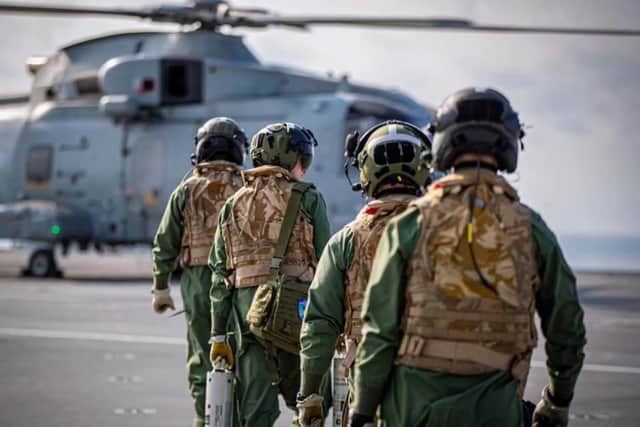

Captain James Hall, the commanding officer of RNAS Culdrose, said: “Our anti-submarine capability is essential to protect Royal Navy submarines and the UK’s nuclear deterrent. The capability offered using sonobuoys forms an essential part of the toolkit used to identify, track and deter submarine threats.
“It is not an exaggeration to say that Merlin Helicopter Force - combining its aircraft, its sensors and equipment, and the crews’ extensive tactical training – is a world leader in anti-submarine warfare.”
The new contract covers the design, development, engineering and manufacturing of sonobuoys. Ultra Maritime is also in discussions with the Ministry of Defence (MoD) for a miniaturised version for un-crewed air systems.
Russian submarines have been spotted in the English Channel before, with the Kilo-class submarine Krasnodar being seen in British waters in December 2025.
Capt Hall added: “Central to this capability is the tactical use of sonobuoys which our aircraft can deploy in-flight. The Merlin carries a dipping sonar which, in combination with sonobuoys, creates an acoustic network to hunt for and track adversary submarines. Ultimately, the Merlin can be armed with Sting Ray torpedoes to eliminate that threat if necessary.
“We face an increasingly uncertain and contested world, which includes ever evolving threats to our critical undersea national infrastructure. Our control of the subsurface maritime environment is a key pillar of the Royal Navy’s ability to confront global threats and ensure operational success as we defend the nation.”