
Iran: 'Difficult decisions' face Royal Navy as UK may have to 'pick and choose' if to respond in Middle East

Challenging circumstances face the British armed forces amid the growing hostilities in Iran and the wider Middle East.
The government will be considering how the UK should respond after Tehran and its proxies carried out strikes in response to the American and Israeli bombing over the weekend. Tehran’s Supreme Leader Ayatollah Ali Khamenei, who has held an iron-grip over the nation over the past three decades, was killed on Saturday (February 28).
A kamikaze drone struck RAF Akrotiri in Cyprus on March 2, with more un-crewed air attacks elsewhere. This comes as the Royal Navy has been moving away from the Middle East, with the last permanent Gulf-based warship - HMS Lancaster - being decommissioned in December last year. HMS Middleton, a Hunt-class mine countermeasures vessel, is the only stationed there.
Prime minister Sir Keir Starmer late on Tuesday that Type 45 destroyer HMS Dragon will be deployed alongside her Wildcat helicopters. She was taken out of maintenance at short notice.


“Difficult decisions”
Dr Matthew Powell, Teaching Fellow in Strategic and Air Power Studies at the University of Portsmouth, believes naval response will be limited in scale. He told The News: “It’s undoubtable that the Royal Navy has to make difficult decisions about deployments, given both the size of the fleet and the personnel available to crew its warships. Membership of the Nato alliance, however, does mean they do not have to do everything everywhere, and can concentrate on roles and deployments to bolster the security of both Nato and the UK.
“While all eyes are currently on Iran, there is still a conflict in Ukraine and attention must be kept on Russian activities in the High North. The Royal Navy can continue to operate in this region freeing up the assets of the US to deploy even greater naval strength to the Middle East. A small-scale detachment may be deployed to the Middle East to demonstrate political resolve and unity with the US, but this will very much be in a supporting role.”
Given the aerial threats being faced by drones, the Daring-class is best suited vessels to respond defensively. Concerns have been raised as to whether the fleet is spread to thin. Dr Powell said the lack of stationed vessels means any ship would take several days to be at sea after the decision is made.

“The major role for the Royal Navy would be in the protection of international shipping lanes from attack to allow the freedom of the seas to continue whilst supporting wider operations undertaken by the United States Navy in operations such as preventing the Straits of Hormuz from being mined or blockaded,” he said.
He added: “The RAF is currently conducting operations to protect the air space of allies in the region and attempting, with a relatively large degree of success, to prevent Iran missiles and drones from reaching their targets. The intensity and duration of these operations could increase depending on the actions of Tehran. I cannot see any changes to this approach in the present circumstances.”
“We’re going to have to pick and choose”
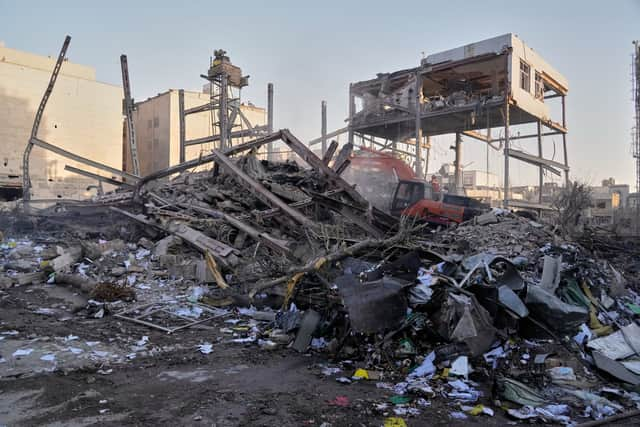
As of March 2, at least 555 people have been killed in Iran so far by the US-Israeli campaign, the Iranian Red Crescent Society said, and more than 130 cities across the country have come under attack. Eleven people have been killed in Israel and 31 in Lebanon, according to authorities there. Iran and Iranian-backed militias fired missiles at Israel and Arab states including Kuwait, where the US embassy compound was hit.
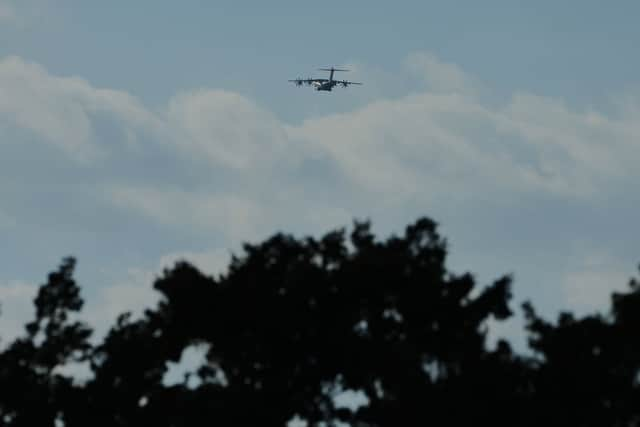
In Iraq, a pro-Iranian militia claimed responsibility for a drone attack targeting US troops at Baghdad airport, the day after it said it fired at a US base in the city of Irbil in the north. Officials at RAF Akrotiri said the base is continuing to operate as normal after minimal damage was sustained, but families were evacuated as a precaution. There were no casualties.
Dr Powell said there is increased risk on British bases, but any increase in threats by Iran, its proxies, smaller terrorist groups, and lone wolf attackers, will be limited and unlikely to be a major concern - as their goal will be to destabilise the Middle East itself.
Prime minister Sir Keir Starmer has given permission for US strikes to be carried out from some British bases. President Donald Trump criticised the speed at which the decision was made. Dr Dafyyd Townley, Senior Teaching Fellow at the University of Portsmouth and leading expert on US-UK politics, believes the conflict could last some time. He added that M15 considers Iran to be an increasing threat to British security.
He told The News: “We assumed with the removal of the Ayatollah that the whole system would collapse, but this is a system that has been well entrenched for close to 50 years. It’s not going to collapse in one moment. There seems to be no clear political objective for the United States for what victory looks like. Preferably a western supporting government, which it’s unlikely to get.
“From recognising international law, Starmer has played it pretty straight. In the long term, Trump will recognise that. It’s another example of where American and British policy diverge. We want the same objectives, but the UK has a different methodology in getting there to the United States.”
A naval response to protect commercial ships in the Gulf is a possibility. Fleet Commander Vice Admiral Steve Moorhouse defended the lack of warships in the region - stating it’s what British allies wanted - but continued conflict and uncertainty could force the Royal Navy’s hand. Dr Townley said increased naval activity may take place in the Mediterranean, adding that critical investment decisions are needed to secure the future of the armed forces.
“It depends how much Starmer wants to see the UK pulled into the conflict,” he added. “It’s a divisive issue in the UK and US, whether we are best off maintaining a more neutral position than an active ally of the United States.
“The issue is not whether they consider the region to be worthwhile, but where they spend their money. Unless there is a considerable increase in funding the armed forces, we’re going to be unable to commit to all the crises around the world. We’re going to have to pick and choose. Trump has mentioned that this may continue for four weeks, how long it goes on for beyond that is uncertain. We may be drawn into a conflict whether we like it or not, which may force military planners to rethink.”