
Royal Navy delivers life saving Covid vaccines to remote South Atlantic Island
THE Royal Navy has been on a life-saving mission to deliver vital Covid vaccines to one of the most remote locations in the world.
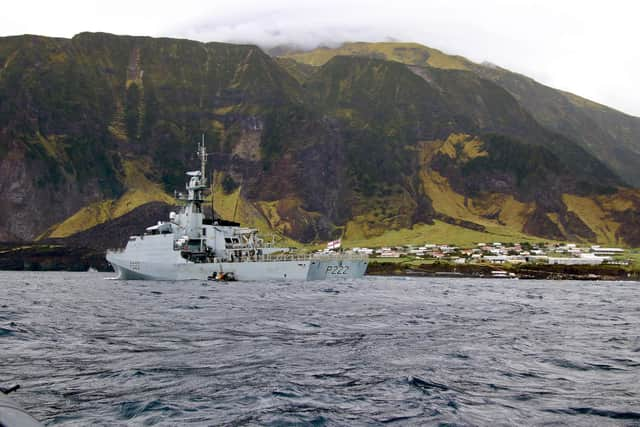
HMS Forth landed 900 doses of the Oxford-AstraZeneca vaccine on the shores of Tristan da Cunha, a remote island in the South Atlantic.
It was a race against time with the ship and her crew looking to complete the 5,000 mile round trip from the Falklands ahead of the onset of winter and potentially ferocious storms.
With no airport and no ships able to offload onto the island during the winter months, the 200-plus inhabitants of the British Overseas Territory are cut off from the world until summer returns.

It was a joint operation with the RAF who had flown the vaccines from its base at Brize Norton to Mount Pleasant in the Falklands where the Portsmouth crew are currently based.
Forth’s medical officer, surgeon lieutenant commander Rory Goodenough, was the only member of the ship’s company to accompany the vaccines ashore – following in the footsteps of his father who spent six months on the island as a botanist.
He said: ‘This is a vital lifeline to a community whose nearest support is seven days sailing away
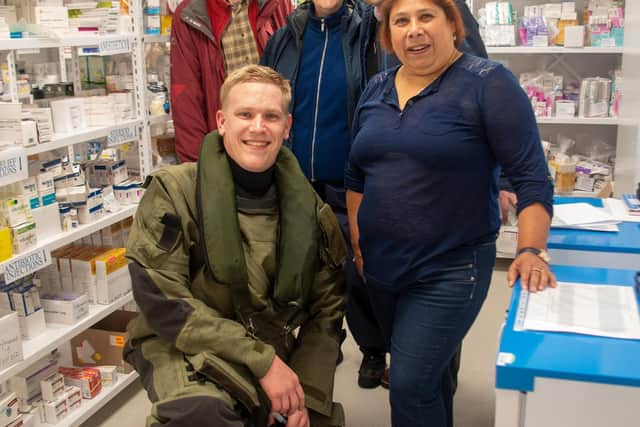
‘Most significantly, the UK and Royal Navy have reaffirmed their enduring commitment to our overseas territories by safeguarding Tristan da Cunha’s over 200 inhabitants against the very real threat of Covid-19.’
The mission was at the limits of HMS Forth’s fuel capacity and the vaccine had to be maintained in cold bags at a temperature of between 2C and 8C.
Commodore Jonathan Lett, Commander British Forces South Atlantic, said: ‘The entire operation has been a great team effort from start to finish.
‘I am hugely proud of every member of the British Forces South Atlantic Islands team involved in all elements of this epic journey.’
Forth was the first ship to call on the volcanic island in eight months and the first Royal Navy vessels to dock there in six years. The island’s harbour is normally only accessible for around 60 days each year.