
'No excuses': ‘Cultural change’ pushed to support women in Royal Navy to solve 'toxic leadership'

High profile figures in the Royal Navy have been sacked or removed from their posts due to inappropriate relationship
‘Toxic leadership’ in the Royal Navy and armed forces which is stifling support for female personnel is being dealt with, the First Sea Lord has said.
General Sir Gwyn Jenkins told the defence select committee today (April 14) said efforts are continuing to be made to make the force a more welcoming place for women. He assumed the role of the First Sea Lord on May 15 after his predecessor, Admiral Sir Ben Key, was sacked in disgrace after having a consensual relationship with a female subordinate under his command - despite being a married father of three children.
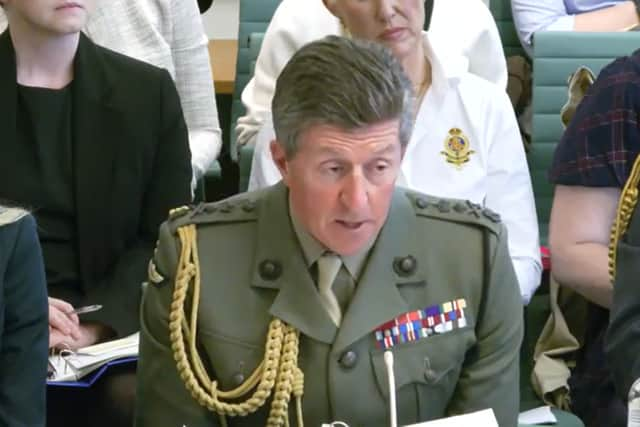

Sir Gwyn said women in the Royal Navy are regularly put forward for promotion at all ranks on merit, and retention figures are continuing to improve. “We’re seeing a rising level of recruiting,” he told MPs. “It’s not where it needs to be yet but it’s continuing to improve on a steady trajectory. Our representation is filtering up, in terms of our selection in the future Navy.”
When asked about taking the job following Sir Ben’s dismissal, he added: “There are no excuses and the standards apply to everybody. It doesn’t matter if you're the service chief or the most junior rank within the Royal Navy. We will apply our standards to anyone, and we expect everyone to uphold those standards, particularly senior leaders. A service chief being dismissed tells us it’s a long way to go on the systemic change we need to make across the armed forces.”
Sexual harassment and bullying
Women make up roughly 16 per cent of the Royal Navy. The force has ran into various scandals regarding sexual harassment and bullying. Sir Ben said last year that 21 personnel were dismissed after an investigation into the submarine service.
This follows allegations raised by Sophie Brook, a former lieutenant, that there was a “constant campaign of sexual bullying”. A government report published in October 2024 found “misogyny, bullying and unacceptable behaviours”. The Daily Mail in 2022 reported claims that submariners compiled a “crush depth rape list” were ranked in the order they should be raped in a catastrophic event.
In separate incidents aboard the nuclear attack submarine HMS Audacious, Petty Officer Greg Melrose, 32, was jailed for 30 months after being found guilty of three counts of sexual assault, and another incident where he exposed his erect penis through a shower curtain. Court heard incidents included PO Melrose groping a female colleague at swimming pool bar, where he “put his hand down the back of her swimming costume, around her bottom and onto her vagina”.
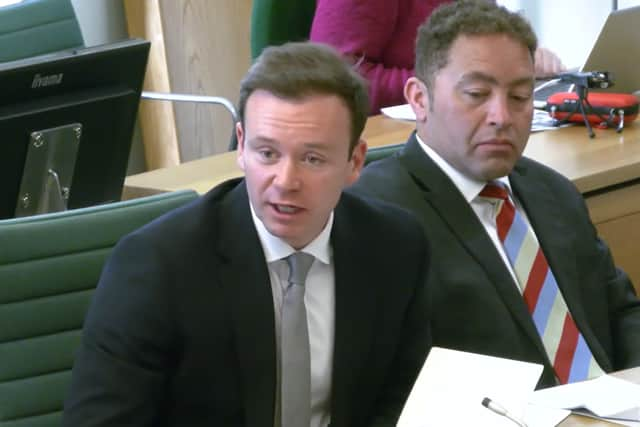
Sir Gwyn said seeing an increasing number of complaints shows that people have more trust in the system, and that their concerns will be actioned. In contrast, Labour MP Derek Twigg said the 2025 armed forces sexual harassment survey showed 86 per cent of people subject to sexual bullying and harassment did not make a formal complaint.
When asked by Labour MP Michelle Scrogham if women are as safe in the military as in civilian life, the First Sea Lord said yes. Sir Gwyn added: “The Navy has a phenomenal amount of checks and balances you wouldn’t see in much of the civilian sector. From the beginning, we educate people on the culture and standards we expect them to live within. We do that at every level of command as they progress.
“We willingly invite scrutiny and challenge to the way we look after our people and keep them safe. There’s still room for improvement and we’ll take actions that are required to keep our people as safe as possible, even in the often difficult circumstances our people operate in. This is the moral obligation we have.”
Changes of leadership
High-ranking officials in the Royal Navy have been removed from their posts in the past. Former Commanding Officer of HMS Tyne, Lieutenant Commander Martyn Mayger, was removed from his post after being accused of “unacceptable sexual behaviour”.
Fred Thomas, Labour MP for Plymouth Moor View - who served as a Royal Marines Officer between 2016 and 2023 - said: “I’ve heard anecdotally from serving female personnel that life is ok ashore on naval bases, but at sea. It’s a significantly different sketch. Do you recognise that characterisation?”
Sir Gwyn responded: “We have best practice within the Royal Navy in terms of how we assess climate and culture on deployed platforms, ships and submarines. Our culture team is a team of experts who we can fire in to assess the culture a leadership team has built on a ship, and make sure that environment is where we expect it to be.
“We’ll take action if it falls below the standards we expect. If we see a thriving platform, we share that best practice. Since I arrived, we’ve changed the way that we assess our leaders by putting an emphasis on the climate they create within their teams.
“We need high performing teams to solve the most complex problems in the most difficult circumstances. That can’t survive if we have toxic leadership, or if we haven’t created an environment where people can bring the best of themselves to work.”
He said a new assessment model was trialled last autumn, and highlighted individuals who wouldn’t have been up for promotion under the old system, but created a fantastic culture onboard ship, and vice versa. “This will engender the cultural change we have to have in the armed forces,” he added. “Lecturing people on the culture we want won’t produce the results we need. We need leadership excellence, people who can achieve the results we need and do it in a way that helps our people thrive.”