
Brutal "disavow" of major Royal Navy, Army and RAF reforms with doubts cast on whether UK can afford them

Doubts have been cast on whether major defence reforms can be implemented without sacrifices needing to be made.
Chief of Defence Staff (CDS), Air Chief Marshal Sir Richard Knighton, told MPs that improvements to the armed forces could not be made under the current levels of funding. He was referring to the Strategic Defence Review (SDR) published in June 2025, adding that the full costings are being drawn up in the defence investment plan.
This is despite prime minister Sir Keir Starmer stating on its publication that funding and achievability was baked in from its very inception. Addressing the CDS during a defence select committee meeting, Conservative MP Jesse Norman said: “You were perfectly clear that the government could not fund the combination of current commitment to programmes and the SDR. Something has got to give. That might be a level of ambition or pushing stuff aside. Was that right?”
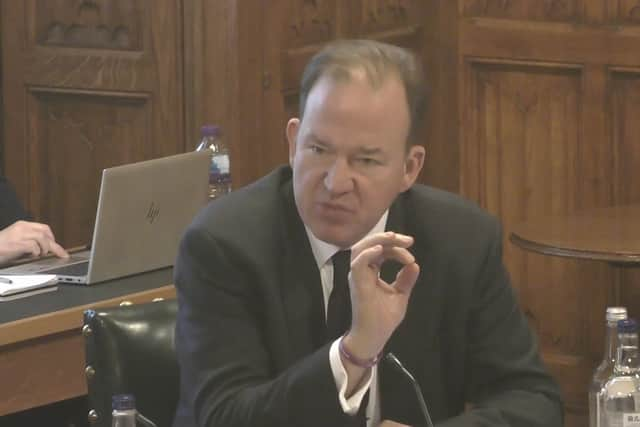

Sir Richard responded: “The SDR set a headmark of 2035. There will be limitations on capacity of industry, limitations in our ability to recruit the number of people we need, and limitations financially. My point is we cannot deliver everything we might want to in a short period of time.”
The MP for Hereford and South Herefordshire asked if decisions such as cutting current platforms would need to be made. Sir Richard had become agitated earlier in the meeting after being quizzed on a possible £29bn defence shortfall, despite government commitments of 2.6 per cent of GDP on defence by 2027 - with 3.5 per cent by 2035.
“There’s a whole range of choices we might have,” Sir Richard said to Mr Norman. “I’ve laid out some around levels of contingency, the speed you might do things. There are things which will go out of service and need to be replaced. The question is whether we can accelerate that replacement, and bring in new capability and modernise. All of those are in play.”
Earlier in the meeting, he said the government’s committed increased were unprecedented, but added: “We will not be able to do everything that we would wish to do, as quickly as we would want to do it, in that envelope. That is a judgement for ministers around the trade-offs that they have to make.”

The Strategic Defence Review urged the government to make extensive modernisations to armed forces capabilities, kit, procurement processes, work culture, and other matters. The government accepted all 62 of its recommendations. What proceeded it was the National Audit Office’s 2023 Equipment Plan, which showcased major holes in the armed forces finances.
Calvin Bailey, Labour MP for Leyton and Wanstead and former RAF officer, said it showed a £29bn shortfall. “The RAF and Royal Navy both included full predictive costs where they appear unaffordable. The Army produced an affordable plan, which accepted risks that capabilities wouldn’t meet government objectives. Considering the NAO’s premise about how the gaps arose, is that something you agree with or not?”
Sir Richard said the number depends on the assumptions you make, with some it about uncertainty of future upgrades costs. “If you can’t afford it, you can’t deliver it,” he added. “The Navy and Air Force, in the way you describe it, will have to make adjustments to their programme to live within it. This could be about delay, or reductions in numbers. There’s a whole bunch of ways in which you can do that.”
Mr Bailey said if un-costed options were included, why the SDR included options that were too expensive. The CDS said: “The SDR was an external report and not done by anyone in the department. It did not go into details about the programme, that is what the defence investment plan is for. That’s the approach we’re taking, to make sure we understand the costs associated with it and any trade-offs we’re taking.”

He added that the equipment plan was made before the projected increases to defence spending were outlined. “The reviewers were not asked to produce a costed programme,” he said. “That’s one of the reasons getting the investment plan is so hard. We have high levels of ambition over long periods of time we’re trying to address, and do some prioritisation work.”
Sir Richard’s statement on costing contradicts what the prime minister said in June. When asked if the reforms were properly funded, Sir Keir said: “I’m 100 per cent confident this can be delivered, because it was baked in from the very start of the review.”
Mr Norman said reviewers including Lord Robertson said they worked closely with the MoD and the Treasury throughout SDR process. “They said there was specific care taken to the costs and there should be no surprises,” he added. “It just feels like a disavow for you to say ‘Suddenly we’ve got this external document and we have to deal with it’. How does that work?”
“The government accepted these proposals were costed and accepted for purposes for procedure, planning, and programming, on that basis. To come now and say the SDR was going to create all this extra cost is odd.”
Sir Richard said: “The government decided to have an external panel that engaged brilliantly with those inside the department. What has had to follow is the detailed costing of that plan, and that’s the work we’re doing under the defence investment plan. That was very specifically what the ministers set out they were going to do.”
Mr Norman responded: “It was never actually costed? They did some work, thought it was costed, but it wasn’t really costed?”
The CDS said: “We had not done all of the detail we are doing right now to make that work. That was a position the government decided was the appropriate one to take, by having the external review first and doing the detailed costed plan to follow.” No date for the defence investment plan has been given, with the report being delayed since the autumn of 2025.