
'Neglected' Royal Navy, Army and RAF houses causing problems as nine in ten need 'serious attention'

Work is underway to refurbish and rebuild large parts of the defence estate after thousands of properties were brought back into public ownership
Deteriorating military housing is blighting service families with nine in ten properties needing “serious attention”.
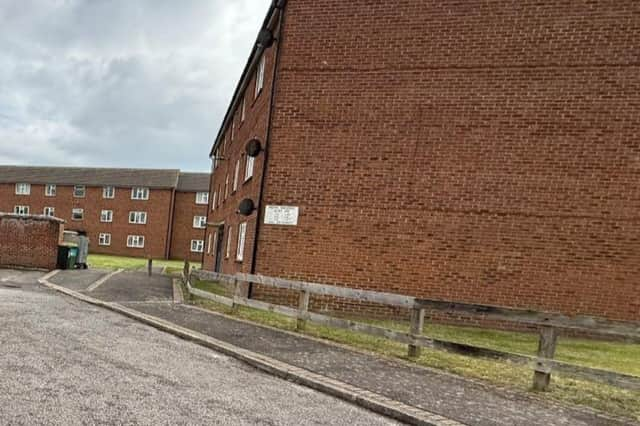
Mike Green, chief executive of the Defence Infrastructure Organisation (DIO), said more work needs to be done to given armed forces personnel homes that they can be proud of. More than 36,000 properties were brought back into public ownership following a purchase deal between the Ministry of Defence (MoD) and Annington Homes, but several are in a deteriorating condition.


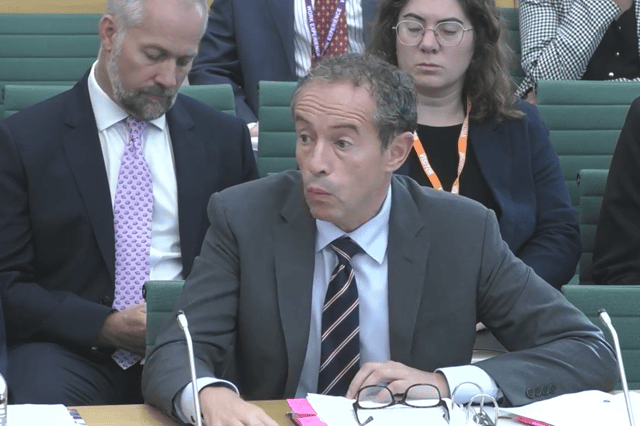
Facing the Public Accounts Committee, defence officials faced questions regarding the condition of the defence estate. Mr Green said problems found on these houses included vents that didn’t lead anywhere, single brick walls, and no cavity wall insulation.
“I’m not surprised that our houses are like this,” he added. “We have underinvested in them for the best part of 40 to 50 years. That needs to change because it affects families. Our wonderful service personnel deserve better.”
“Serious attention”
Labour MP for Watford Matt Turmaine asked the official what his assessment on the current defence estate is. Mr Green said: “We know nine out of ten houses need serious attention.
“We know they nearly all meet the decent home standard, but to be frank, that is not as aspirational as you or I would like. The plan is to sort out the building blocks of what we use to house our service personnel, and turn them from tolerable to aspirational.”
He added: “We have neglected these houses. We’ve put right the things in front of us, but now we need to sort out the building blocks.”
The MoD purchased 36,347 homes from Annington in December 2024, which included 650 in Portsmouth. The cost to return the properties into public ownership was £6bn, following the original sale of around 55,000 homes at the cost of £1.7bn in 1996.
By 2024, the National Audit Office estimated that the sell off left the government and taxpayer £14.5bn out of pocket. Damp, mould, and leaks were commonplace in many of the newly acquired military houses, as well as much of the current stock of properties.
DIO chief operating officer David Brewer said most of these houses were built immediately post-war, and into the early 1970s. “The inherent quality and design of them are of their age, and they’ve not been well maintained subsequently,” he added. “Our estate, if you compare it to most regulated housing providers, is inherently worse than those in terms of where we’re starting from.”
Mr Brewer said around 250,000 reactive repair tasks are done across the estate in a year. “Because of that poor quality of housing and the condition, it drives a huge amount of reactive work,” he added.
“Every single reactive repair is disruption to a service family. We need this sustained long term programme to address the fundamentals and underlying quality of the properties. While we’re getting on with that, we need to get much better in dealing with reactive repairs. We’re tackling both of these things in parallel."
“We’re getting after this”
According to a recent MoD survey, only 39 per cent of people were satisfied with the response times for requests for maintenance, and only 33 per cent of respondents were happy with the quality of the repairs. Mr Turmaine said: “There’s clearly a long way still to go to getting to an acceptable level.”
Mr Green responded: “We’re on a journey. We’ve fixed the big things in front of us. We’re working with lots of people to get better. The core components of the houses we own aren’t great.
“We go back to them a lot, and fix them a lot. We need to put ourselves in a different position for the next 50 years or however long it is. We need to do it efficiently and properly.”
As part of the defence housing strategy, the government is investing £9bn in modernising more than 40,000 military homes. A Defence Housing Service will be set up to take over the management of service housing after years of complaints.
Mr Tumaine asked the panel what is being done to resolve the MoD’s “negligent approach” to upkeep and maintenance. Jeremy Pocklington, the MoD’s permanent secretary, said 1,250 homes were upgraded and refurbished last year, and complaints are drastically lower than in 2022.
He added: “The defence housing service will make sure we provide the quality homes our service personnel rightly expect from the department. Work is already underway.
“The quality of the service we’re offering has already improved. We’re getting after this. There’s more we need to do. It’s a priority for the department. We’ve all seen examples of housing which isn’t at the standard we need.”
National Armaments Director Rupert Pearce said the department has moved on from a costly strategy where something will simply be maintained until it fails, to a proactive approach to maintaining and improving housing.