
Union warns it will fight against 'long-standing' problems in the Royal Fleet Auxiliary after pay rise secured

Months of negotiations have paid off as naval support sailors have secured an above-inflation pay rise
Vital civilian officers that support Royal Navy deployments have secured a pay rise after months of negotiations - with the union warning that problems still exist within the force.
Royal Fleet Auxiliary (RFA) personnel of all ranks were awarded an above-inflation pay offer. Members of the National Union of Rail, Maritime and Transport Workers (RMT) accepted the offer in July, with the Nautilus International union following suit.


The agreement between the maritime trade unions and the Ministry of Defence (MoD) includes a 4.5 per cent rise from April 1, 2025, and a further 3.6 per cent increase from April 1, 2026. Improvements have also been promised for leave arrangements that will allow personnel to earn more time off for periods spent at sea, a one-off leave buy-back arrangement, and a £250 one-off payment.
It’s believed the new agreement is a step in the right direction, but more needs to be done to solve problems within the force. Director of organising at Nautilus, Martyn Gray, said: “Our members have accepted the latest pay offer, bringing this particular dispute to a close.
“However, acceptance of the offer should not be interpreted as an endorsement of the longstanding approach to RFA pay. Years of below-inflation settlements have created significant recruitment and retention challenges across the fleet.”
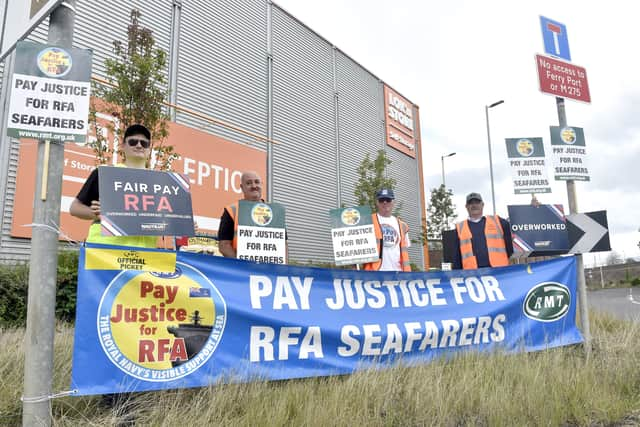
Members of the union planned to take action short of a strike earlier this year, but halted the arrangements after a new offer was tabled. RMT members, including those actively serving on RFA Lyme Bay, staged two walkouts during the round of bitter discussions.
Previous demonstrations took place in Portsmouth in 2024, with civilian sailors striking over pay and conditions. None-monetary problems included poor staffing levels, sailors working above their ranks, and people being “harassed” into returning to work early while on leave. It later transpired that female sailors felt as if they were being pushed out of the force due to maternity policies, with some taking the decision to have an abortion to keep their career.
RFA personnel are civilians seafarers but play a vital role in supporting the Royal Navy on military deployments. Their job is to extend the reach of warships and keep them at sea for longer by providing them with fuel, equipment, supplies, mechanical engineering expertise and other tools. RFA Tidespring conducted such tasks while deployed on Operation Firecrest alongside HMS Prince of Wales.
Mr Gray said the union will continue to hold the MoD to account. He added: “RFA seafarers deliver critical support to Royal Navy operations at sea and around the globe. Nautilus will continue to press the Ministry of Defence to address the structural issues affecting the service and to develop a sustainable pay system that properly values the contribution of civilian seafarers to UK defence capability."
Minister for veterans and people, Calvin Bailey, visited Portland Port as part of the announcement. He discussed workforce challenges and heard how the force is preparing to crew its future Fleet Solid Support ships.
The former RAF Officer said: “The Royal Fleet Auxiliary is a vital part of the Royal Navy and contributes directly to the UK’s national security through their crucial work across the world. This agreement recognises the unique contribution that RFA members make to the Royal Navy and provides a strong foundation for the future as the organisation prepares to crew the next generation of support ships. We thank the Maritime Trade Unions for their support in reaching a resolution.”