
MoD: "Depressing" slow decline in Royal Fleet Auxiliary sailors despite increased role with Royal Navy

Falling numbers of sailors are diminishing the Royal Fleet Auxiliary (RFA) with statistics being described as “depressing”.
Personnel headcount for the operational and logistical fleet has slowly declined over the years, despite the force being asked to support the Royal Navy more on operations. According to the Ministry of Defence’s (MoD) Biannual Civilian Personnel Statistics data, staff employed has fallen from 1921 in January 2018, to 1636 in October 2024.
The RFA fleet has reduced in size since, which means less personnel being required for operations, but the fall has proven to be a major concern for some. Former RFA Captain Simon Booth, who served in the force for 37 years, said he was not surprised by the data.


He told The News: “It’s depressing. You could call it ‘managed decline’, but that would give them too much credit. It’s indicative of a failure to recruit people properly and shows the difficulty they have created in the recruitment process.”
Statistics show trickles of personnel leave the force over three month periods. The most consistent fall started in July 2022 - 1,776 - dropping incrementally to 1,636 for October 2024.
The MoD also recorded the net change in RFA headcount over 12-month periods. After this climbed out of the negatives in the 12 months up to December 31, 2020, staffing levels started to fall again and the force consistently shrunk. The largest net change was -84 personnel, recorded in the 12 months up to March 31, 2022.
Capt Booth said prospective RFA applicants told him the force took too long to answer their queries and applications, eventually giving up due to the elongated process. He added that unaddressed problems with working conditions caused a retention problem, which compounded staffing issues. Problems surrounding recruitment and retention are impacting all three armed forces.
Capt Booth said the incremental decline meaning the problem is going under the radar. “If you reduce the number of ships, you reduce the number of people you need,” he added. “They have reduced the number of ships they’ve got, but I suspect there are areas which are desperately short.
“I know the engineering side has desperately struggled. It was struggling before I left and the situation is no better, and possibly even worse. When I was doing the risk management job for the RFA, I would get a figure which said ‘yes you can man all your ships’, but in that they’d hide a load of apprentices and cadets who actually don’t count because you can’t actually use them to run ships.
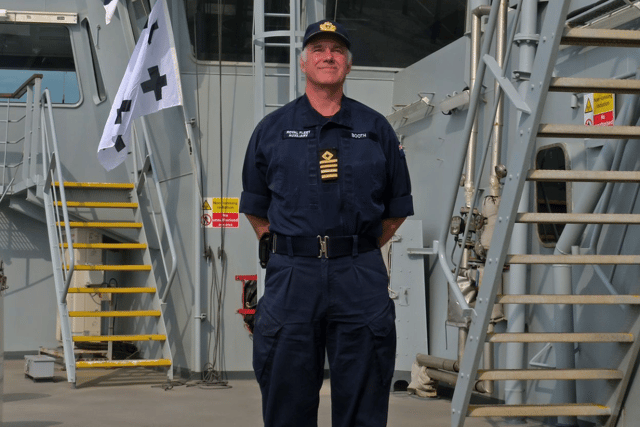
“We went through a phase where we had vast numbers of Third Officers - Deck Officers and Engineers - which is great, but if you haven’t got a Captain, it doesn’t matter how many officers you have. It got so bad we were putting them on leave because we had no place to put them. It’s about the management of the people and of the skillsets that you need, add to that the recruitment and retention issues which have plagued the RFA for quite a long time.”
RFA Proteus was recently added to the fleet as a platform to house autonomous vessels to protect undersea cables. Multi-Role Strike Ships (MRSS) are not due to be delivered until 2033, with these vessels due to replace the three Bay-class ships, as well as HMS Albion and Bulwark and RFA Argus. RFA Sailors will be asked to be involved in Carrier Strike Group operations this year and other Royal Navy deployments.
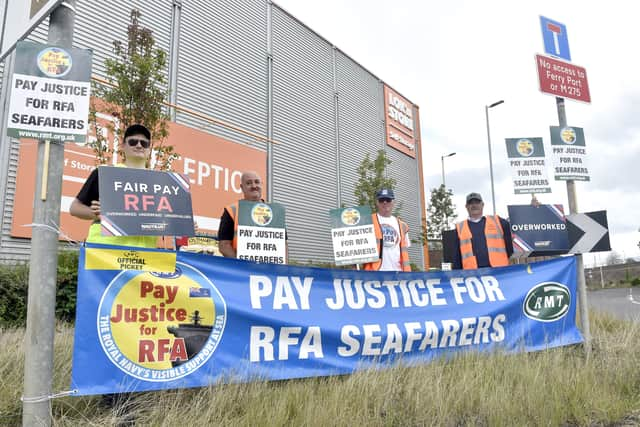
Staffing has proved to be a consistent issue, with half the fleet at one point being stuck in docks due to a lack of available personnel. A new pay deal was recently struck between the MoD and striking sailors affiliated with the RMT and Nautilus International unions after months of industrial action, which promised wider reforms in the force alongside an above-inflation pay rise.
Capt Booth said with the RFA being asked to support the Royal Navy more with less resources, and with the problems around staffing still to be fixed, may encourage seafarers to look elsewhere. “The time when ships are tied up because you haven't got the right skillset, that’s depressing for the other people on board as they’d rather be out being paid for the job they want to do,” he said. “It’s a vicious circle they’ve got themselves into.”
He added: “It really is a downward spiral we’re in. There is no easy fix. It takes about ten years to train a Master Mariner, then you need experience before you pick up command. If you started now at 16, they’re not going to be Masters until the middle of the next decade.”
RMT secretary Mick Lynch said the union will keep on top of the MoD to monitor the promised reforms. He added: “RMT will keep fighting to ensure the contributions of RFA workers are properly recognised going forward. We now go into a phase of serious discussions with the RFA and MoD on the future structure of the RFA, their conditions of service and salaries in which we expect to make further significant improvements for our members.”

Nautilus International’s director of organising, Martyn Gray, added that while the pay deal is a positive milestone for members, more work needs to be done to ensure wages and working conditions are sustainable and attractive long term.
Dame Caroline Dinenage, Conservative MP for Gosport, said she challenged the Labour government on several occasions to resolve the RFA dispute, and hopes recruitment and retention can be improved. She added: “I am glad that Royal Fleet Auxiliary strikes have come to an end as I know what a vital role the RFA plays in supporting Royal Navy operations around the world. I now hope that this generous pay offer acts as a springboard to improving rates of recruitment and retention in the fleet.”
In response to the data, an MoD spokesperson said: “The Royal Fleet Auxiliary continues to provide crucial support to the delivery of operations in conjunction with the Royal Navy and our allies around the world continues to meet operational commitments. The Strategic Defence Review recently announced by the Prime Minister will consider all aspects of Defence, including the RFA.
“A series of new recruitment and retention initiatives are being introduced by the RFA , including enhanced lateral entry routes from maritime industry, improved occupational health measures and a suite of options to increase working flexibility.”