
"Low" impact of steel shortage on construction of RFA Resurgent supporting Royal Navy, dismissive MP said

A defence minister has played down the potential impact a steel shortage will have on the construction of a new naval ship.
Work is continuing to produce RFA Resurgent, a Royal Fleet Auxiliary ship that will support Royal Navy operations. She will be one of the three vessels built under the Fleet Solid Support (FSS) ships programme.
The Guardian reported earlier this week that Liberty Steel Dalzell could not procure enough steel due to a cash shortage. A lack of funds means that it is unable to buy much-needed slabs from British Steel, the national publication said. Engineers have been unable to start production in earnest as a result.
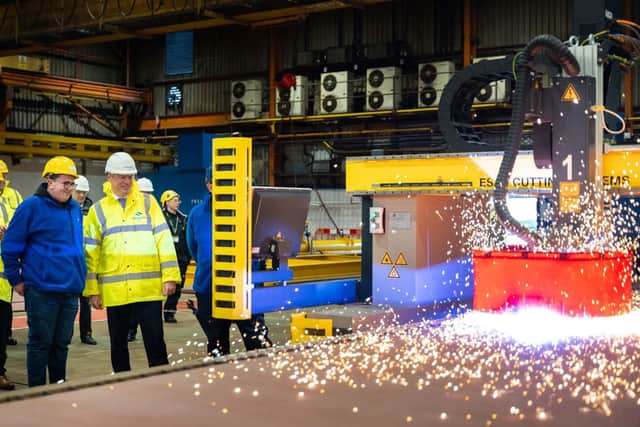

Sir David Murray, a Scottish metals magnate, called on the government to take action and pass over control of the plant to get the programme up and running again. He added inaction would be a “terrible error of judgement”.
The FSS ships are due to be build in Belfast by Spanish-owned shipbuilder Navantia, and require the steel for work to continue. Despite the problems, minister for defence industry and readiness, Luke Pollard, dismissed any effect this would have on the programme.

Responding to a parliamentary written question by Conservative MP Ben Obese-Jecty, he said: “The current assessment of the potential impact of the raw material shortage at Liberty Steel's Dalzell plant, on the construction of the three Fleet Solid Support (FSS) ships for the Royal Fleet Auxiliary, is deemed low.
“The sourcing of steel for the FSS programme is a matter for the prime contractor, Navantia UK, whose goal is to maximise UK steel content wherever it is technically and commercially feasible, while protecting the delivery schedule.”
Commanded by the Royal Fleet Auxiliary (RFA), the FSS ships will provide munitions, stores, and provisions to Royal Navy task groups. They will replace RFA Fort Victoria, which was launched in 1990.