
"Real privilege" for Royal Navy Portsmouth divers as nurtured oysters returned to the Solent restoring species

Oysters nurtured by the Royal Navy have been released to help the species return to the Solent.
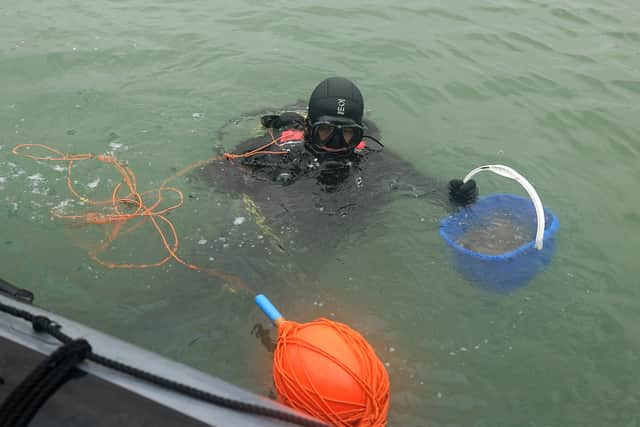
Personnel from the Navy’s Bravo Diving Unit 2 – a Portsmouth -based team normally used to dealing with unexploded bombs and mines – carefully placed the creatures on to a dedicated reef in the River Hamble. It’s hoped they will settle and flourish as a result.
It’s the second batch of European flat oysters returned to these waters, with the molluscs being prevalent in the Solent until the 1980s. Volunteers have been raising them in a dedicated garden at HMS Excellent in Portsmouth Harbour.
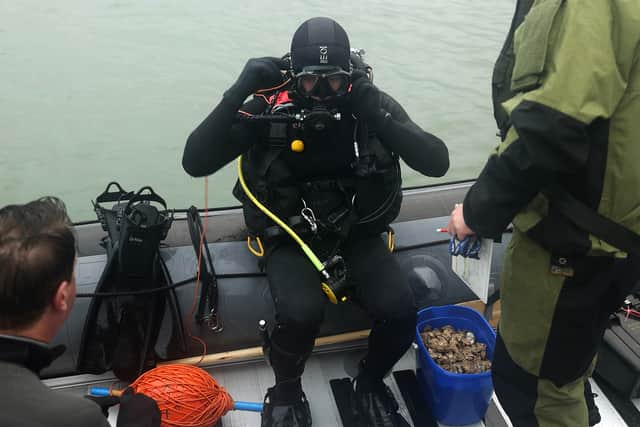

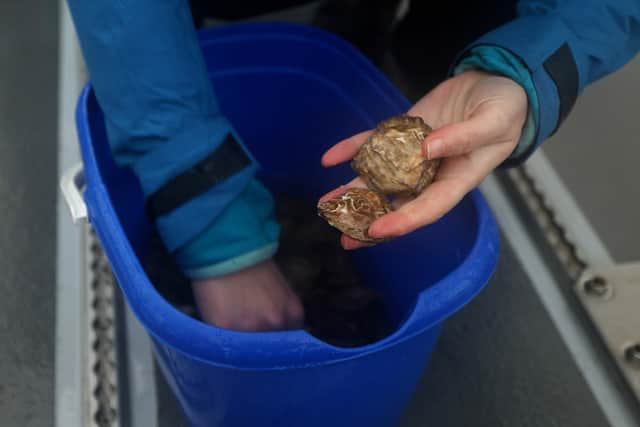
They joined divers on an expedition to the Hamble, where the Blue Marine Foundation charity has established an artificial reef. Personnel hand-delivered hundreds of oysters to the seabed to ensure they reached their optimal habitat and have the best possible start to their new lives.
A survey was then conducted of the site to see how the colony is progressing. Its success is fundamental not only to reintroducing the species to the Solent, but also to help clean some of Britain’s busiest waters, stimulate other marine life and help defend against coastal erosion. A total of 200 mature adult oysters have been released this year and last.
Rod Jones, the Royal Navy’s Assistant Head Environmental Management, said the team of volunteers is showing what could be achieved nurturing the creatures in less-than-ideal conditions. The Whale Island garden is inspected every fortnight for 18 months to give the marine life the best chance of survival.
“We are learning practical lessons about how best to care for juvenile oysters alongside a busy, industrial port and Naval Base and hope that our success encourages others to consider how they might support recovery of nature in their locations,” he added. “Native oysters were previously a major part of the Solent ecosystem, creating habitat and conditions that support a range of marine life and anything we can do to support their return must be applauded.”
Lieutenant Commander Callum Clarke, in charge of Bravo Diving Unit 2, said the unusual task was useful training for his team given the murky conditions and currents in the Hamble and in the long run, divers would benefit from the initiative. “Being part of such an important project in the local area has been a real privilege and a great opportunity to practise the skills that modern Royal Navy Clearance Divers use day to day,” he said.
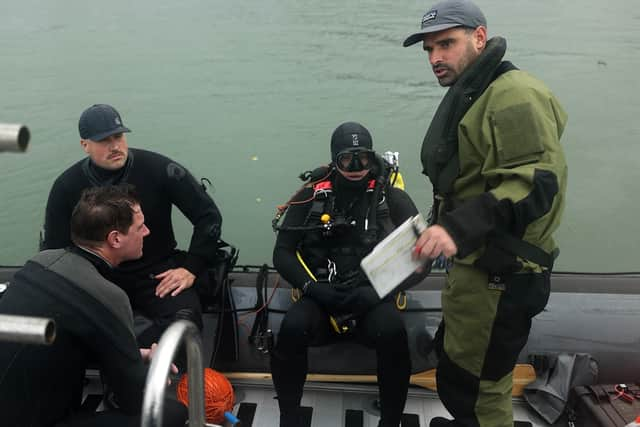
“Having a positive impact on the marine environment that we so regularly occupy is a fantastic by product and we are very happy to be supporting.”
The Solent was once home to the largest fishery of European flat oysters in Europe, but overfishing and pollution reduced the European flat oyster (ostrea edulis) to negligible numbers by the 1980s. A single adult European flat oyster – measuring just 8-9cms – can filter up to 200 litres of water a day.
This process removes chemicals and pollutants from the sea, improving not just the clarity and quality of the sea, but allowing sunlight to penetrate further. This allows certain species, such as seagrass beds, to grow. Blue Marine has established artificial reefs in Langstone Harbour and the River Hamble.