
Portsmouth-based destroyer HMS Dragon 'breathes fire' to destroy missile threat
A HI-TECH destroyer has proved to be a world leader in defeating missile and air attacks after the largest international test of its type.
HMS Dragon’s weapons and sensors proved themselves against everything fired against a Nato task force – from ballistic missiles plunging towards Earth from space to supersonic targets heading towards the ships at nearly three times the speed of sound – during the fortnight-long Exercise Formidable Shield.
The workout ended with the Portsmouth-based Type 45 destroyer’s primary weapon smashing an incoming missile into a million pieces as the war games reached their climax.

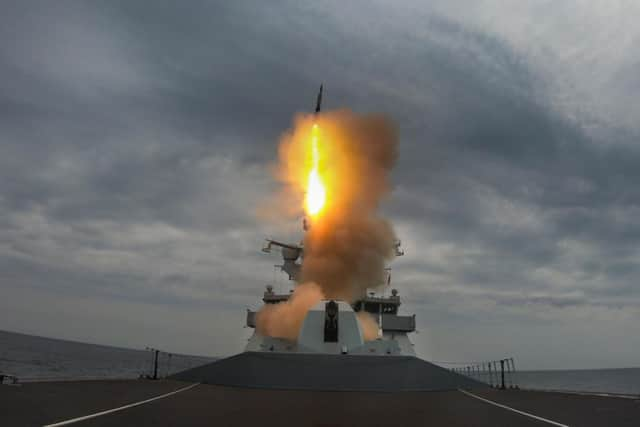

Run every two years, the huge – and hugely complex – exercise tests the ability of Nato ships both individually and collectively to deal with the latest aerial threats.
The Senior Service tested its two principal air defence missile systems during this year’s exercise – Dragon’s Sea Viper, plus the shorter-range Sea Ceptor fitted on frigates HMS Lancaster and HMS Argyll.
Dragon’s foe, fired from the range at Benbecula, was a Firejet drone, intercepted travelling at more than 400mph.
In the operations room, the air warfare team tracked the missile, then Sea Viper locked on to its target.
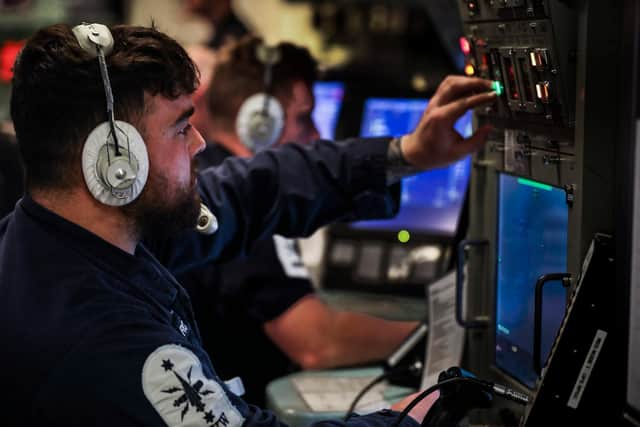
The whole engagement lasted a matter of seconds – with the specially-modified Sea Viper feeding Dragon data about its actions throughout its short flight until striking the Firejet.
‘I was left speechless after the firing; it was something I had never experienced before. The build-up all week really added to the anticipation,’ said Engineering Technician Jamie King, one of Dragon’s junior weapon engineers.
Sub Lieutenant Ben Craddock observed the firing from Dragon’s bridge and said: ‘I cannot believe how lucky I am to be part of this; the flames were massive.’
Formidable Shield proved that Dragon can track long-range ballistic missiles into space – and crucially on their return trajectory – at speeds of over Mach 8, as well as shorter range variants which arced up to the edge of the atmosphere before returning to Earth.
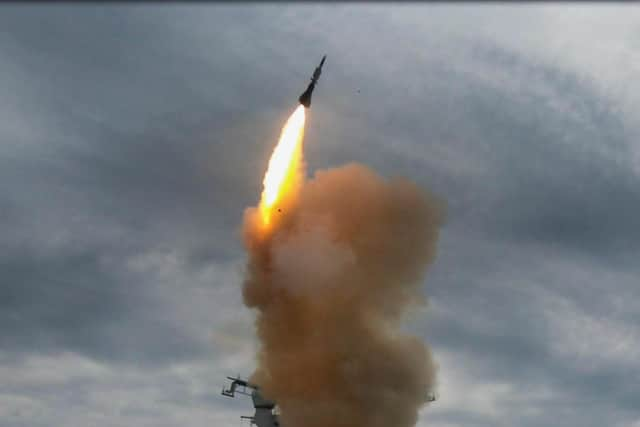
‘Dragon has done what dragons do best: breathe fire,’ said Commander Giles Palin, the ship’s captain. ‘It’s been a successful Formidable Shield, a successful missile firing for Dragon and a great time to contribute to our enduring partnerships within Nato.’