
Royal Navy icebreaker HMS Protector back to sea on climate change mission to the Antarctic
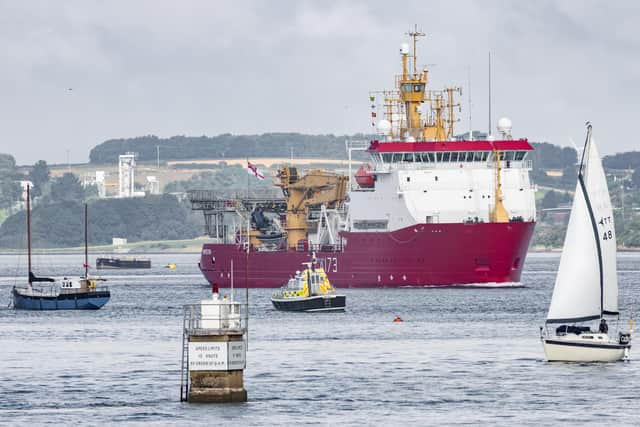
THE Royal Navy’s sole ‘icebreaker’ set sail for the Antarctic yesterday note-0 on her first visit to the frozen continent in two years.
HMS Protector’s journey to the icy wasteland as part of a research expedition to gather data which will help scientists better understand the impact of climate change.

The former Portsmouth-based vessel’s journey comes after a landmark study by the United Nations this week warned humanity was on the brink of a global environmental disaster if drastic action wasn’t taken to reverse the impact of climate change.
The scientific report warned of increasingly extreme heatwaves, droughts, flooding and was branded a ‘code red for humanity’ by the UN’s chief.
HMS Protector’s voyage from Plymouth is the first major one since 2019, after the vessel spent most of 2020 undergoing its ‘most comprehensive refit’ in its history.
The vessel’s deployment will focus first on the warmer climes of two of Britain’s south Atlantic territories: Ascension Island – In the middle of the ocean between Brazil and Angola – and, 800 miles to the southeast, St Helena.
Some of the stretches of water around the remote islands have not been surveyed in 200 years, so Admiralty Charts – used not just by the Royal Navy, but seafarers the world over – need updating courtesy of the latest sonar and surveying equipment Protector carries.
The ship will begin her polar work in December at the height of the austral summer –where temperatures can creep just above freezing – visiting UK and international research stations peppered around the British Antarctic territory, and extensively surveying the seabed there.
Captain Michael Wood, Protector’s commanding officer, said his ship’s return to Antarctica ‘highlights the navy and nation’s determination to contribute to climate science and limit climate change’.
He added: ‘I am proud of the very hard yards this team made to reset the ice patrol ship. It’s time now for new adventures at the other end of the world.’