
Inconsistent education SEND support one of the "greatest challenges" facing Royal Navy, Army and RAF families

Unpredictable education support for children in armed forces families is considered one of great challenges facing personnel.
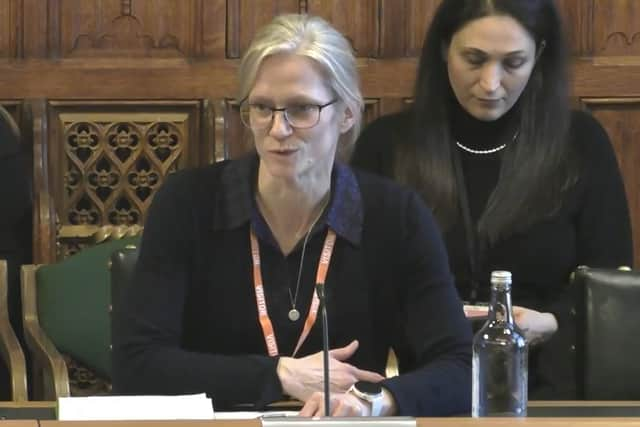
Andrea Devlin, director of the RAF Families Federation, told the Armed Forces Bill Select Committee that military children do not always get the care and attention they need - especially with loved ones on deployments.
“It’s one of the greatest areas of challenge facing forces families,” she said. “It does cause a huge amount of hardship. They’re often moving at short notice, and not through their choice.


“We’re seeing an increasing number of families to allow serving personnel to go unaccompanied rather than disrupt the family because of that inconsistency. That starts to impact retention. It may solve one problem but brings other challenges for that family.”
Jayne Kirkham, Labour MP for Truro and Falmouth, said earlier in the meeting that parents applying for pupil premium and Special Educational Needs and Disabilities (SEND) support often face many hurdles, with local authorities or multi-academy trusts not always understanding the complexities of military service.
Some, including the Clifton family from Fareham, had educational help removed by Hampshire County Council after temporarily relocating due to a deployment - despite having a return date. The family had to fight through the courts to have the support for their son Theo, 10, retained.
Sacha Butcher, of Portsmouth, previously spoke of how her 10-year-old daughter Eleanor struggled to cope while Adam Powlesland, a Royal Navy Chief Petty Officer, went on deployment for several months. They found support at school was positive, but this is not always the case.
Rebecca Lovell, head of policy and deputy CEO of the Naval Families Federation, said: “For support in schools, we do find examples of good practice across the board. However, families do come to us and say there isn’t recognition in their school.
“This may be due to being in an area with a lower military footprint. We have other examples where they take care, understand their obligations, and make provisions. That can make a real difference.
“From our point of view in the Royal Navy and Royal Marines, there is not visibility on mobility. This is one of the areas that causes significant disadvantage. It’s the length of separation: six months, nine months, or longer than that. The children aren’t in and out of school, so it’s not so obvious. With submariners, there is no contact either, which adds a completely different element.”
The government is currently pushing to enshrine the Armed Forces Covenant into law. This is a pledge to acknowledge that serving personnel and their families face certain difficulties, and should not face any disadvantages in their lives due to serving their country.
Earlier in the meeting, Ms Kirkham asked the panel: “Forces families face several challenges. They have to move regularly, they often face periods where one member is not there, or left, or died, and there are lots of issues they face that other families do not. How well does the Armed Forces Covenant support forces families?”
Collette Musgrave, chief executive of the Army Families Federation, said it was a “very mixed bag”. “Some service providers and areas of the country are very focused on the armed forces covenant, and have a high level of understanding,” she said. “Almost everywhere has a high level of empathy, but there’s not necessarily an understanding of the complexity of service life.”
She added: “Each family would have experienced an individual journey. Some elements would have been positive, others very difficult due to their family situation. There’s a challenge for service families in engaging with service providers and the government to receive a consistent level of support and understanding of their particular circumstances.”