
"Critical" hypersonic missile propulsion test hailed success as project hopes to counter "dangerous" world

Development of hypersonic missiles for the armed forces has reached a critical milestone.
British scientists have completed a high-speed propulsion test as part of a project to produce cutting-edge cruise weapons. Alongside their American counterparts, 233 test runs of a high-propulsion engine were completed at hypersonic speeds.
Defence secretary John Healey said: “We are living in a more dangerous world and it has never been more important for us to innovate and stay ahead of our adversaries, equipping our forces with the technologies of the future. This milestone moment on hypersonics research, supported by British scientists and British small businesses, demonstrates another crucial area where we are working in lockstep with the United States to bolster our Armed Forces and strengthen our deterrence.”
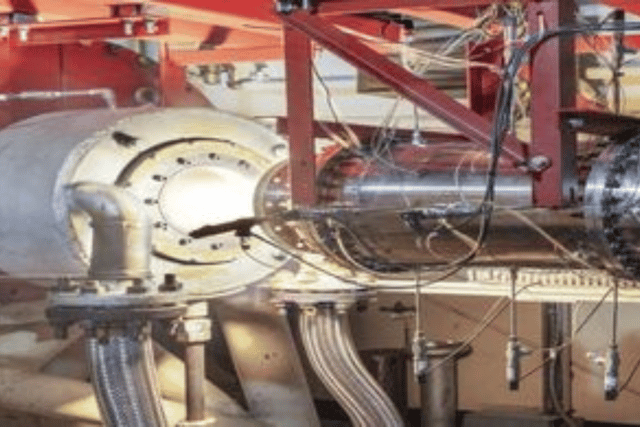

A joint team led by the Defence Science and Technology Laboratory (Dstl) and US Air Force Research Labratory (AFRL) carried out the test runs at the NASA Langley Research Centre in Virginia. The extensive testing - part of the Hypersonic Weapons Programme - took place over six weeks, with analysis being carried out to boost propulsive performance.
The engine was tested extensively and is poised to power hypersonic cruise missiles, with the trial successfully trialling a high-speed air-breathing engine. It’s hoped the weaponry will have greater ranges than conventional rockets. The engine was tested at a variety of speeds on the Mach number range from supersonic to hypersonic.
Various new capabilities are being developed for the British armed forces, including the destructive DragonFire laser weapon system which can reportedly zap a £1 coin from a mile away.
On the hypersonic test, Dstl’s Chief Executive Paul Hollinshead said: “This milestone represents a critical advancement in the UK’s defence capabilities and reinforces our standing in the AUKUS hypersonic weapon development collaboration. The success of these tests highlights the UK’s commitment to technological leadership and innovation in this crucial area.”