
HMS Victory: Conservation work "continues at pace" to restore Royal Navy flagship to her former glory

Painstaking engineering to conserve HMS Victory for future generations is “continuing at pace”.
The Royal Navy flagship, known for Admiral Lord Nelson’s famous victory against Napoleon at the Battle of Trafalgar in 1805, is undergoing major restoration work. Much of the vessel is covered by scaffolding as highly skilled shipwrights, conservationists and archaeologists conduct The Big Repair - due to be completed in 2032.
Simon Williams, project manager for HMS Victory The Big Repair, said the scheme has a long timeframe due to it being a conservation project that goes far beyond the restoration of the vessel. He added that every step is being taken not to lose anymore historical material. The 37-year-old said rot was found after the outer shell of HMS Victory was taken off, with woodboring Deathwatch beetles attacking its timber frame.


Conservationists are aiming for the restoration to protect the ship from the elements over the next 50 years, though Mr Williams believes it can last longer. The Southsea resident told The News: “We need to replace a substantial number of frames on the starboard side.
“That’s the area most affected by those cycles of wet and sun, which has created the environment for rot and the Deathwatch beetle attack. There’s a lot of work to do there. Portside is much better, but we’ve got to conserve some historically significant frames which date to her seagoing career, which is an exciting challenge we have coming up.”
HMS Victory’s midship from the waterline, bow and stern, will be fully restored, a new figurehead will be created, and the first-rate-ship-of-the-line will be fully re-rigged. Mr Williams said it’s hoped the framing stage will finish by the end of this summer, with the oak re-planking phase being the next step. The midship is due to be fully restored by 2027. HMS Victory is ironically being rebuilt using French wood, as its considered the most sustainable and effective material.

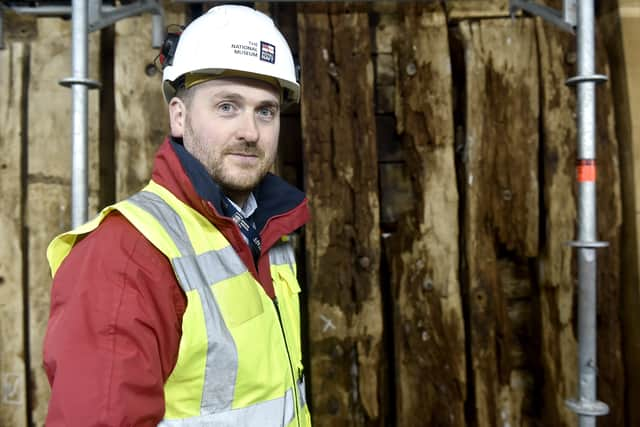
“The project is going well,” Mr Williams added. “In some areas, it was worse than we expected, in others it was better. HMS Victory always throws up these challenges and we can never fully plan for what we may find. We’ve got a skilled team of shipwrights, conservationists and archaeologists working on this full time and progress is on schedule.”
The project manager said the biggest hurdle has been taking out structural components of HMS Victory while safeguarding the vessel as a whole. A propping scaffolding system had to be built around the historic naval craft, so she doesn’t bear any weight from components while they’re being fitted. “All the work we do is subject to structural modelling,” Mr Williams added.
“That gives the team the confidence in what they’re working on and it's not risking the structural integrity of the ship. When you’re working on a project of this importance and this scale, there is always inherent risk, but we put a huge number of controls in to manage that. The team has built confidence from the work we’ve done and we can continue at pace. HMS Victory will look like she did on the morning of the Battle of Trafalgar in 1805.”
HMS Victory was commissioned in 1778 and took 6,000 trees to construct - holding 104 guns and being over 227ft long. The warship was at the centre of the Battle of Trafalgar - a decisive British victory over the French and Spanish fleets - where Admiral Lord Nelson was famously shot dead. Its regarded as the key event during the Napoleonic wars. Scientists and historians are now taking the opportunity to explore more of HMS Victory’s past.

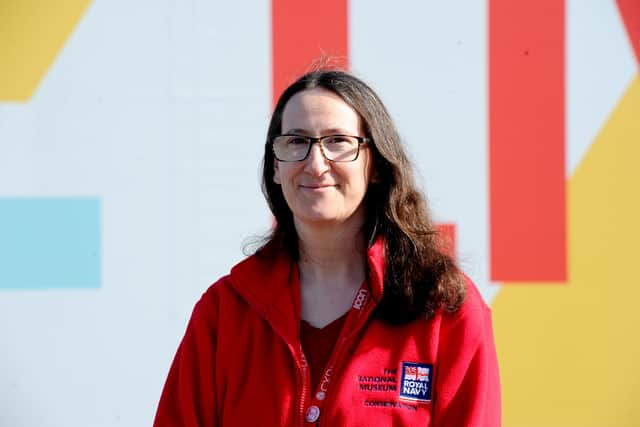
Diana Davis, head of conservation for The Big Repair, said diligent research is being done into the types of materials that need to be used on the ship to cope with the weather. “This includes ways of protecting the timber from rain water, fungi and bacteria which can grow and decay the wood,” the 43-year-old added.
Ms Davis said more of HMS Victory’s history is being discovered, including 17th century oak frames which no one knew had survived. “We’re still adding to the ship’s story and it's still being written,” the Fareham resident said. “This is a special opportunity to learn more about the inside of the ship we can’t normally see. The hull is a complex structure. Opening it up doesn’t happen very often.
“We’ve learnt so much about those uncovered frames and we’ve analysed what’s hidden in the frame spaces, some things left accidentally and others on purpose. We’ve also found out a lot about the biological agents on the hull including insects, fungi and wood decaying bacteria. We’re finding new things everyday, and generating a lot of data which will be useful to a lot of people. We’re engaging with other historic ships around the UK and the world about the things we’ve learned. It’s difficult and expensive to maintain historic ships, so any help we can give is valuable.”