
Exciting construction update for new Royal Navy Type 26 frigate HMS Sheffield - when will she enter the fleet?

HMS Sheffield is the fifth of the eight City-class frigates being built
An advanced new submarine-hunting frigate being built for the Royal Navy is slowly starting to take shape.
The first section of HMS Sheffield, a huge aft block, has been transported and brought to the new paint facility at BAE Systems’ Govan shipyard. The block, which will house machinery at the heart of the Type 26 frigate, was moved from the outfit hall as part of the next stage of construction.
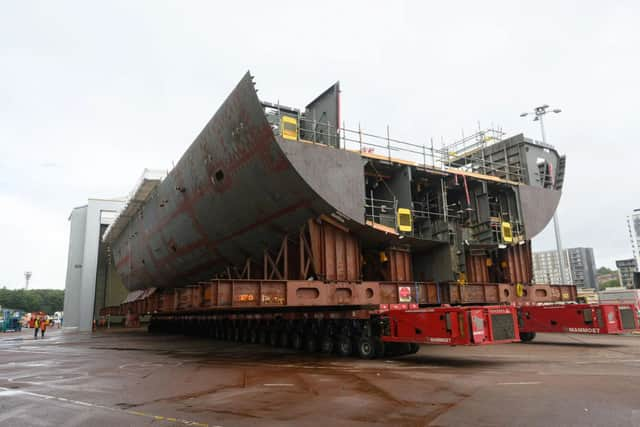

Engineers can now use the new facility to speed up construction. It allows consolidated blocks of the ship to go through the shot blast and paint process rather than the work being carried out on less efficient unit-by-unit basis. This means that the hull can be painted more efficiently.
The use of the dedicated facility also minimises disruption on other units and blocks under construction in the build facilities. HMS Belfast, Birmingham, and Sheffield, are all in this stage of the production line at Govan. HMS Glasgow and Cardiff are further ahead, currently in the fitting out phase where key systems are being installed ahead of upcoming sea trials.
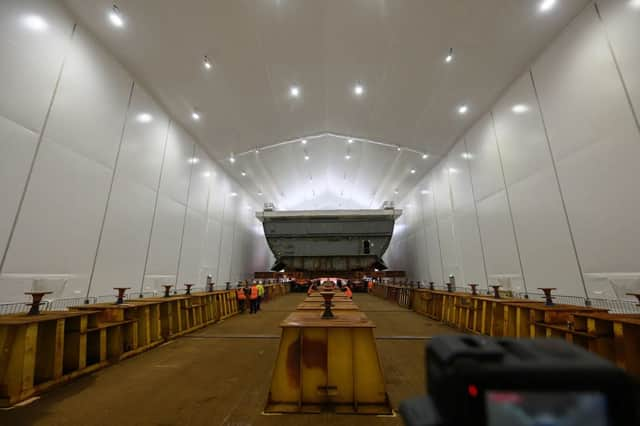
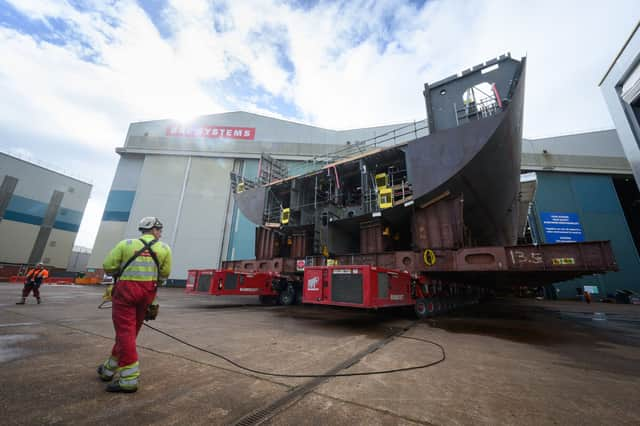
Work is being undertaken on those two frigates at the Scotstoun site. The new paint hall is part of a multi-million-pound upgrade of the Govan site. This is part of the huge Janet Harvey Hall, where two Type 26 frigates can be worked on side-by-side.
The first of the frigates are due to be commissioned into the fleet by 2028. Later additions, including HMS Sheffield, will be rolled out throughout the 2030s. These are needed desperately given the deteriorating state of the Type 23 frigates, which are being retired due to their age.
Minister for defence readiness and industry, Luke Pollard, previously said: “This is part of a carefully managed modernisation programme, which will see these new highly capable Frigates enter service, and the Type 23s retire from the Royal Navy following decades of dedicated service. In addition, there will be significant long-term investment in the six Type 45s, to enhance and sustain these world beating Air Defence platforms into the late 2030s.”