
"It makes me proud" - Lieutenant on HMS Prince of Wales op reflects upon uncle being sunk and taken prisoner

An emotional Lieutenant Commander aboard the Royal Navy flagship has reflected on the service of his uncle eight decades before.
HMS Prince of Wales passing through the Java Sea re-awakened Lieutenant Commander Dominic Garner’s family history. Stoker 1st Class Patrick Joseph ‘Rusty’ Cawley, from Burtonwood near Warrington, was serving aboard HMS Exeter when the Heavy Cruiser was sunk during the Second World War.
He was then thought to have been taken prisoner by the Japanese after making it to a life raft. Lt Cdr Garner knew Rusty Cawley simply as “Uncle Paddy”. Like many of his generation, Rusty never shared his experiences with his family, but Lt Cdr Garner, from St Helens, has attempted to piece together some of Paddy’s history through research and conversations with former shipmates.
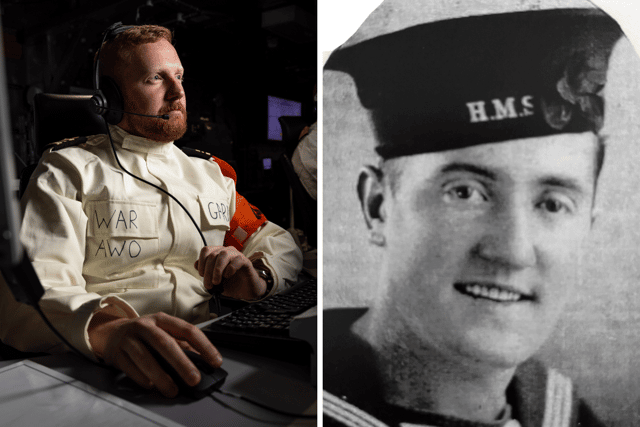

Paddy Cawley probably ended up at the infamous Makasar Camp near Celebres (modern day Sulawasi, an island east of Borneo) where inmates were put to work building railways and military infrastructure. While Lt Cdr Garner was training at Dartmouth in 2013, he attended a service for the wartime Exeter attended by small band of survivors. The veterans were able to recognise some of their old shipmate’s features, including his bright ginger hair.
“We spent the rest of the afternoon and evening sharing stories as they told me their tales of each other and my great uncle during the battle and the rest of the war as prisoners of war together,” the 30-year-old naval officer said. “That afternoon and the profound feeling of belonging I had as a young midshipman has stayed with me throughout my career.
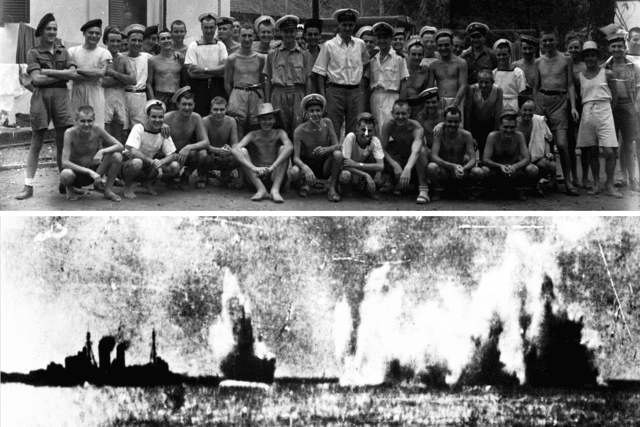
“Being deployed in HMS Prince of Wales and operating in the Java Sea where some 83 years ago my uncle and his shipmates were sunk, fighting as the ship went down, makes me feel so proud to serve today.”
HMS Prince of Wales left Singapore last week following a high-profile diplomatic visit. Taking the helm of the UK Carrier Strike Group (UKCSG), the 65,000 tonne warship is heading to Australia for Exercise Talisman Sabre - a huge multinational mission involving 19 other countries.
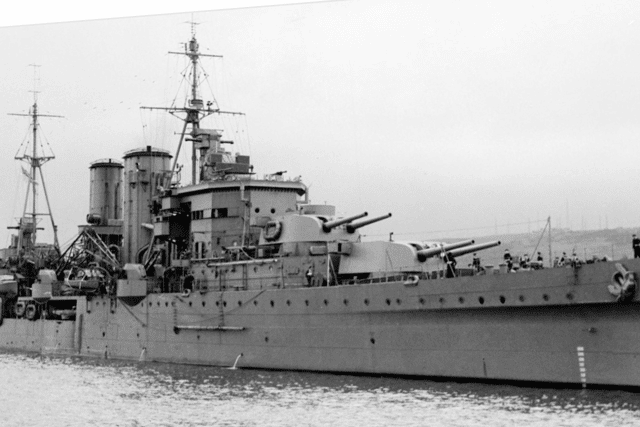
Since arriving in the Indian Ocean in early June, the multi-national force has followed much of the path taken by Royal Navy warships during the Second World War. They were fighting against Japanese forces sweeping through South East Asia in 1941-42.
The UKCSG is currently in the Java Sea, near the Indonesian islands of Borneo, Java, Sumatra and Sulawesi, where in late February and early March 1942, the waters were the scene of two major naval encounters. During the Battles of the Java Sea, several Royal Navy warships were sunk.