
Royal Navy: HMS Collingwood sailors remember fallen First World War comrades in Battle of Gallipoli
Compassionate sailors held a memorial to those who lost their lives in the First World War Gallipoli campaign.
Royal Navy personnel based at HMS Collingwood in Fareham took part in the ceremony at the Blandford memorial. Serving sailors, dignitaries and members of the public came together to remember their fallen comrades in the Collingwood Battalion.
The battalion suffered disastrous casualties on June 4, 1915, so much so that the unit was never reformed. Their sacrifices were brought to the spotlight during the annual commemoration at Collingwood Corner.
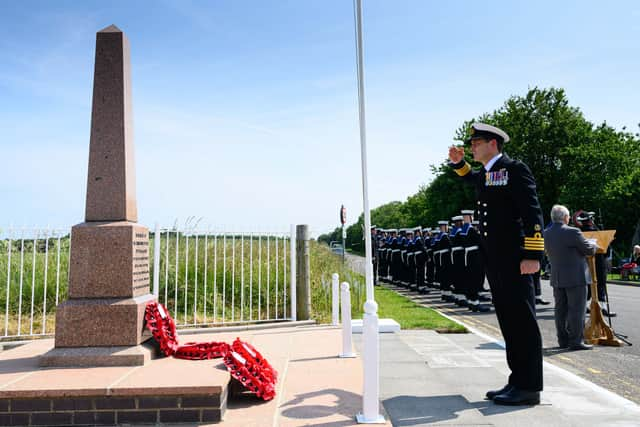

Lieutenant Colonel (Retired) Bob Brannigan led the act of remembrance and Mr Stuart Adam, whose grandfather served with the Royal Naval Division, shared his personal history.
HMS Collingwood’s Commanding Officer, Captain Tim Davey, shared his appreciation for the memorial service. He said: “This annual service is an important way for today’s sailors to connect with their naval heritage. This annual service is an important way for today’s sailors to connect with their naval heritage.”
On June 4th 1915, 1,060 officers and men of the Royal Naval Division lost their lives. The unit was disbanded exactly four years later. It’s considered the bloodiest day associated with the Collingwood.
There are still many physical reminders of their presence in the Blandford camp, as the practice trenches are still used today. Roads are named after those that once trained there. The memorial visited today was first erected in 1919 and unveiled by the widow of the Collingwood Battalion's commanding officer Mrs Spearman. Now, the memorial is the location where each annual commemorations held, inviting people to remember the tragedies of June 4th.
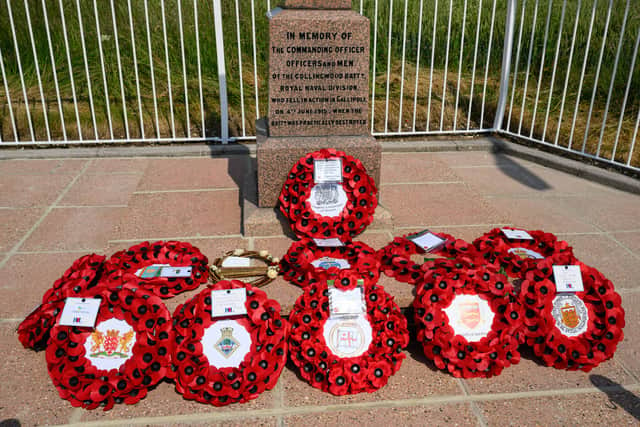
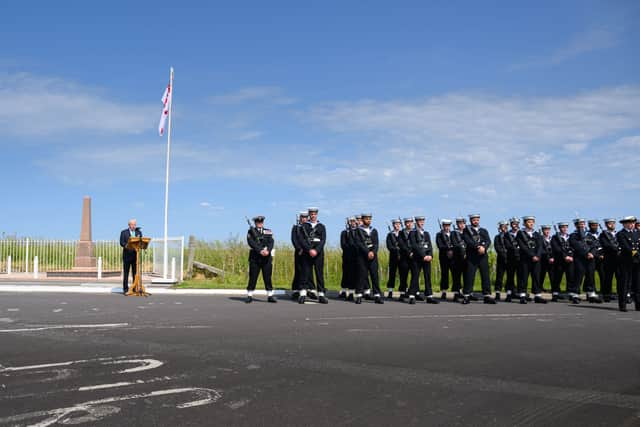
During this year's ceremony, the service included traditional hymns of “oh god our help in ages past” as well as “nearer my god to thee”. Both hymns were performed by the HMS Collingwood’s volunteer band. The traditional sounding of the Last Post was made, alongside a two minute silence.
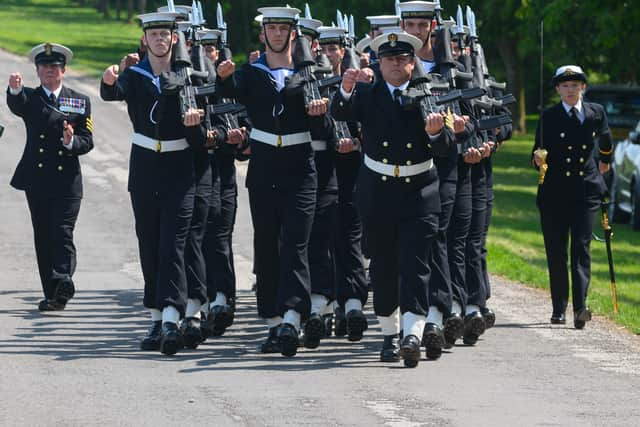
Second Sea Lord Vice Admiral Sir Martin Connell inspected the guard of honour formed by 24 Victory Squadron ratings from HMS Collingwood. In the First World War, trained personnel in the Collingwood battalion were sent with the rest of the Royal Naval Division to Gallipoli. The operation’s intention was to knock the Ottoman Empire out of the war.
Instead, after six weeks of fighting all the offensive achieved was to recreate the Western Front in microcosm on the Gallipoli peninsula; the attackers had advanced just three miles. On June 4, the Royal Naval Division committed around 2,000 men – part of a larger force of 30,000 Allied troops storming the Turkish lines near the village of Krithia.
The attack began at mid-day. By 12.45pm it had failed completely after two waves of sailors had been committed. In just 45 minutes’ of fighting, hundreds of officers and men of the Royal Naval Division were dead. The Collingwood Battalion suffered the bulk of the casualties.
The Royal Naval Division was formed at the outbreak of World War One under the direction of then First Lord of the Admiralty Winston Churchill, when the navy had a surplus of sailors upon mobilisation. After the mauling at Gallipoli, the division returned to Blandford to re-group and re-train, before deploying to the Western Front, where it served with distinction as the 63rd (RN) Division for the remainder of the war.
The Blandford Memorial was erected in 1919 and originally unveiled by Mrs Spearman, widow of the Collingwood Battalion’s Commanding Officer. The Fareham training establishment has carried the Collingwood name since 1940.