
"Defence industrial superpower" plans set out by Rachel Reeves with boost to Royal Navy, Army and RAF spending

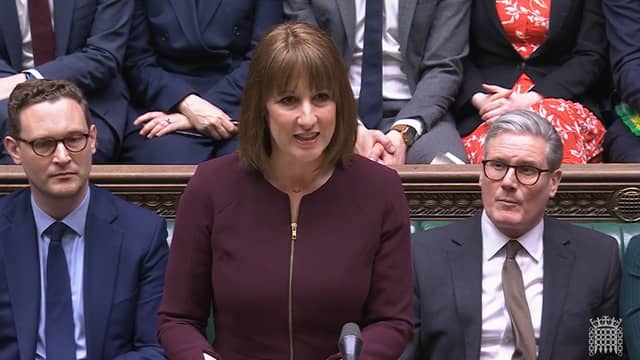

Defence spending was at the top of the agenda during the government’s Spring Statement.
Chancellor Rachel Reeves set out aims to make the UK a “defence industrial superpower” while speaking to the House of Commons today (March 26). She confirmed plans to increase military spending by a further £2.2bn, will be made alongside the previously announced rise of £2.9bn in October.
The government previously announced plans to boost support for the Royal Navy, Army, RAF, and other forces, to 2.5 per cent of GDP by April 2027. Labour received pressure from the Conservatives, American president Donald Trump and officials in Nato to announce a timeline for this.

Speaking in parliament, Ms Reeves said: “Our task is to secure Britain’s future in a world which is changing before our eyes. The threat facing our continent was transformed when Putin invaded Ukraine, and has since escalated further, and continues to evolve rapidly. This moment demands an active government. A government stepping up and on the side of working people, helping Britain to reach its potential.”
The budget set out plans to boost the country’s defence industry, and gave further details on where the money is coming from. Some related policies were also mentioned. Here is what Rachel Reeves said during the Spring Budget.
Spending boost of £2.2bn on defence
To fund the 2.5 per cent of GDP on defence spending by April 2027, the overseas aid budget will reduce to 0.3 per cent of GDP.
“This means we will save £2.6bn in day to day spending in 2029/2030, to fund our more capital intensive defence commitments,” Ms Reeves said. The Labour politician added that despite the challenges presented in a “changing world”, there were opportunities for new jobs and new contracts in Britain’s “world class defence industrial centres”.
Earlier in the address to parliament, she added: “This is the biggest sustained increase in defence spending since the end of the Cold War, with the ambition to spend three per cent of GDP on defence in the next parliament. That was the right decision in a more insecure world, putting an extra £6.4bn into defence spending by 2027. But we have to move quickly and that starts with investment.”
She added: “This additional investment is not just about increasing our national security, but also our economic security too. As defence spending rises, I want the whole country to feel its benefits.”
“Defence industrial superpower”
Ms Reeves said a minimum of 10 per cent of MoD equipment budget will be allocated towards novel burgeoning technologies including drones and other AI systems. The aim is to drive forward advanced manufacturing for military capabilities, as well as increase demand for high-skilled scientists and engineers.
Millions of pounds of funding will be ringfenced in a protected budget for the same purpose. The Chancellor said: “We will establish a protected budget of £400m within the MoD, a budget which will rise over time for UK Defence Innovation, with a clear mandate to bring innovative technology to the front line at speed.”
Upgrades will be made to HMNB Portsmouth as part of the package, though the chancellor did not provide further details about the plans. This policy was praised by Portsmouth’s Labour MPs.
Refurbishment work for military homes will also be carried out, including the 36,000 new properties which were recently acquired by the Ministry of Defence (MoD) from the private sector. Ms Reeves said these houses are largely based in Aldershot, York Outer, Plymouth Moor View, and Plymouth Sutton and Devonport constituencies.
The Chancellor also announced plans to encourage more oversea businesses to buy military goods produced in the UK. “We will provide £2bn of increased capacity for UK export finance to provide loans for overseas buyers of UK defence goods and services,” she said.
“I want to do more with our defence budget, so we can buy, make and sell things in Britain, giving further opportunities for our world-leading defence companies and those who work in them to grow and create jobs here in Britain as military spending rightly increases across Europe.”
The Chancellor lastly confirmed that she and the defence secretary, John Healey, will be established. Its aim will be to maximise the benefits from taxpayers’ money.
Other matters
Further details on what military capabilities will be prioritised were not announced. As previously reported in The News, part of the funding will be put towards directed energy weapons. These capabilities, including long range lasers and microwave weapons, will be fitted to Royal Navy warships.
Armed forces minister Luke Pollard told Forces News that Dragonfire directed energy weapons will be installed on four Royal Navy destroyers as part of the £2.2bn of extra funding.
Further plans on how the government will invest in the defence sector, and the country’s military capabilities, are currently being drawn up as part of the Strategic Defence Review.
Reacting to the budget, Ross McNally, Chief Executive and Executive Chairman of Hampshire Chamber of Commerce, said: “The Chancellor’s announcement of a £2.2bn boost to defence spending plays directly into Hampshire’s strengths in advanced manufacturing, technology and engineering.
“We are central to the UK’s defence sector and so it was great to hear Rachel Reeves’ specific commitment to regenerate and secure the future of Portsmouth Naval Base. Similarly, we welcome her announcement of more investment in export finance to enable our defence contractors to do more in global markets.
“Hampshire’s role as an engine of growth will also be helped by the moves she announced to make it easier for our smaller firms to land defence contracts through easier procurement.”