
Defence sector supporting Royal Navy in 'very poor state' with firms 'stifled by money' and 'uncertainty'

The long-standing delays to the Defence Investment Plan is having a large impact on several firms
Delayed investment pathways are leaving the defence sector and its businesses in a “very poor state”.
Directors who spoke to The News at the Seawork conference on June 9 painted a bleak picture of the current business landscape, though a brighter future is being promised. Much of the pessimism comes from the delayed Defence Investment Plan (Dip), which has been pushed back since the autumn of last year.
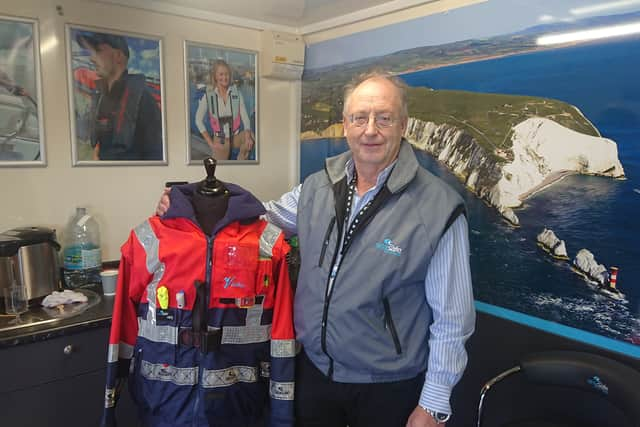
Jeremy Dale, managing director for Seasafe - an Isle of Wight firm that produces maritime inflatable coats for pilots in Portsmouth - said the sector is in a “very poor state”. He added: “Since we’re now the only UK manufacturer left making lifejackets, we have seven military customers who are all interested in body armour. We also do inflatable fuel tanks for drones.
“These are projects we’ve been working on for nearly three years. None have come to fruition yet. There is no money. It’s not happening, and I think we’re leaving it too late. It’s just getting ridiculous.”

“Struggling to make ends meet”
The Dip aims to set out the funding parameters for reforms in the Strategic Defence Review. Controversy surrounds the document, with defence secretary John Healey and defence minister Al Carns resigning over its contents. Mr Healey said in his resignation letter that it only sets out an increase in defence spending to 2.68 per cent of GDP by 2030, and an extra £13.5bn insteads of the recommended £28bn.
Many businesses are looking for the devil in the detail, which armaments and capabilities are being procured, and the ones being cut. Seasafe has been operating on the Isle of Wight for 60 years, producing life jackets, life rafts, and equipment.
Speaking before the minister resignations, Mr Dale said the UK risks being left behind the longer it takes to publish the Dip. He added: “When we started on drones, it was very advanced, but now Ukraine is a world leader. The stuff we were looking at three years ago was incredibly sophisticated, but it still hasn’t been accepted and not signed off. Unfortunately, everything is being stifled by money.
“It hasn’t left us short of money, but we have committed to them to a certain degree. We’ve been cautious, but it hasn’t helped us. We’re still hoping they’ll come through, but we’re struggling to make ends meet on that basis. It’s down to the delayed Defence Investment Plan. We don’t know what they’re going to say or when it’ll be implemented. I give up, and I think we all do.”
The government has previously insisted that it’ll prioritise British-based companies, as well as small and medium-sized enterprises, for contracts. Mr Dale said Seasafe is the only company that manufacturers life jackets entirely in the UK, but is still missing out on potential revenue. The News understands that the firm missed out on a contract due to costs, as a rival produced the components abroad where the minimum wage is lower.
“We need to know”
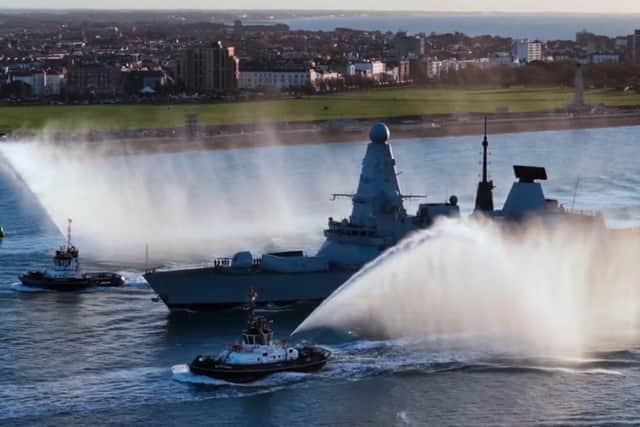
Some firms have seen much-needed investment. UK Docks in Gosport, Griffon Marine in Portchester, and Serco Maritime in Portsmouth, received multi-million pound packages as part of the £283.5m Boats In Service Support Contract - alongside Golden Arrow and Babcock.
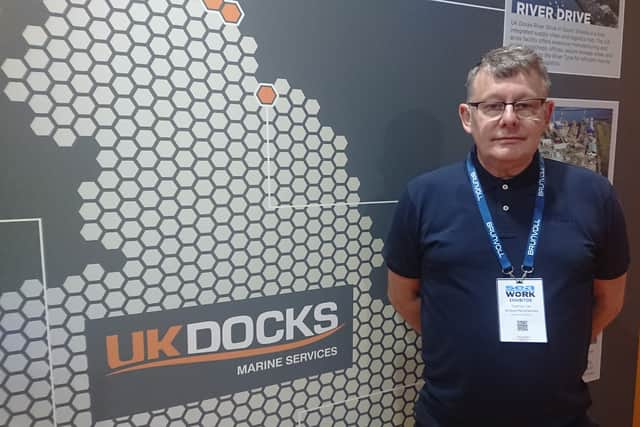
The former, based at Endeavour Quay, was awarded £84m to look after 194 Royal Navy and Royal Fleet Auxiliary (RFA) vessels, as well as Ministry of Defence Police boats. Operations director Stephen Lee said several questions are left unanswered due to the unpublished Dip.
He said: “We need to know what’s coming down the line. There’s still a large amount of uncertainty. Industry is being asked to prepare, be agile, and flexible. I think we are. Everyone can pivot quickly, but the idea of that strategic review being realised and enacted upon is dependent on how much investment is coming.
“We’re in a good position. It’s a competitive arena we’re working in because the manpower pool is small. We’re scaling up and investing in new people. We’re scaling across our wider portfolio too in the north of England, with the size and scale of our ship repair yard in a 15 acre site, with four dry docks being used. We’re expanding our apprenticeships. I would like to say we will be in a good position, but I’m not going to lie and say it won’t be a challenge.”
Mr Lee added that employees are more likely to move between jobs due to skills shortages, making it difficult for companies to retain talent long term. This is poignant given comments made by Samira Braund, defence director for ADS Group - a defence and aerospace trade association - earlier this year. Speaking to the defence select committee, she said the delayed Dip has created a “feast and famine environment”. Some businesses are thriving, while others are at risk and laying off staff.
Mr Lee added that people with ambition are more likely to acquire the skills in one place, while moving to another for different incentives. “Depending on the size of the company, that ability to progress may not be there,” he added. “Due to the uncertainty around investment and contracts, you can’t move people up to supervisory and managerial roles.”
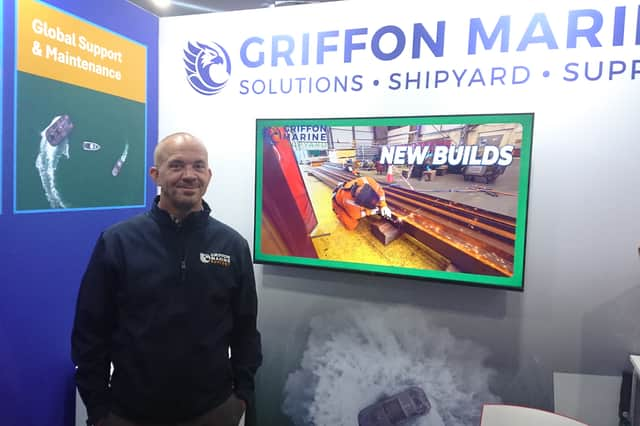
Griffon Marine’s head of support, Andy Weaver - who is in charge of the BISS26 contract - said the security has enabled the company to increase staff by 24 per cent and employ 11 apprentices. He hopes the government can put words into action and prioritise British businesses. “Why wouldn’t they,” he added. “We’ve gone overseas and got our fingers burnt. They should be staying here.
“It gives job security and has made us really attractive for recruiting, as we can dangle the carrot of seven years of solid work.”
“We want to shape that future”
Serco Maritime’s businesses development director, Andy Linegar, said the Dip is a hot topic of interest among businesses. He added that the firm isn’t going to wait for it before making moves.
“If that is crystallised, the future should be clearer, but we can’t wait for it to happen,” he said. “We’ve got initiatives in the US and internationally with the Joint Expeditionary Forces we want to engage with. There’s a positivity within defence, and we’re going to go ahead anyway.
“If we wait for it too long, there are large companies who are already pushing the boundary forward. By the time DIP comes on, the answer will already be out there, so we need to compete against that. We see the hybrid navy as the future, and we want to shape that future as well. The government has to have that demand signal ratified and do more about it.”
C-Quip, a Whiteley-based marine equipment distributor, is considering whether to move into the defence sector. They’ve become JOSCAR verified, which means they can be registered for MoD contracts. The firm helps make vital components available for larger businesses on procurement projects, often produced by smaller firms. This can be anything from commercial hatches and other equipment used in boatbuilding.
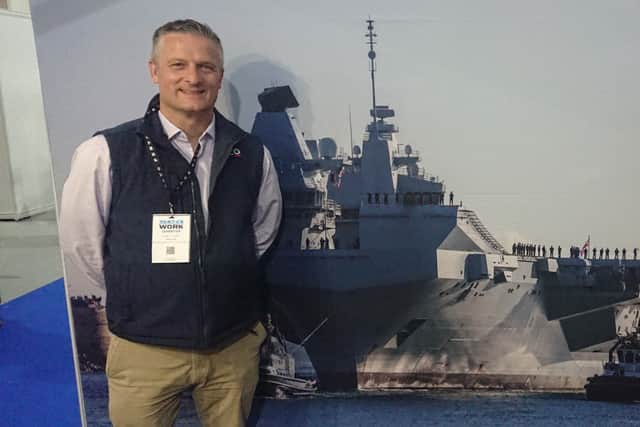
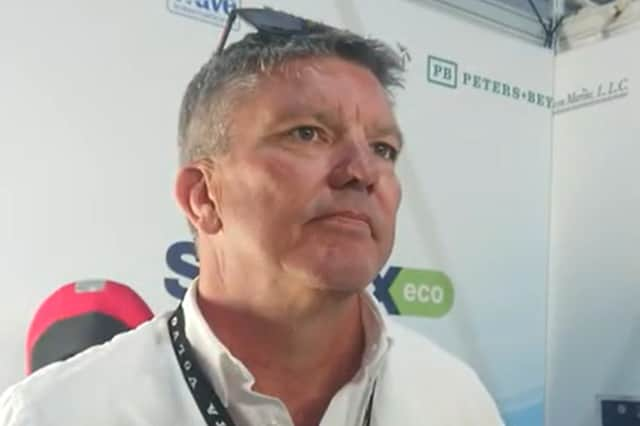
Managing director Ian Cooke said the leisure and recreational sector has been under significant pressure, and believes there is a real opportunity in defence. “We don’t quite know all the details yet, but we know there’s going to be investment in it,” he added.
“We would love to be part of that. It’s not a straightforward exercise. We’ve had some really interesting introductions to people that can guide us through that. The commercial sector is under much heavier legislation. When things need repairing or replacing, it’s a legislative requirement of safety. It rolls on fairly predictably compared to the luxury sector. I’m quite looking forward to that element of it.
“Once you get momentum and underway, I think the opportunities are there and I’m confident in that. We’ve launched a new platform which is proving interesting to a lot of manufacturing brands. We’re providing a system that hasn’t been available to that particular sector, and if I can generate the same customer interest, I’ll be a very happy man by next year.”
“Demands that we do better”
John Carrigan, deputy director of the National Shipbuilding Office, tried to allay fears about the delayed Dip. He said access to finance and government incentive schemes have been a thron in the side of industry, but there is support available through the British Industrial Competitiveness scheme and other initiatives.
“I recognise that the Defence Investment Plan is eagerly awaited by us all, but there is a lot the government is doing, and can do, while those senior people wrestle with the longstanding challenge of how the country forms the defence capability it needs. The geostrategic landscape demands that we do better and do it differently. We’re seeing real progress and buy-in from the government. There is much to be positive and excited about.”
He said you only have to walk around the halls to see the exciting autonomous technologies being produced for the sector. “They are at the heart of the First Sea Lord’s vision for the Royal Navy,” he added. “We accept clear frustrations in the regulatory landscape that inhibits that development of autonomous technologies and risks forcing UK companies overseas.
“The announcement of the regulating for growth bill and its powers, announced in the King’s Speech last month, is a great step forward. It’ll help businesses developing innovative technologies to have the freedom to do so. While it’ll take time for the legislation to become law, we’re doing what we can to enable testing and development.”