
“Stalking can slowly strip away someone’s sense of safety and control" - stalking victims boosted by support
Over 500 victims of stalking have been helped by service
“Stalking can slowly strip away someone’s sense of safety and control. Many victims question themselves, worry they won’t be believed and think they are overreacting. Stalking hides in plain sight. Victims rarely label it as stalking at first, and it can happen online as well as in person.”
Those are the words of police and crime commissioner Donna Jones - a stalking victim herself - who has urged victims to seek help through her Stalking Advocacy and Support Service (SASS).

The service, delivered by the charity Stop Domestic Abuse, provides confidential support and safety planning. Since its inception in 2023, it has supported over 500 victims of stalking.
The SASS is part of the region’s Multi-Agency Stalking Partnership. A pioneering project which has been recognised as leading the way in response to stalking in a national super-complaint report published by the Suzy Lamplugh Trust.
The region’s approach was singled out for its innovative leadership, multi-agency coordination and the crime commissioner’s investment in both victim support and perpetrator-focused services.
The unique approach brings together police, probation, the NHS, the CPS, Youth Justice and specialist support for victims.
A key part of the project is ensuring all professionals understand how to spot the signs of stalking. Between April 2023 to March 2026, over 180 specialist consultations were delivered to police officers and probation staff to strengthen understanding of stalking behaviours and improve decision‑making.
Throughout Stalking Awareness Week (20–26 April), police delivered additional training for officers and staff, with a focus on recognising stalking early and responding in a way that supports victims, particularly where reporting feels overwhelming.
Ms Jones said: “I want people to know that if this is happening to you, help and support is available. You can reach out to the police or in confidence, at your own pace, and there are specialist services in place to listen, protect you and help you feel safe again.”
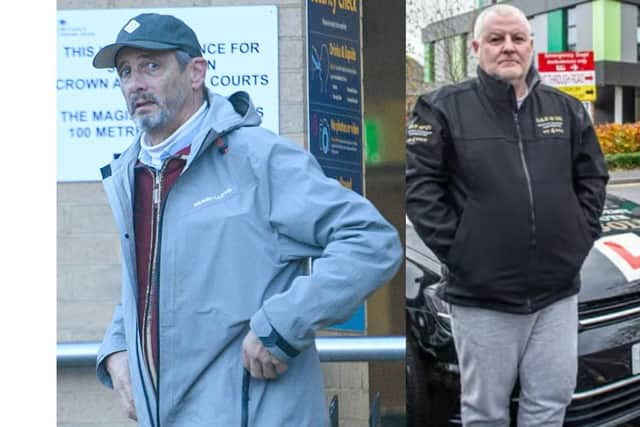
Ms Jones is well placed to shine a light on the topic having had first-hand experience of stalking after being on the receiving end of a campaign of harassment by Robert Hood.
The 59-year-old denied any wrongdoing but was found guilty of a single charge of harassment without violence after turning up at her office with falsified arrest warrants to remove her using reasonable force. This had caused “serious distress” to her loved ones and staff, she said.
The worrying turn of events led the commissioner to reconsider her office security and attendance at public events. She described the harassment as “sad” and admitted there was “genuine concern” over “relentless” Hood’s antics.
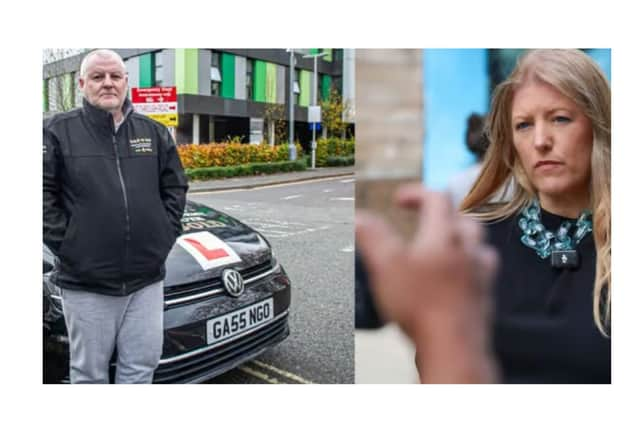
Hood, of Kingsley Road, Southsea, was jailed for 20 weeks for his offending. Ms Jones said after the sentence in November: “Robert Hood is a notorious stalker who has insisted on continuing his sinister campaign against me and others. His tireless obsession has been relentless and caused serious distress to my loved ones, my staff, and anyone else he can manipulate.
"He has shared personal information about me, including my home address, turned up at my office with falsified arrest warrants to remove me using reasonable force, created a ring of obsessive people by spreading false information, and used anyone he could to further his vendetta.”
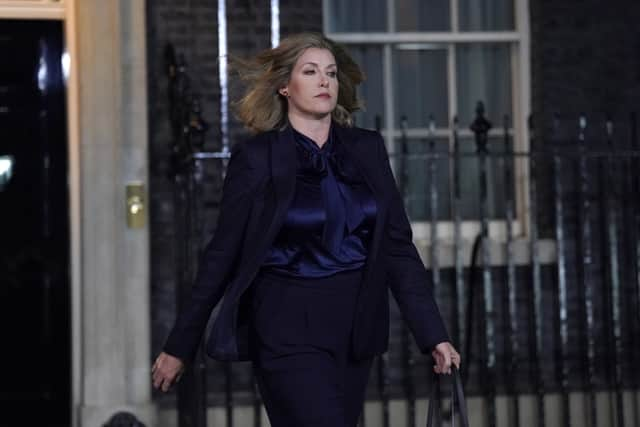
The crime commissioner is not the only public figure to be subjected to stalking with former Portsmouth North MP Dame Penny Mordaunt also hounded by an “obsessed” and “creepy” former councillor who was jailed for 20 weeks.
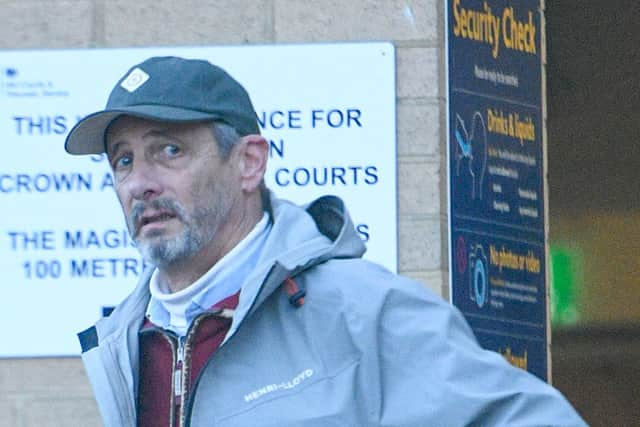
The former prime minister hopeful was subjected to a relentless campaign of stalking by Edward Brandt, 61, with her telling a trial at Southampton Crown Court it was the “hardest case I’ve had to deal with” after she feared “sexual violence”.
Brandt sent multiple emails and phone messages to Dame Penny and also turned up at her Portsmouth office at Lakeside, North Harbour, out of hours in a bid to meet her. “I believe this man was a real threat to me…and still is,” an emotional Ms Mordaunt told the court in January.
The former leader of the House of Commons said the unnerving campaign of stalking was worse than “threats to shoot me and my family” as they were not a “constant and immediate threat”, with them “not something I have to think about when leaving my house”.
She said: “My anxiety and concern about Mr Brandt was because of his obsessive behaviour. He came to my office out of hours and ignored police warnings and conditions asked of him and continued to have total disregard. The distress this has caused me is why I’m in court.”
Often, though, stalking involves people who are not high profile, with them subjected to psychological abuse and threatening behaviour. Shane Fudge, of Norfolk Street, Southsea, was jailed for four years in February 2025 following his latest excessive stalking actions.
The then 35-year-old, who was once dubbed a “classic stalker” in court, stalked a woman in her 20s and made various threats of violence by telephone. He also sent text and Whatsapp messages threatening her and her mother, some indicating he was outside her address. The woman reported that she received 70 missed calls from Fudge on one day alone.
Fudge also entered her address whilst she was out and caused severe damage to the property. He ripped light switches off the wall and left gauge marks in the walls and cupboards.
Officers attended and located Fudge, however he fled the area and was later found on the train tracks between Bedhampton and Havant.
Police engaged with National Network Rail and the live electricity was turned off for two and a half hours whilst Fudge remained on the tracks.
As a result, this caused severe disruptions for Network Rail, amounting to 1,380 delay minutes, which impacted 95 trains from five different operators, and it had a financial impact of £54,701.73 to the railway network.
Fudge then climbed up a gantry and threatened to jump off - this caused police negotiators, along with colleagues from British Transport Police, ambulance and fire services, to attend. He eventually gave himself up and was arrested as a result.
What does stalking look like?
Stalking always follows the same pattern – known as the “FOUR”. They are fixated, obsessed, unwanted and repeated.
It may not begin with threats. It might be constant messages or “coincidental” appearances. It may include gifts, emails and the stalker monitoring your movements.
The Multi-Agency Stalking Partnership works with perpetrators to change stalking behaviours. Over the last three years over 1,600 stalking cases have been reviewed by MASP professionals to protect victims. Hampshire & Isle of Wight NHS Foundation Trust has provided psychiatric input to over 50 complex cases and 106 individuals were referred to a psychologist-led intervention programme with 65% completing it in full. The trust has also trained 1,915 people within the partnership.
What can the police do?
Police have a range of powers that can be used to restrain perpetrators and protect victims, which includes Stalking Protection Orders (SPO). This type of order is applied for in the court.
Conditions which can be granted include restrictions on the perpetrator, such as preventing them going to specific locations, making contact, recording images, or referencing their victim on social media.
They can also require the perpetrator to do certain actions, such as attend a stalking, drug or alcohol intervention programme, sign on at a police station, or provide police with access to their phones and social media accounts. SPOs last for a minimum of two years. Breaching the protection order is a criminal offence.
Claire Lambon, chief executive officer of Stop Domestic Abuse, said: “Stalking is profoundly harmful, stripping away a person’s sense of safety, control and wellbeing, often over long periods of time.
“Victims regularly tell us how exhausting and frightening it is to live with fixated, obsessive, unwanted and repeated behaviour that can quickly escalate if it is not recognised early. Through our Stalking Advocacy and Support Service, we help victims understand what is happening, put safety measures in place and ensure they are believed and protected, while working with partners to hold perpetrators to account.
“Reaching over 500 victims through our Stalking Advocacy and Support Service is significant, but it also highlights the scale of need. We are proud to be a contributing partner to the progress made in Hampshire and the Isle of Wight which is significant and nationally recognised, however, stalking remains too often misunderstood, and continued investment in specialist services, professional training and early intervention is essential to prevent further harm.”
DI Claire Learnihan from Hampshire & Isle of Wight Constabulary said: “Stalking is a serious crime that can escalate when early warning signs are missed. Victims can be exposed to fear and disruption to every part of their lives, with fixed obsessive unwanted and repeated offending being experienced by a perpetrator.
“We have an excellent working relationship with the Multi-Agency Stalking Partnership (MASP), with weekly stalking clinics and monthly enhanced clinics for the most high risk cases. Our Force Stalking Coordinator also works with schools to provide stalking awareness from an early age.
“Our message is clear: if you come forward, you will be listened to and taken seriously. HIOW Constabulary takes all stalking reports seriously, by acting early and working closely with specialist partners, we are building trust, reducing risk and preventing further harm.”
Where to get help
stopdomesticabuse.uk/stalking 0330 0533 630 [email protected] Stop Domestic Abuse, PO Box 53, Havant, PO9 1UA
You can report this in different ways.
Is it an emergency? Is someone in immediate danger? Is a crime taking place or has one just happened? If so, call 999 now and ask for the police.