
Man who claimed innocence over murder of lover in Swanwick is released from jail
A man who claimed he was innocent of murdering his lover has now been released from jail.


Roger Kearney was jailed for life with a minimum of 15 years in summer 2010 for the murder of 40-year-old Paula Poolton. Now the Ministry of Justice has confirmed to The News he has been released after serving his full term behind bars.
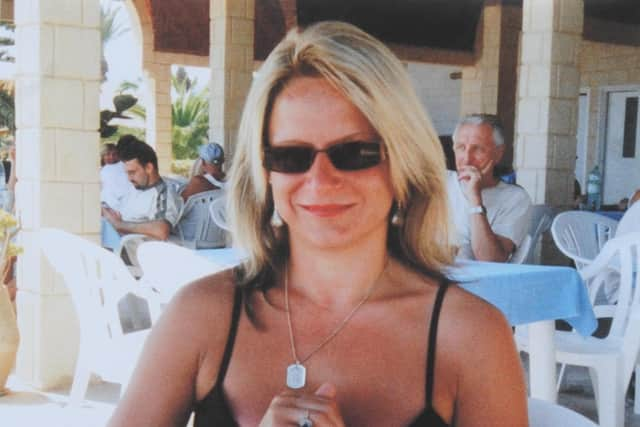
Mrs Poolton, from Titchfield, was found stabbed to death in the boot of her car in Duncan Road near Swanwick Railway Station in 2008.
Royal Mail postal worker Kearney, who was Mrs Poolton’s lover in an affair and who knew her while working at Southampton FC together as stewards, denied murder.
Kearney always claimed he was innocent but was unsuccessful in his applications to appeal the conviction. However, the case drew widespread interest as questions were raised.
A documentary mini-series Conviction: Murder at the Station became one of the most viewed TV series on Netflix in October 2023. The BBC documentary, which is still available on the platform, was released back in 2016 but became the fourth-most watched TV show seven years on from when it was first released.
Interest was piqued as campaigners investigating the case found some evidence had been ‘lost, contaminated or destroyed’ by Hampshire police. The force has previously said the officer in the case destroyed items without consulting the senior investigating officer.
Charity Inside Justice, which featured in the documentary, revealed ‘people close’ to the victim said Mrs Poolton may have been in a ‘relationship or friendship’ with another man close to her death. The charity did not provide further details.
Louise Shorter, chief executive and investigator at Inside Justice, said at the time: “There has been further speculation of this on social media and if true, could be highly relevant to the case.
“We need to know one way or the other, so I am appealing to anyone who has information about a relationship or friendship to come forward, speaking in confidence if need be.”
In Conviction: Murder at the Station Ms Shorter is shown finding tapings from the victim’s clothing and a carrier bag had been lost, destroyed or contaminated.
There is guidance in place to stop this from happening but 80 per cent of police forces are unaware, the charity claimed.
Mrs Poolton’s parents told The News of their anguish in 2016 at the BBC documentary. Her mother said: “He’s not innocent. Twelve jurors all agreed he was guilty.”
Meanwhile Kearney’s daughter claimed he was innocent. She said: “He’s not a callous murderer.”
In any event, the reality is that Kearney is now a free man after being released at the first opportunity in 2025 following a decision by the independent Parole Board. If he breaches licence conditions he could be sent back to jail.
A Ministry of Justice spokesperson said: "Our thoughts remain with the family and friends of Paula Poolton. Decisions to release life-sentenced prisoners are made by the independent Parole Board after a thorough risk assessment.
“They are subject to probation supervision for life and can be recalled to prison if they breach strict licence conditions."
A Hampshire police spokeswoman previously said: “Hampshire Constabulary has co-operated fully with the Criminal Cases Review Commission (CCRC) and all records relating to our investigation into the murder of Paula Poolton have been shared with them upon request.
“We have confirmed to the CCRC that some forensic exhibits have been disposed of since Roger Kearney’s unsuccessful applications to appeal. These items did not become actual court exhibits during Roger Kearney’s trial and were not used as part of the criminal proceedings or the evidence that led to his conviction for Paula’s murder.
“The exhibits and disclosure officer in this case disposed of the exhibits because they had either been forensically tested to the point of destruction, were deemed a health hazard or had not become actual court exhibits and because Roger Kearney had exhausted all legal avenues to appeal his conviction.
“These exhibits were available to the court at the time of Roger Kearney’s trial and were not used. Their subsequent destruction has no bearing on the investigation into Paula’s murder or Roger Kearney’s conviction in 2010.
“As a force we constantly seek to ensure we uphold best practice and although we don’t believe the destruction of these exhibits has had a detrimental effect on this case, we acknowledge that the senior investigating officer was not consulted before their destruction.
“We have reviewed our management of forensic exhibits and changed our policy and working practices to make sure the retention and destruction of forensic exhibits is appropriately managed.”