
“I don’t want him to take my life" - abuse survivor's fears over safeguarding amid violent ex-partner
Domestic abuse survivor living in fear eight years after leaving violent ex-partner
“It only takes a second to take someone’s life. I don’t want him to take my life.”
Those are the words of Gosport domestic abuse survivor Harmony Hayman who is still living in fear of her former partner eight years after leaving the relationship.
The 33-year-old’s ex is currently serving a lengthy prison sentence but is now eligible to be considered for early release despite an ongoing police investigation for alleged threats to kill her from inside prison using a contraband mobile phone.


It comes as charities warn that domestic abuse victims’ fears have been heightened after receiving letters revealing offenders will start being released early under the new Sentencing Act from September in a bid to reduce prison overcrowding.
Worries over failures to put in place safeguards for when prisoners’ are released has only added to the tension for abuse survivors.
Harmony’s ordeal has led to attempts to take her own life while she lives with complex Post Traumatic Stress Syndrome (PTSD). Her mental health plummets back into a “dark place” whenever another court case involving her partner arises or when he breaks his restraining order to make contact with her.
“I’m on edge and have been struggling to leave the house,” she said after learning her former boyfriend could be released early from prison. “It pushes me back into a dark place and I live in fear.
“He knows where I live and the only protection I have is a restraining order which he has broken every time. His behaviour has been the same for 20 years.
“If he’s caught he’ll go back to prison but while he’s out it only takes a second to take someone’s life. I don’t want him to take my life.”

Following her difficulties, Harmony has launched a campaign on change.org to ensure victims and the public are better protected. She hopes the government will review how repeat violent offenders are sentenced, considered for early release, managed in prison, and monitored after conviction.
She said: “Sadly, my story is not unique. Too many victims continue to live with fear long after an offender has been convicted.
“Time and again, serious offences are committed by individuals with long histories of violence, raising questions about whether repeat offending, ongoing risk and victim safety are given enough weight when decisions are made about sentencing, prison management and release.”
The survivor is calling for greater consideration of repeat offending when making sentencing and release decisions. She is urging tougher action to prevent offenders using contraband mobile phones and continuing criminal activity from prison, and stronger protections for victims who remain at risk after convictions.
She also wants better recognition of patterns of escalating violent behaviour before more people are harmed. “Victims should not spend years living in fear while repeat violent offenders continue to pose a danger. I am asking the government to review these issues and introduce changes that put public safety and victim protection first,” she said.
Since recently launching her campaign Harmony said she had been “bombarded with people who want to support” it - with her having received 100 messages already from fellow survivors. “How many people live in fear thanks to the criminal justice system? There are rapists and stalkers who are being released early and victims are not being consulted,” she said.
“There are so many people who are living their lives petrified that the courts are failing.”
And despite her own ordeal of being “attacked for a good few hours” in a vicious physical assault resulting in a conviction for actual bodily harm for her ex, Harmony said the mental side is far worse. “The physical injuries heal but the mental healing takes a long time to heal,” she said.
The survivor said she made suicide attempts which came following repeated attacks over a “long period of time”. She added: “I was trapped with him and had no help until I left the relationship. I got help from a domestic violence person, the police and mental health charities which got me through it.”
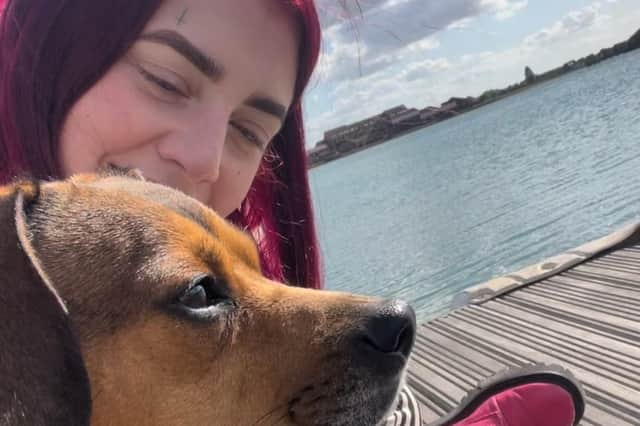
Yet the relationship, as many do, had started so brightly before unravelling. “At the start he was my best friend, I would go to him for everything. That’s how he got a grip on me,” Harmony said.
“By two years there was coercive control, physical abuse and control. I nearly took my own life.”
Although Harmony has been more “stable” she has now turned to mental health services for support once again amid the looming release of her ex-partner. And despite previously moving to escape his clutches, she is once again considering leaving her hometown with it a “big worry” he will come and find her.
Gosport MP Caroline Dinenage is taking up her campaign in parliament as Harmony continues to lobby for support - offering her comfort during her struggles.
Concerns raised over early early release
Jess Phillips, who resigned as the safeguarding minister in May, said she raised multiple fears about risk analysis before the sentencing bill was put before parliament, but her concerns were not acted on.
“They need to halt all releases related to violence against women and girls until they can prove that proper risk assessments are being done in every case,” she said. “Without the correct victim support systems in place, the state is leaving the responsibility of the prisons crisis in victims’ hands. That cannot be right.”
Claire Waxman, the victims commissioner, and Nicole Jacobs, the domestic abuse commissioner, said they had been given “specific reassurances” before the bill was passed that were still not in place.
She said: “I was repeatedly told that victims would be properly informed and reassured that measures would be put in place to keep them safe. What is abundantly clear now is that communication with victims, safeguarding and support has been an afterthought.”
To support Harmony’s petition go to: www.change.org/p/how-many-victims-are-too-many-protect-victims-from-repeat-violent-offenders