
Hampshire police officer calling for better suicide prevention support for new parents after childbirth trauma

PC Ruth Kerr has been diagnosed with post-natal depression twice - as well as PTSD.
A police officer who struggled with suicidal thoughts after childbirth is calling for more support for new parents battling mental health issues.
PC Ruth Kerr from Hampshire and Isle of Wight Constabulary gave birth to a son in 2021, under traumatic circumstances. During her maternity leave she recevied treatment for post-natal depression, returning to the force nine months later - still affected by the symptoms.
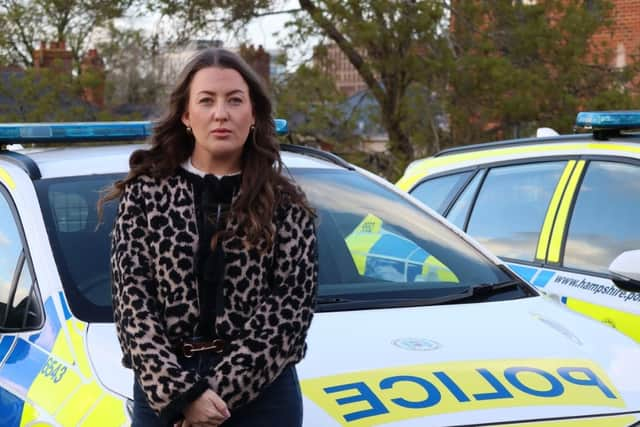

She experienced similar mental health problems once again in 2023, after giving birth to her daughter. Now, she is campaigning for improved support for police officers who have just become parents.
PC Kerr said: I was cared for by a psychiatrist, psychologist, mental health nurse and nursery nurse, and they genuinely saved my life. I am forever indebted to them for what they did. They made sure my children still had a mum.
“After my maternity leave, I had six months off sick because I was so mentally unwell. I was very lucky that my line manager was very supportive. He came to visit me, checked in on me, and made sure I was in contact with the wellbeing team and HR.”
PC Kerr was later diagnosed with PTSD, for which she received further treatment. Having experienced trauma that statistically affects one in five women - and one in ten men - she has started taking steps to ensure police officers are properly looked after by their respective constabularies.
The officer is pushing for better support for male colleagues and for focussed risk assessments for new parents returning to work in a job where they are regularly exposed to trauma. She has supported other officers with their own struggles and has spoken at the American Embassy in London about the unique risks faced by emergency worker parents.
What’s more, PC Kerr is aiming to set up a group that enables officers and staff to connect with others who have shared similar experiences, and to access support and guidance.
“I am part of the one-in-five statistic, not once but twice, and I am a survivor,” she said. “I clawed myself out of the pits of hell of PTSD and depression, with the perinatal mental health team as my crutch and the additional support of my family.
“I was suicidal for a very long period of time and was surviving day by day. But I have gone from never thinking I would survive what I did, and needing something as basic as a toothbrush physically placed into my mouth while still caring for a baby, to speaking at the American Embassy in London about my story and journey.
“But I am happy to be here today and supporting other colleagues as they go through what can be the toughest time of their lives.”
When life is difficult, Samaritans are here to listen – day or night, 365 days a year. You can call them for free on 116 123 or visit samaritans.org.