
Facial recognition police vans to begin roll out in Hampshire to fight crime and "make a difference"

Live facial recognition vans will be hitting the streets of Hampshire and the Isle of Wight from next week.
Hampshire and Isle of Wight Constabulary will be rolling out two new fully-equipped vehicles for the first time next Thursday (December 18). Following a successful pilot last year, will the technology will start to be used to quickly identify suspects wanted for high risk and priority offences.
Assistant Chief Constable for the Joint Operations Unit, Robert France, said: “We are very excited to get these vans out into our communities where they can really make a difference when it comes to fighting crime. We have seen how successful the use of this technology has been for other forces across the country when it comes to arresting outstanding suspects, so we cannot wait to get them deployed and supporting our officers on their patrols.
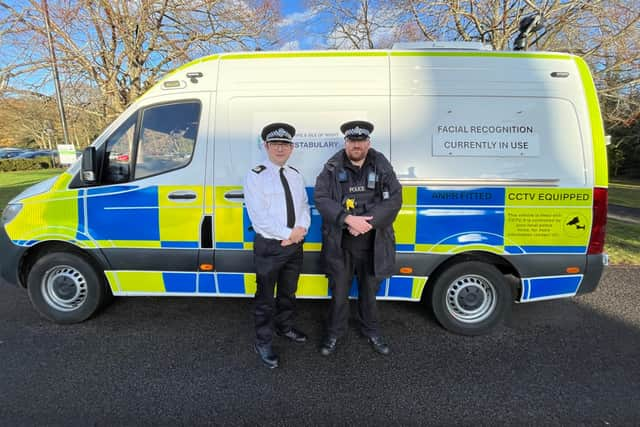

“It was clear from our pilot in September last year, just what an effective tool it can be for our teams, not just when it comes to tracking down high priority suspects but also to help reduce crime in the area more generally. This sort of precision policing that sees the latest technology working in the background targeting those most wanted criminals, allows our officers to focus more on responding to emergencies, spending time patrolling and investigating crime.”
The facial recognition technology scans crowds for to identify suspects with a higher accuracy rate than officers on the ground. Alerts are verified by the specialist trained operator and assigned to officers, retaining human decision making.
Any biometric templates that do not cause an alert are automatically deleted within seconds, meaning that no personal data is stored. ACC France added: “We know that some people are concerned about misidentification, particularly in relation to those from ethnic minority backgrounds and women.
“This is a really important issue and the technology has been significantly upgraded and undergone stringent independent testing to address the issues which were identified in early versions of the software as far back as 2019. I am confident that we will see extremely low levels of misidentification and we will be monitoring this closely.

“We do understand the concerns and are committed to ensuring ongoing and open dialogue with communities and individuals. It is completely right that the use of this technology is properly scrutinised to make sure it is always used in the correct and proportionate way and our deployments will be routinely reviewed by senior officers to ensure complete compliance at all times.”
Police and Crime Commissioner for Hampshire and the Isle of Wight, Donna Jones, said: “This technology is ground-breaking. It's helping lead to the faster detention of suspects which is freeing up police time to fight crime, patrol our streets and respond to emergencies. This is a forward-thinking approach for modern policing and is another vital step in further protecting our communities.”
Deployments of the technology will be announced to the public seven days in advance. The software doesn’t take pictures, but creates a biometric facial template from faces seen on the live camera feed - comparing them to a crime watchlist. Watchlist images and their biometric templates will routinely be deleted within 24 hours after each day of the deployment, with CCTV deleted after 31 days. The first deployment will take place in Southampton city centre.