
Beaver Moon 2025: How to see November's full 'supermoon' as it lights up UK skies this week

It will be the brightest full moon of the year, astronomy experts say🌕
- November’s full moon will rise over the UK this week
- The full moon this month is sometimes nicknamed the beaver moon
- It will also be the second of three so-called ‘supermoons’ this year - meaning itwill look especially big
- This ‘super beaver moon’ should be easily visible to the naked eye, so long as the clouds cooperate
Anyone keen to try their hand at a little full moon photography will have an excellent opportunity in the coming days.
November’s full moon is due midweek, and will also be a ‘supermoon’. This means it will appear larger than usual, with astronomy experts saying it will likely be our brightest full moon of the year. Now that the clocks have gone back, it should rise quite early too - being visible in UK skies from early evening.
This month’s full moon has a particularly unusual moniker, being known as the ‘beaver moon’. If you’re wondering why, we’ve got you covered. Here are astronomy experts on where the name comes from - as well as why it’ll be a supermoon, and how you can see it:
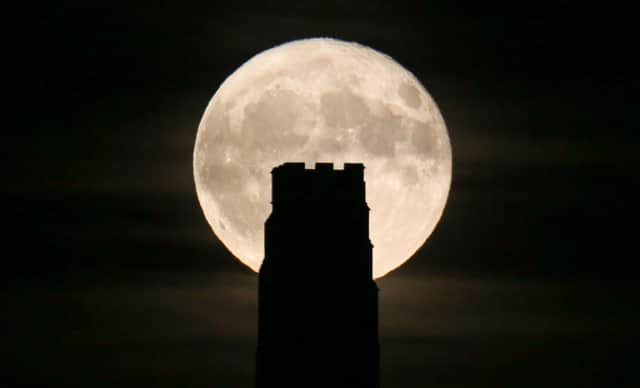

What is the beaver moon – and why is it called that?
There is usually one full moon each month, and the ‘beaver moon’ is the nickname given to the one in November. Many of these full moon names date back to traditional names used in Native American timekeeping – like August’s sturgeon moon, September’s corn moon, or last month’s double-whammy harvest and hunter’s moon.
But experts at the Royal Observatory in Greenwich say that there is some disagreement over where the beaver moon got its name. “Some say it comes from Native Americans setting beaver traps during this month, while others say the name comes from the heavy activity of beavers building their winter dams,” they write. It is sometimes also known as the frost moon.
What makes it a ‘supermoon’?
A supermoon is when a full moon appears slightly larger in our skies than usual. This happens because the moon orbits the Earth in an egg-like shape, meaning that at certain points in the year, the moon will pass much closer to us.
The last three full moons of 2025 are all set to be supermoons, with this month’s super beaver moon sandwiched between October and December’s. Prior to these three, the last supermoon was in November 2024.
The Royal Observatory says that this week’s supermoon will be the brightest full moon of the year. “At 7-8% larger than average, this supermoon will certainly catch your eye.”
Where and when will I be able to see it?
The beaver moon will appear on Wednesday night (November 5). Now that daylight saving time has ended, it is getting darker much earlier in the evening. This also means that the full moon will become visible a little earlier than usual, with BBC Sky at Night reporting that it will rise at about 3.55pm – before making its way across the night sky.
It should be easily visible to the naked eye all the way through to dawn on Thursday morning, when it will set. Due to its size and brightness, the only thing that could really stop keen stargazers from seeing it is the weather (which may also disrupt any bonfire night celebrations people have planned). So far, the Met Office’s cloud cover map unfortunately predicts a cloudy middle of the week for much of the country - although it should start to clear in south and middle England later into the night. But you should make sure to check your local area’s forecast online here closer to the time, as this could change.
The moon has a unique power to capture our imagination - and our attention. Check out this story to find out more about one interesting poll, exploring how people across the UK say moon phases affect their sleep.

If you’re even slightly curious about what’s going on above your head at night, this is the book you want by your side. Philip’s 2026 Stargazing Month-by-Month Guide is the go-to companion for anyone who loves looking up at the stars – from total beginners to seasoned telescope-toters.
⭐ Monthly star maps and moon calendars 🌕 Daily lunar phases and eclipse guides (including a massive 90% solar eclipse in August!) 🔭 Telescope tips, smartphone tricks, and jargon busters 🌠 Must-see events and sky highlights through the year 📍 Plus the best dark-sky spots and astro festivals in the UK & Ireland
It’s usually £6.99, but as it’s such a consistent bestseller, you’ll often find it on offer for less.