
The Portsmouth sailor who became a singing sensation in the 1940s | Nostalgia
I wonder if any of you can remember a singer from the late 1940s and 1950s, Ronnie Harris?A Londoner, from Tottenham by birth, he is believed to be living in the Copnor area of Portsmouth.
Ronnie came to the city to join the Royal Navy during the war.
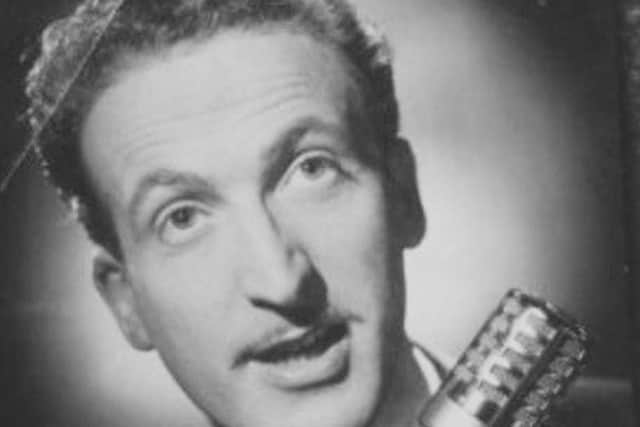

In 1945 he was serving as an air mechanic in the Royal Naval Air Service (later the Fleet Air Arm) and had two ambitions, to be a successful singer and to stroll across a naval parade ground.
Both ambitions were fulfilled one week in 1954 when he was appearing at the Theatre Royal, Portsmouth.
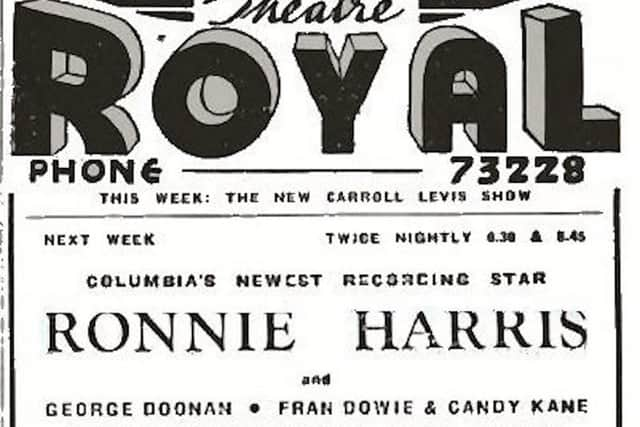
After several years’ gaining experience by singing in bands of various kinds he became famous after the overwhelming success of his recording of The Story of Tina.
It was while appearing in a Shipmates Ahoy show at the Royal Naval Barracks in Queen Street, Portsea, that his second ambition was fulfilled.
With the freedom and right of way accorded to civilians he strolled across the barracks’ parade ground conscious of the stares he received and recalling the times he had to ‘double’ across the square as a punishment.
Like David Whitfield, he used to sing in many pubs and clubs around the city.
When he appeared in Blackpool an American GI was heard to say that Ronnie was as near to America’s own Nat King Cole as was possible.
In 1954, Ronnie won a national award for his recording of The Story of Tina. In all, he released 16 single 45s and one EP compilation.
Some of his records were: I Love Paris, Stranger in Paradise and Dear To Me.
He made numerous live appearances on radio and toured the country appearing in many top theatres.
Some of the stars of the time Ronnie appeared with were: Charlie Chester, Bert Weedon, The Stargazers, Alfred Marks and he duetted with Barbara Lyon. For those who remember Life With the Lyons, Ronnie was the crooner boyfriend brought into the family for a while by Barbara.
If anyone has any knowledge of Ronnie please let me know.
Thanks to Mick Cooper for relevant information.
– Harry Cotterell was four-and-a-half years old on VE Day. He had a twin brother and sister, John and Shirley, who were aged nine, sisters Sheila, 13, and Thelma,17, all of whom have now died. There was also a half-sister, 18-month-old Carol.
His mother had re-married following the death of Harry’s father. Henry Cotterell worked on MoD tugs within Portsmouth Dockyard. His boat was T10 and he was killed during an air raid on April 19, 1941. He was 38.
John, Shirley and Sheila had all been evacuated to Cowplain during the earlier phases of the war but were back home by May 1945. They lived in Connaught Road, North End, Portsmouth.
Harry's only recollection of VE Day in May 1945 was street parties. He says: ‘We all went to one that was held at Taylor's Dairy which was situated at Kingston Cross.
‘The family formed up with other children from the North End area and they all marched down from North End Junction to the party venue.’
He does not know what became of Taylor's but it was located about where the Blue Anchor pub was.
Nearby was North End Public Library which Harry thinks was above the former police station before the latter moved to Kingston Crescent.
– I have received the following e-mail from Mike Pillidge, who lives in Devon, asking about a late uncle of his.
Mike says: ‘I’m writing a brief memoir (for family use) about my great uncle Bert(ram) Roberts (1896–1962).
‘He was a schoolmaster and choirmaster in Portsmouth until his untimely death in 1962.
‘He applied his artistic skills in virtually all that he did.
'During my searches I came across a feature in The News from November 29, 2017.
This celebrated the 1928 book on Portchester Castle by Col JH Cooke and featured a plan supposed to be by Cooke.
Mike adds: ‘We had no idea this extended to bulk illustrations – about 250 drawings to illustrate Lt-Col Cooke’s 1928 book.
‘That book was republished by Michael Keith-Smith in 2008. Before it was republished Michael sought permission from my late mother for the project as the nearest relative of Bert he could find.
‘Cooke’s original book was illustrated by about 250 ink sketches – almost all by Bert – of which the plan published in The News in 2017 was an extract.’
If you can help locate any of Bert’s ink sketches, contact Mike on [email protected] or 01392 202284.
– Watching the final of Mastermind last Monday I really do not think it fair that each contestant gets to answer a different set in the second round. I am sure that when one competitor has answered their questions and receives a low score and then listens to the next person answering another set of questions and in their mind find they can answer far more than they did in their round. Surely in this day and age with all the sound systems available, competitors could be asked the same set of questions whilst the others have earphones on or are taken to a side room. They would also all receive the same amount of questions give or take the speed in which they answer.