
Here’s a way of getting people back on the trains after July 19 | Nostalgia
Last Saturday I mentioned a way of getting people to travel once again after July 19, we hope.
I suggest re-introducing the Runabout Rover ticket which I used to purchase for 10 shillings (50p) back before I left school.
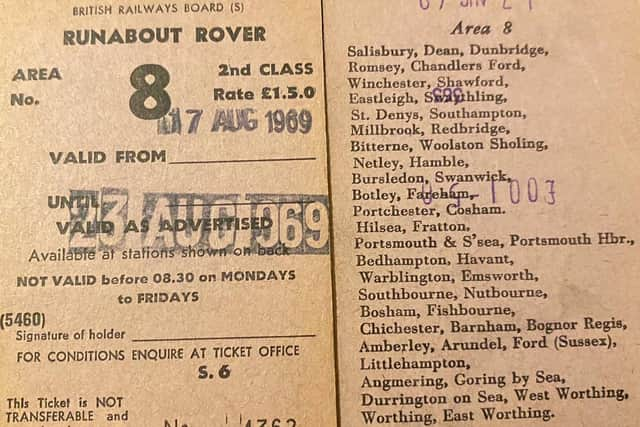

It allowed me unlimited travel between certain stations on a route map printed on the reverse of the cardboard ticket.
Alan Smith came up trumps as he still has a ticket, although it was a little more expensive than when I purchased my last one back in 1966.
Alan’s dates from August 1969 and was valid for seven days. It cost £1.5s (£1-25p) but look at what you got for your money. After 8.30am he could travel from Portsmouth as far as Salisbury and Southampton westward, via Fareham and Eastleigh to Winchester and along the coast to Chichester, Bognor and Littlehampton. His eastward point was Worthing but not Brighton.
I am sure if someone in railway management today would introduce this method of travelling the region they would be on to a winner, especially with so few people travelling.
Then again, knowing the railway management as I do, you can be sure they would look to find every reason not to do it…
Car No 5
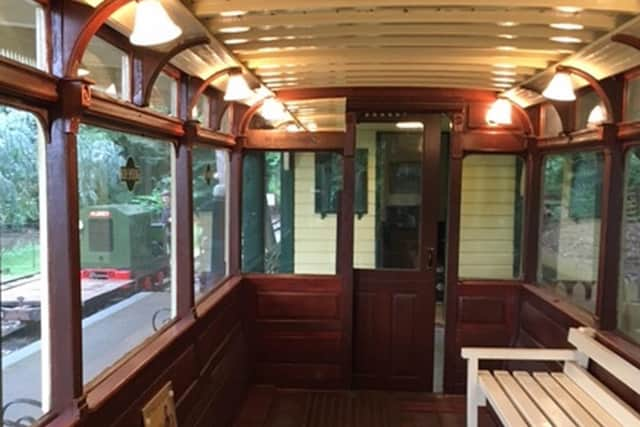
Yesterday I wrote about former Portsdown and Horndean Light Railway car No. 5, now at the Rural Life Living Museum near Farnham, Surrey.
Bernie Knibbs has sent me a photograph of what the inside of the car, now a waiting room, looks like. Although the seating is not how it was when in service, the inside furnishings are.
Through the window can be seen one of the diesel engines used on the narrow gauge railway for shunting.
Guildhall Square tram
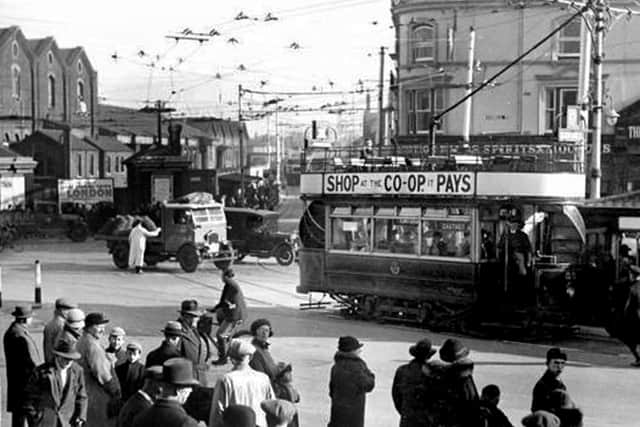
Today’s final photograph appeared in The News recently and is a ‘transitional' photograph because we can see not only the overhead single tram wires but also double wires for trolleybuses. The last tram ran on November 10, 1936, the trolleybus service beginning two years previously on August 4, 1934. The non-polluting trams and trolleybuses would be an environmental dream today.
We are looking down Greetham Street from Guildhall Square and on the left is the former Southern Railway goods yard. That moved to spare ground along Goldsmith Avenue in 1937. It is now the site of the Fratton Centre so you can see how much ground was available even with the loco sheds alongside. It looks a little like an Austen 7 crossing in front of the policeman on point duty.
As ever in Guildhall Square, there are people milling about and all are well-dressed, no dressing down in those days. Thanks to John Rich for bringing it to my attention, I must have been away.
A message from the editor, Mark Waldron. You can subscribe here for unlimited access to our online coverage, including Pompey, for 27p a day.