
Waterlooville grandfather who has given 100 pints of blood over the years urges others to donate
A FORMER policeman who is ‘proud’ to have donated 100 pints of blood over a span of six decades is urging others to do the same to help save lives.
Grandfather-of-four Keith Chadwick was just 22 when he was signed up to give blood for the first time by his boss – in what was then Portsmouth City Police – in 1967.
Unsure what to expect he attended a clinic at St Cuthbert’s Church in Copnor, where he found the process to be ‘easy.’
‘Our sergeant at the time just decided we were going to give blood,’ the 77-year-old said.
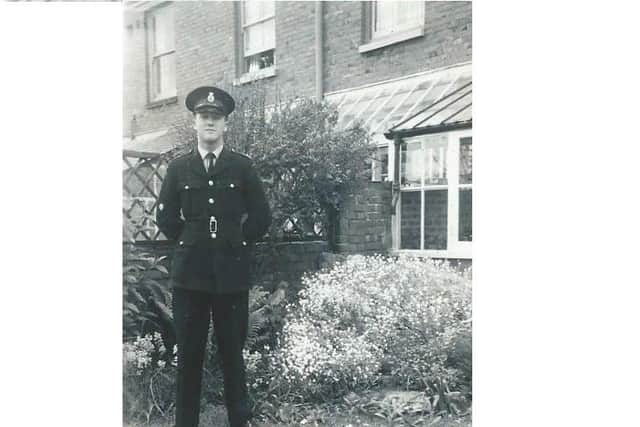


‘The process was a bit different then, you could only donate about twice a year and once you hit 60 they wouldn’t let you do it any more.
‘You were put on a bed while they took the blood and afterwards they used about a metre of bandage to wrap around your arm. Now you can do it sitting down and just with a couple of plasters after.
‘But the main thing was you knew you were going to be helping someone who really needed it. Now I get a message to say which hospital my blood has gone to which I think is amazing.’
It was all the more meaningful for Keith as his brother Roger was diagnosed with non-Hodgkin lymphoma at the age of 21.
He said: ‘My brother had about 21 blood transfusions throughout his life. Because of them he survived a lot longer than anyone thought he would and he reached the age of 72.’
Just a few years ago it was also discovered that Keith actually had a rare blood type. Initially he was recorded as having O positive blood, but in 2016 a subgroup of O positive was found – called RO. It is thought only two per cent of blood donors have RO blood and so Keith’s donations became even more valuable.
SEE ALSO: New Covid cases confirmed in Hampshire
He said: ‘They need RO blood to treat people with sickle cell anaemia, who require a lot of transfusions.’
Keith, who lives in Waterlooville with his wife Shirley, made his 100th donation in October this year.
‘If anyone is thinking about donating blood for the first time I’d tell them to just do it,’ he added.
‘You could be saving someone’s life.’