
Thousands of children are injured every year by this outdoor activity - how to keep kids safe this half-term

Many parents may be unaware of the dangers of trampolines 🚨
- A child safety expert has warned about the dangers of trampolines ahead of half-term.
- More than 11,000 children visit A&E every year in the UK due to trampoline injuries.
- Olle Göransson, founder of North Trampoline, outlines the risks parents need to know.
Parents are being warned about the dangers of a common outdoor activity this half-term, as more children will spend time playing outdoors.
A trampoline is a popular addition to any garden, but a child-safety expert has warned that many parents may be unaware of the limits of safety standards when buying and maintaining one.
In the UK, more than 11,000 children each year visit A&E from trampoline injuries, according to figures from RoSPA and NHS trusts. Research shows trampoline accidents account for a significant number of emergency hospital visits for children under 14 requiring medical attention for fractures or head injuries.
The risk rises sharply when multiple children jump together, with collisions, double-bouncing and attempted flips the most common causes.
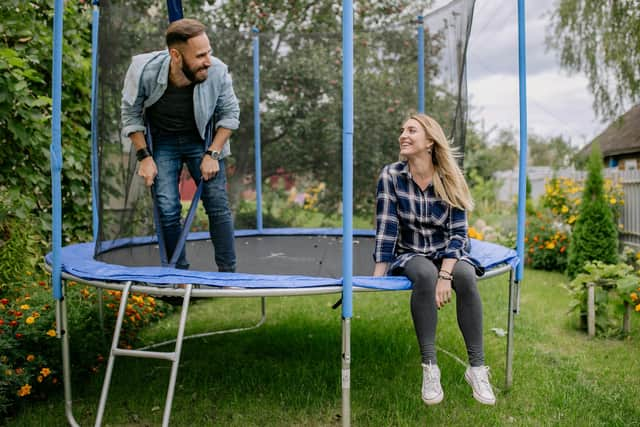

Olle Göransson, founder of North Trampoline, explains that parents are often reassured by labels and price without realising what they do and do not cover, with winter being the time of year when issues start to show.
Göransson said: “If a trampoline costs less than a phone, it probably should not be in your garden. That price difference usually reflects what you cannot see, like weaker frames, lower-quality springs and materials with a shorter lifespan. Those are not cosmetic details; they affect how the trampoline behaves over time.”
How to use a trampoline safely?
Children can still use their trampoline safely. Parents should ensure their trampoline has recognised safety standards such as BS EN 71-14:2018, secure enclosure nets and padding that fully cover springs and frames, and place trampolines on level grass away from hard surfaces.
Close adult supervision and clear rules, such as one jumper at a time, can help reduce risk, while parents should seek urgent medical help if a child shows red-flag symptoms, including severe head pain, neck or back pain, or difficulty walking.
How to know if a trampoline is safe?
Regular checks of your trampoline help ensure everything is working as it should. Göransson advises following this checklist to make sure your trampoline is in good condition.
Frame and legs
Look for any movement, bending, cracks or rust, particularly where the legs meet the frame. If the trampoline does not feel solid when pressed down, that is a sign to stop using it until it is checked.
Springs
Any broken, stretched or very loose springs should be replaced. Worn springs don’t just affect safety; they also reduce the bounce quality, with children far less likely to use a trampoline that feels flat or uneven.
Padding
Cold and damp conditions can cause padding to harden, crack or shift. Padding should fully cover springs and frames at all times.
Jump mat
Check the jump mat for any holes or tears. Small holes can usually be repaired, but larger holes mean the mat should be replaced. If damage is left unfixed, the mat could tear further while someone is jumping. You should also check the seams around the edge of the mat where the D-rings attach to the springs. If the stitching is coming loose or damaged, the jump mat should be replaced.
Safety nets
Check the safety net for sagging, tears or weakened stitching. Nets can degrade over time, particularly when exposed to wind, rain and UV from the sun. If the entrance has a zip, make sure it opens and closes properly.
Ground stability
Make sure the trampoline is level and standing firmly on the ground. During winter, the ground can soften or shift, which may throw the frame slightly out of balance. Each leg should be fully supported underneath. If the frame is uneven, it can move slightly with every jump, and that movement is usually what causes the noise.
Surface and weather checks
Clear any leaves, standing water and debris from the jump mat and frame padding. Trampolines should not be used in icy or slippery conditions.
Göransson said: “Safety standards are important, but they are only the starting point. They show a trampoline has passed a test, not how it will cope after months of use, changing ground conditions and colder temperatures.”
Enjoy the outdoors safely this half-term and find out more essential tips for looking after your trampoline at RoSPA.