
South Central Ambulance Service marks 'major achievement' with latest CQC findings following previously damning report

“Significant work” to improve an ambulance has been recognised by the CQC following a previously damning report three years ago.
South Central Ambulance Service (SCAS) has seen two major areas of care make considerable improvements following a four-day CQC inspection at the start of May 2025 after previously being rated inadequate in 2022.
The inspection highlighted that emergency operations centre service is now good, rather than its previous requires improvement rating, and the service’s emergency and urgent care facilities require improvement instead of being inadequate.
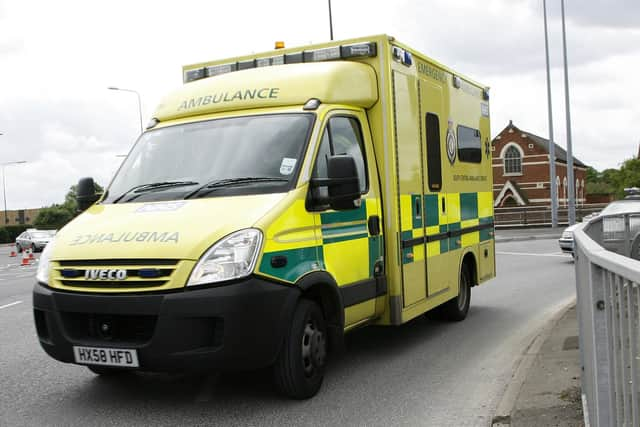

The previous report raised a number of concerns about the quality of the trust’s governance and its staff training, describing leaders as “dismissive” and “out of touch.”
Following the most recent CQC visit, David Eltringham, chief executive of SCAS, has said he is “very pleased” at the “major achievement” of the CQC upgrading their assessment of the two services.
He added: “This is a major achievement, acknowledging the hard work in recent years and giving us a great start to 2026. It has been a huge team effort and on behalf of the executive team and Board I want to say thank you and well done to everyone at SCAS.”
The overall CQC rating of inadequate will not change until a Trust-wide well-led inspection is completed but the visit has highlighted that there has been significant improvements in care and response times.
Amanda Williams, CQC deputy director of hospitals, secondary and specialist care in the South East, said: “When we inspected South Central Ambulance Service NHS Foundation Trust, we were pleased to find the service had made important improvements since our last inspection, and that the requirements of the warning notice we previously issued had now been met.
“In the two emergency operations centres, we found staff understood the emotional impact that delays had on people’s wellbeing.
“They were well trained and responded professionally to help people receive the care they needed. The service was performing well at answering 999 calls, and staff could access interpretation services in 240 languages to support people.”
Ms Williams added: “In emergency and urgent care, we saw leaders had introduced an innovative ‘release to respond’ initiative, which enabled ambulance crews to safely leave hospital emergency departments within a 45-minute window, allowing them to respond to people in the community.
“This initiative made a significant difference to response times. The time taken to reach someone who called 999 with an emergency dropped from 38 minutes in October 2024 to 22 minutes by March this year.”