
Inside Southampton General Hospital nine months after devastating fire which destroyed endoscopy unit
The fire in February destroyed a wing and had a knock-on effect across the ‘whole hospital’ - but steps are being taken to return to normal
Southampton General Hospital remains 66 beds down nine months after a devastating fire, with its destroyed endoscopy suite expected to take up to two years to rebuild.
New University Hospital Southampton chief executive Trevor Smith said the February blaze was still having a “knock-on effect across the whole hospital”.
Mobile units have been stationed outside the main entrance to the hospital and at Adanac Park, while operating theatre space is being used for specialist procedures.
Mr Smith, who previously worked clinically at the hospital, described seeing the gutted space for himself as “quite shocking”.
He said: “It’s just the sheer extent of the damage. I worked here clinically for years and so you come into a place that you’re used to working, used to looking after patients, and then the whole thing’s burned to a shell. It’s quite shocking when you first see it.”
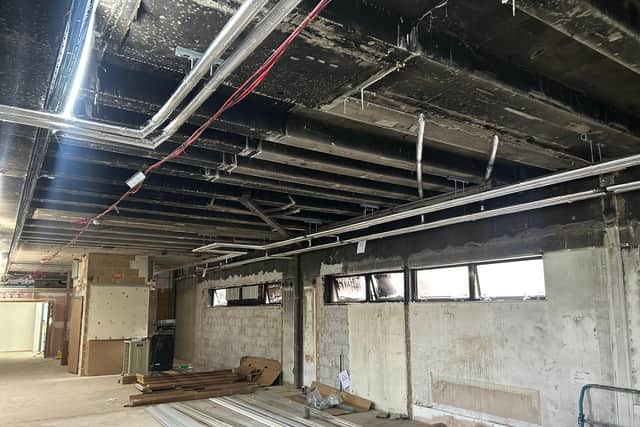

The fire broke out in the hospital’s West Wing in February, forcing hundreds of patients to be evacuated and causing extensive fire and water damage.
While fire doors protected nearby ward E5, there were widespread areas taken out of action in endoscopy as well as directly above and below the site of the fire.

The destroyed endoscopy unit has now been stripped out, with surveyors assessing the complex repairs needed before it can be rebuilt.
Mr Smith said: “We are 66 beds down. We’ve lost a lot of outpatient rooms. We’ve lost our entire endoscopy facility, so we have got mobile units out the front of the hospital.
“We’ve had to use some of our operating theatre space to accommodate some of the more complex endoscopy work. It has had a knock-on effect across the whole hospital, across all of our services.”
Bed capacity is expected to increase in the coming months.
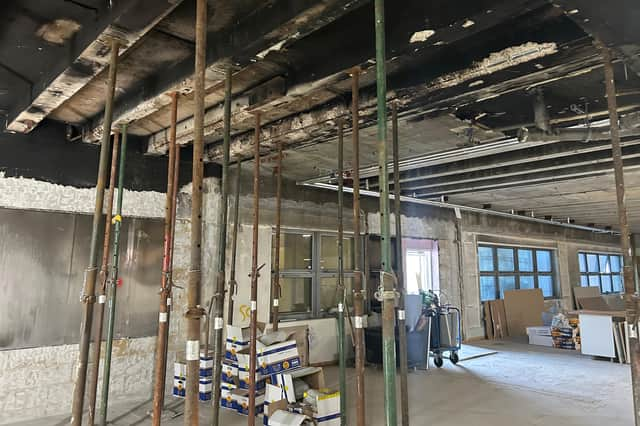
Three endoscopy rooms will be brought back into use, allowing some procedures to move out of operating theatres, with around half of the 66 lost beds expected to reopen early in the new year.
The remaining beds are expected to return by March, alongside refurbished outpatient rooms.
Mr Smith said this would make running the hospital “quite a bit easier”, but rebuilding the fire-ravaged endoscopy unit itself would take considerably longer.
He praised the work of staff to adapt since the fire and efforts by the main contractor, Eastleigh-based LST Projects.
Mr Smith added: “In the next few weeks and small number of months we will get quite a lot of our capacity back online. But for this unit itself to be rebuilt is a two-year programme of work.”