
Hampshire firefighters redeployed to ambulance service to support overwhelmed paramedics
FIREFIGHTERS are being redeployed to help ambulance crews with the increased demand caused by the coronavirus pandemic.
A group of 20 firefighters from up and down the country have started driving ambulances for South Central Ambulance Service (SCAS), using their skills to support the efforts of paramedics.
It comes as Queen Alexandra Hospital is seeing some of the worst ambulance handover delays since the start of the Covid-19 pandemic in March last year.

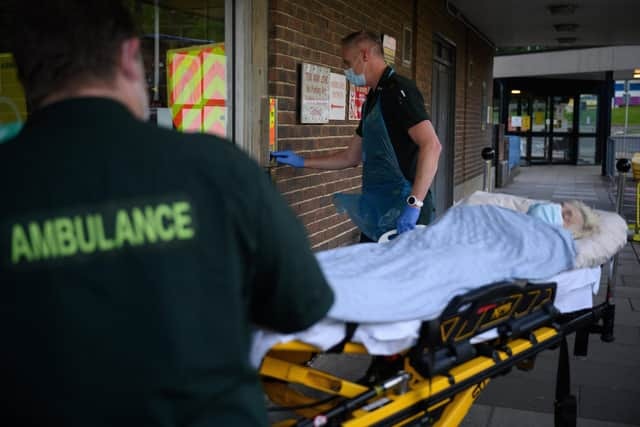

Patients were not always left waiting inside an ambulance, as the figures include those moved into an A&E department where staff were not available to complete the handover.
The redeployment of firefighters is part of an agreement between Hampshire Fire and Rescue Service and SCAS.
Firefighter Ben Carter, from St Mary’s Fire Station, said: ‘I’m proud to be supporting our NHS colleagues by driving ambulances.
‘I volunteered during the first lockdown, and the experience reinforces the skills I already had as a firefighter, whilst also gaining an understanding of the extent of a paramedic’s role.
‘My wife is in the NHS and we know how hard they’re all working to keep us safe.’
Paul Jefferies, assistant director of operations for South Central Ambulance Service NHS Foundation Trust, added: ‘We are incredibly grateful to our partners in HFRS for their help and support during Covid-19.
‘Currently there are under 20 firefighters deployed across our region and we anticipate a further 20 will be deployed over the coming weeks, to support our 1,900 strong frontline workforce at these particularly challenging times.
‘Fire service colleagues have undergone driver training delivered by our SCAS teams but this will build on the skills they already have to help support local communities; many of whom are already co-responders in their local areas.
‘We would like to take this opportunity to thank our partners for their assistance during this time as we work together to care for our communities and of course, our patients.’