
'Dishonest and flawed': Families take police watchdog to court over Gosport War Memorial Hospital deaths

The police watchdog is being taken to court by ‘suffering families’ who are demanding the truth about what happened at Gosport War Memorial Hospital
Aggrieved families are accusing the police watchdog of failing to properly investigate how Hampshire and Isle of Wight Constabulary handled hundreds of deaths at Gosport War Memorial Hospital.
Over the past twenty five years, one of the most complex scandals in NHS history has unravelled, after hundreds of patients died at the Gosport War Memorial Hospital due to ‘inappropriately high doses of opioids’ administered between 1987 and 2001.
However despite an investigation no-one has been held accountable - with criticism levelled at the police over its investigation after concerns were first raised.
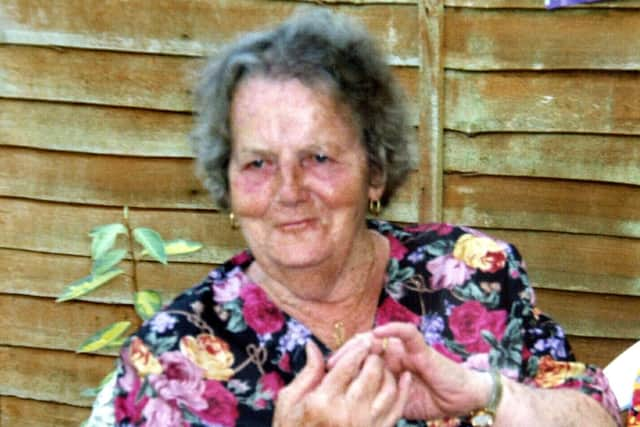
“It’s not just Gosport but the country that has been let down,” said David Wilson, whose aunt, Dulcie Middleton, died at the hospital at the age of 86.

“Families are suffering so much unnecessary stress but if the investigative authorities did what they should have done and looked at the documentation properly, this would have been avoided”, he added.
As previously reported by The News, Gladys Richards is believed to be the first documented victim in the unfolding scandal after she died within a matter of ten days of being at the hospital in 1998. The ‘frail’ 91-year-old was admitted to the facility for rehabilitation after undergoing a hip operation but following her death, her daughter, Gillian Mackenzie, raised concerns with the police, claiming she had been unlawfully killed.
But this initial investigation has since been branded “dishonest and flawed” by relatives who have previously claimed gross misconduct occurred at the time, and the force’s ineffective probe led to the deaths of hundreds of patients.
Mr Wilson is one of said family members who is continuing to take action as he launches a judicial review into the police watchdog - Independent Office for Police Conduct (IOPC). Whilst the judicial review is in David’s name, he is supported by families who were original complainants to Hampshire and Isle of Wight Constabulary.
Years of investigations
The original 1998 investigation was only the start of many years of unanswered questions and over the next few years that followed, more and more family members came forward with concerns following the death of their loved ones while in the care of the community hospital
In 2003 a review into the deaths of patients at Gosport War Memorial Hospital between 1987 and 2001 was conducted and completed by Professor Richard Baker. But it was not published on the government website until 2013, stating "the proportion of patients at Gosport who did receive opiates before death is remarkably high”.
It also said it “is difficult to accept that the practice of almost routine use of opiates before death, dating from 1988 or earlier, merely represents clinical practice in advance of practice elsewhere.”

Within the review, which dates back more than 20 years ago, a sample was taken of 81 patients revealing 76 individuals had been given opiates before their death, 72 of which were administered diamorphine.
Despite the published findings, no criminal proceedings took place, prompting families to continue their fight for justice and, in turn, the Gosport Independent Panel was established by Norman Lamb, the former Minister of State for Care and Support at the Department of Health.
The panel, which was established in 2014 and chaired by Bishop James Jones, was tasked to investigate the deaths of over 450 patients who died while at the hospital, with the findings published in 2018 outlining the “quality of the police investigations was consistently poor.”
The published report said: “The documents show that, following a complaint to the Trust in 1998 and the police investigation, it should have become clear to local NHS organisations that there was a serious problem with services at the hospital.
“Although the successive police investigations undoubtedly complicated the NHS response, it is nevertheless remarkable that at no stage was there a public admission of failure or any public apology. Nor was there a proportionate clinical investigation into what had happened.
“On the contrary, the documents show numerous instances of defensiveness and denial – to families, to the public and the media, and to health service and other organisations.”
Following the Gosport Independent Panel, a further police investigation, known as Operation Magenta, was established in September 2018, after the panel indicated that the use of opioids was without appropriate justification.
Operation Magenta, led by Deputy Chief Constable Neil Jerome of Kent Police, launched a full investigation in May 2019 but an update in November 2025 said there would be “no further action” into the deaths of 101 patients.
The investigation into the remaining deaths continues, with DCC Jerome previously saying: “We are working as quickly and thoroughly as possible to ensure this is the decisive police investigation into what happened at the hospital.
“We are continuing the process of submitting case files to the Crown Prosecution Service and acting on its advice. It is the CPS’ decision as to whether or not any criminal charges can be brought.”
Fighting for justice
In the eight years since the panel was published, relatives of those who died at the hospital have not faltered in their battle for someone to be held responsible, with many working together for answers.
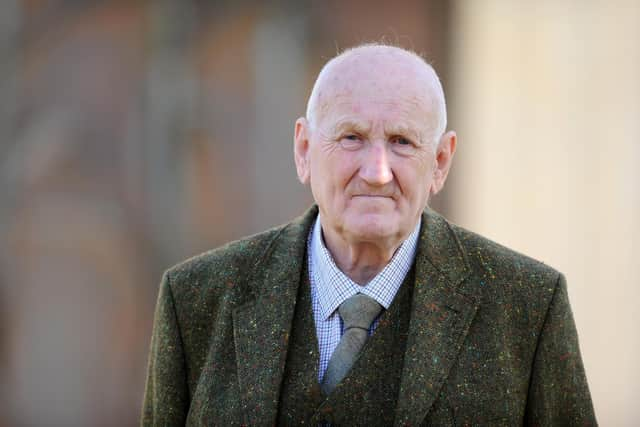
Mr Wilson, now aged 79, made a complaint to the Independent Office for Police Conduct (IOPC) in 2020, outlining allegations in relation to the Hampshire and Isle of Wight Constabulary’s handling of the initial 1998 investigation into the deaths at Gosport War Memorial Hospital and the subsequent investigations.
The complaint, which included 17 pages of misconduct claims against numerous officers, highlighted a number of grievances including misuse of authority, collusion between officers, and corruptly influencing the Crown Prosecution Service.
A threshold test regarding the complaint against Hampshire Constabulary was issued in December 2021, saying: “At this current stage there is no evidence or indication of any misconduct or criminal offences. The current investigation is a review of previous investigations, not a new complaint investigation, and therefore must be treated accordingly.
“At this present time, the review will be considered to be equivalent to an investigation which is below misconduct. Therefore a proportionate investigation based on this assessment will be undertaken.”
What next?
Despite concerns and complaints that initially arose following the first police probe, the constabulary carried out a further second and third investigation into the deaths at the hospital between 1999 to 2006, with Mr Wilson saying lines of enquiries should have been passed onto an independent force.
He has now applied for a judicial review following the outcome of the IOPC’s investigation into his complaints after the watchdog partially upheld his and other families’ complaints but refused to take further action.
A judicial review is a court proceeding where a judge reviews the lawfulness of a decision, act, or failure to act by a public body, and it challenges the process of decision-making.
He said: “487 deaths occurred when the Hampshire police shouldn’t have been investigating it. There wouldn't have been all of those deaths if it had been passed over.
“The PCA (Police Complaints Authority) and IPCC (Independent Police Complaints Commission) should have referred it to an independent force, it was an oversight from the police body because the first investigation was ineffective. The PCA should have investigated why it was ineffective in the first place.
“There was a lot of misconduct in that first investigation which if it had been investigated by an independent body it would have revealed what we have been trying to reveal since the panel report was published.”
Over the years, multiple relatives have highlighted that the Hampshire and Isle of Wight Constabulary failed to meet Article 2 of the European Convention on Human Rights which states everyone has a right to life, and that police have an obligation to “thoroughly” investigate deaths.
Mr Wilson said: “Article 2 is an international obligation that the UK has had since 1951 and that states that we have a duty to investigate deaths involving agents of the state, so nurses and police officers, when there’s a death - so an investigation should be conducted into all of the circumstances not just the criminality but to hold people accountable.
“When you have police investigating a murder and there isn’t an outcome and then you find out the police did it wrong, the first thing you do is investigate why the police didn’t do it right.
“A proper investigation would reveal the truth. I have promised the families. This review will either go to the high court but if it gets refused, I’ll go to the court of appeal and if they refuse again, I’ll go to the Supreme Court and if then I can go to the European Court of Human Rights - And I will do it.
An IOPC spokesperson said: “We are defending a judicial review claim which has been submitted to the High Court in relation to reviews we have carried out into complaints made about Hampshire and Isle of Wight Constabulary’s investigation into deaths at Gosport Memorial Hospital.
“As the matter is before the courts, we’re unable to comment further.”
What the police say
A spokesperson for Hampshire and Isle of Wight Constabulary said: “The report we submitted to the IOPC concluded there was no evidence or indication of any misconduct or criminal offences by Hampshire and Isle of Wight Constabulary’s initial investigation into the deaths at Gosport War Memorial Hospital.
“The IOPC review concluded that no further action was required in relation to the complaints.
“We understand that a judicial review has been lodged in relation to this IOPC decision.
“The independent criminal investigation by Op Magenta, led by Kent Police, continues, which we hope will provide the families with the answers and clarity they deserve.”