
University of Portsmouth scientists discover remains of giant fish larger than a paddle board
SCIENTISTS from the city’s university have discovered the fossilised remains of a giant fish which grew as big as a great white shark.
The discovery of the remains of the Coelacanths species was found by accident after a collector had bought the specimen thinking the bone might have been part of a pterodactyl’s skull.
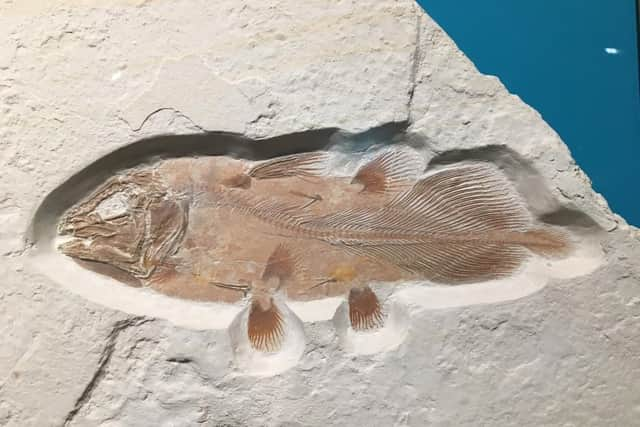

After bringing it to the attention of the University of Portsmouth’s Geography and Geosciences department, who were working in Morocco at the time, experts discovered it was from the giant the fish.
Professor David Martill said: ‘The thin bony plates were arranged like a barrel, but with the staves going round instead of from top to bottom. Only one animal has such a structure and that is the Coelacanth - we’d found a bony lung of this remarkable and bizarre looking fish.
‘The collector was disappointed he didn’t have a pterosaur skull, but my colleagues and I were thrilled as no Coelacanth has ever been found in the phosphate deposits of Morocco, and this example was absolutely massive.’
The Coelacanth species first evolved 400 million years ago – 200 million years before the first dinosaurs. It had long been believed to be extinct, but in 1938 a living Coelacanth was found off South Africa.
Professor Martill added: ‘We only had a single, albeit massive lung, so our conclusions required some quite complex calculations. It was astonishing to deduce that this particular fish was enormous – quite a bit longer than the length of a stand-up paddleboard and likely the largest Coelacanth ever discovered.’